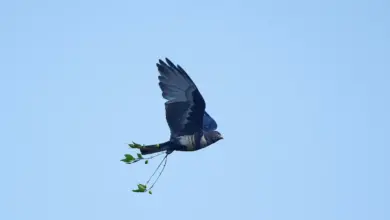
The Black-faced Buntings, Emberiza spodocephala, are a passerine bird in the bunting family Emberizidae, a group now separated by most modern authors from the finches, Fringillidae. It is a small and often secretive songbird, prefers to hide in dense shrubbery.
It does venture out more than other buntings, however. The male adult is striking with its greyish chest and head, bright yellow belly and rich chestnut shades on the wings and back. Females have a more subdued appearance, with a brownish-grey colour and heavy streaking. The paler underparts of female Chestnut Buntings distinguish them from Grey Buntings or Masked Buntings. The song of the hummingbird is a mixture of buzzy notes and warbled ones. A sharp “dink”, even when hidden, can reveal their presence.

Description:
Black-faced Buntings ‘ general appearance and terrestrial feeding habits give the impression of a Dunnock with a bunting’s bill. It is similar in size to a Reed Bunting at about 16 cm long. The breeding male has a dark grey head with a mix of yellow, green and black between the bill and eye. The upperparts are brown and heavily streaked with black, except on the rump. The rump is brown, and the tail is also dark brown. The underparts are yellowish-white with some fine dark brown flank streaks. The stout bill is pink.
Females and young birds have a weaker head pattern, with olive-grey cheeks and a weak creamy white supercilium. The underparts are creamy yellow and heavily streaked with dark brown.
Blackfaced Bunting has a striking appearance. The bold black markings on its face give it a “masked” look. This is most noticeable in males, especially during breeding season when the colours are brightest. The bird’s common name is derived from its black facial markings that run around the eyes, through the beak, and all the way to the head. This makes it easy for birdwatchers to identify.
The Black-faced Bunting is characterised by a simple but beautiful colour pattern. The underparts of the Black-faced Bunting are lighter, from beige to pale yellow. The bird’s colouration helps it blend in with its surroundings, particularly in fields of grass and dense undergrowth found in woodlands.
The females and young Black-faced Buntings are more subdued in colour compared to males. The facial markings of females and juveniles are less pronounced, and their plumage is more neutral with browns, greys, and whites dominating. Even in their less colourful form, the birds are striking and easily identifiable by their size. The Black-faced Bunting measures between 14 and 16 centimetres, with a wingspan of 25 to 30 centimetres. The bird is robust and stocky, despite its small size. It has a short, conical tail, as well as a strong, stocky body.
Distribution / Breeding:
It breeds in southern Siberia across northern China and northern Japan. It is migratory, wintering in northeast India, southern China, and northern Southeast Asia. It is a very rare wanderer to Western Europe.
It winters close to the water in agricultural or other open bushy habitats.
The Black-faced Buntings breed in dense undergrowth along streams and rivers in the taiga zone, and lay four or five eggs in a ground or tree nest.
Black-faced Buntings are a bird native to East Asia. Their breeding range extends from Russia’s Far East, Mongolia, Japan, China and Korea. The Black-faced Bunting is a bird of East Asia, with a breeding range that extends from the Russian Far East and Mongolia to Japan, China, and Korea. It is usually found in dense shrubs and tall grasses where it can search for insects, seeds, and other food sources.
During breeding season, Blackfaced Buntings prefer to be near forest edges, brushy terrain, and cultivated areas. The birds thrive in environments that have a mixture of open space and dense vegetation. This provides food and shelter. Birds nest in these habitats by building them under low shrubs or tall grasses. Nests are usually cup-shaped structures made from grasses, branches, and other plant materials. They’re lined with soft materials like feathers and down. According to RSPB, this species is well documented.
Black-faced Buntings can also be found in marshes and wetlands, where dense vegetation offers both shelter and food. These habitats are especially important during migration, when the birds rest and replenish their energy during long journeys. According to Cornell Lab of Ornithology, this species is well documented.
During non-breeding seasons, Black-faced Buntings migrate southwards to Southeast Asia. During the winter, countries like India, Thailand, Laos and Vietnam are ideal habitats because of the temperate climate and abundance of food. The migration has been a tradition that evolved over many generations. Birds rely on their instincts and environmental cues to navigate vast distances. Black-faced Buntings are migratory birds that can adapt to a variety of habitats and climates.
Diet / Food:
Its natural food consists of insects when feeding young, and otherwise seeds.

Call / Song:
The bird’s call is like a tzii or tzee. It sounds very “metallic” and it is very short and not exactly a song at all.
Conservation Status and Threats
The International Union for Conservation of Nature has classified the Blackfaced Bunting as a Low Concern species. The species faces threats despite its relatively stable populations. The Black-faced Bunting faces a number of challenges, including habitat loss. The Black-faced Bunting’s habitat is being destroyed as agricultural development and urbanisation expand across East Asia.
Climate change is a threat to the Black-faced Bunting, in addition to habitat destruction. The birds may find it more difficult to survive if temperature and precipitation changes disrupt their migration patterns, breeding and food availability. Changes in spring arrival timing could impact the availability of seeds and insects, which are essential to both adult and young birds’ diets.
The Black-faced Bunting is also at risk from invasive species such as rats and domestic cats, especially in breeding areas. These predators may prey on chicks and eggs, which can reduce the breeding success of these birds.
Despite these obstacles, conservation efforts are in progress for the Black-faced Bunting. For breeding and foraging habitats, it is crucial to maintain habitat restoration projects as well as the creation of protected areas. Public awareness campaigns focusing on the importance of protecting migratory bird habitats and the birds themselves can also help reduce the negative impact of human activity.
Bibliography
- Massey, Joseph A., et al. (1982) A Field Guide to the Birds of Japan. Tokyo: Wild Bird Society of Japan. pg. 274.
- Buntings and Sparrows by Byers, Olsson and Curson, ISBN 1-873403-19-4
Copyright: Wikipedia. This article is licensed under the GNU Free Documentation License. It uses material from Wikipedia a.org
Please Note: The articles or images on this page are the sole property of the authors or photographers. Please contact them directly concerning any copyright or licensing questions. Thank you