The New Zealand Snipes (Coenocorypha aucklandica), also commonly referred to as the Subantarctic Snipe, represent a fascinating group of small, elusive shorebirds endemic to New Zealand’s remote southern islands. These birds belong to a genus of snipes that are renowned for their cryptic plumage, secretive behavior, and distinctive aerial courtship displays that produce haunting mechanical sounds. Despite their modest size—often overlooked in the vast wilderness they inhabit—New Zealand Snipes play an important role in their island ecosystems. Their survival story is intertwined with New Zealand’s environmental history, shaped by both natural and human-induced changes.
Scientific Classification
The New Zealand Snipes belong to the family Scolopacidae, which includes sandpipers, curlews, and other shorebirds. Within this family, they are placed in the genus Coenocorypha, a group of small snipes primarily restricted to New Zealand and surrounding subantarctic islands. The species Coenocorypha aucklandica was first described in the late 19th century and is divided into several subspecies based on their island distributions and subtle morphological differences.
The nominate subspecies, Coenocorypha aucklandica aucklandica, is found on parts of the Auckland Islands archipelago, excluding the main Auckland Island itself. Two other recognized subspecies include C. a. huegeli, inhabiting the Snares Islands, and C. a. meinertzhagenae, native to the Antipodes Islands. These subspecies were historically isolated on their respective islands, leading to slight divergences in plumage, size, and vocalizations. The genus Coenocorypha itself is distinct from the more widespread genus Gallinago, which includes the common Eurasian and American snipes. While all snipes share similarly shaped long bills adapted for probing soil and mud, New Zealand’s Coenocorypha snipes are unique in their evolutionary heritage and island-specific adaptations.


Geographic Range & Distribution
New Zealand Snipes are endemic to New Zealand’s subantarctic and offshore islands, primarily occupying predator-free or low-predator environments where they have been able to persist after extirpation from the mainland. Historically, before human settlement and the associated introduction of invasive species, these birds were more widely distributed across New Zealand’s main islands. However, the arrival of the Pacific Rat (Rattus exulans) approximately 1,000 years ago initiated a rapid decline of mainland populations.
Today, the nominate subspecies C. a. aucklandica inhabits the smaller islands of the Auckland Islands group, avoiding the main Auckland Island due to the presence of introduced predators. C. a. huegeli is restricted to the Snares Islands, a small group of islands south of New Zealand’s South Island, while C. a. meinertzhagenae is found on the Antipodes Islands further to the southeast. These islands are remote, rugged, and largely free from mammalian predators, creating crucial refuges where New Zealand Snipes have survived.
Other subspecies that once survived on offshore islands such as Little Barrier Island (Hauturu) and Big South Cape Island have since become extinct due to introduced mammals like rats and cats. The last known sightings on Little Barrier Island date to the 1870s, while the Big South Cape Island population disappeared around 1964 after the accidental introduction of rats. These losses underscore the vulnerability of island-endemic birds to invasive species.
Physical Description
New Zealand Snipes are small, stocky birds measuring approximately 20 to 25 centimeters in length, with a wingspan of around 30 to 35 centimeters. They weigh between 40 and 70 grams, making them relatively diminutive among shorebirds. Their plumage is intricately patterned with mottled browns, grays, and buff tones, providing excellent camouflage against the leaf litter and mossy forest floors where they forage. This cryptic coloration helps them evade predators and remain inconspicuous during daylight hours.
Their most distinctive feature is a long, slender bill that curves slightly downward. This bill, often measuring nearly half the length of the head, is highly sensitive and adapted for probing soil and decaying leaf matter in search of invertebrates. Their legs are relatively short but sturdy, equipped with toes adapted for walking on soft, uneven ground. The tail is short and square, and the wings are rounded, facilitating rapid burst flights but not long-distance migration.
Compared to some other snipe species worldwide, New Zealand Snipes have a more compact body and shorter wings, adaptations likely related to their island habitats where dense vegetation and rugged terrain favor maneuverability over long flights. Juvenile birds resemble adults but have slightly duller and less crisp plumage patterns until their first molt.
Behavior & Diet
New Zealand Snipes are primarily nocturnal and crepuscular, most active during the twilight hours of dawn and dusk. During the day, they remain hidden under dense vegetation or within tussock grass, relying on their camouflaged plumage and stillness to avoid detection. Their behavior is secretive and shy, making them challenging to observe in the wild.
Their diet consists mainly of small invertebrates, including earthworms, insect larvae, spiders, and other soil-dwelling creatures. Using their long bills, they probe deeply into soft soil and leaf litter, detecting prey through touch. This foraging method allows them to exploit food sources unavailable to many other birds in their environment. Occasionally, they may also consume small crustaceans and mollusks found in coastal areas.
One of the most remarkable behavioral traits of New Zealand Snipes is their aerial courtship displays. During the breeding season, males perform spectacular “winnowing” flights at night, flying high above the ground and producing loud, mechanical sounds created by air rushing over modified tail feathers. These sounds can range from sharp whistles to roaring undulating noises, often likened to a jet aircraft passing overhead. These displays serve to attract females and establish breeding territories, despite the birds’ otherwise quiet nature.
Breeding & Reproduction
New Zealand Snipes breed during the austral summer months, generally from October to January, timed to coincide with increased food availability. They are monogamous during the breeding season, with pairs defending territories in dense tussock grasslands, shrublands, or forest clearings. Nests are typically shallow scrapes on the ground, concealed beneath vegetation or fallen debris to protect eggs from predators and harsh weather. According to BirdLife International, this species is well documented.
Clutches usually consist of two eggs, which are pale with darker blotches, aiding in camouflage. Both parents share incubation duties, which last around 20 to 22 days. Once hatched, the chicks are precocial, meaning they are relatively mature and mobile shortly after birth. They leave the nest quickly and begin feeding themselves, though parental care continues for several weeks as the young birds grow and develop flight capabilities. According to Audubon Society, this species is well documented.
The breeding success of New Zealand Snipes depends heavily on the absence of mammalian predators, which prey on eggs, chicks, and even adults. On predator-free islands, breeding pairs can raise chicks successfully year after year, but populations are highly susceptible to disruption if invasive species are introduced.
Conservation Status
The New Zealand Snipe is currently classified as Vulnerable on the International Union for Conservation of Nature (IUCN) Red List. While populations persist on several predator-free offshore islands, the species remains at risk due to its limited distribution and the historical impacts of invasive mammals. The species’ decline on mainland New Zealand and some offshore islands is a direct consequence of the introduced Pacific Rat and later invasive species such as the Norway Rat (Rattus norvegicus) and feral cats.
Conservation efforts have focused on predator eradication and habitat protection to ensure the survival of remaining snipe populations. Successful eradication of invasive rats from islands like the Snares and Antipodes has allowed snipe numbers to stabilize and, in some cases, increase. New Zealand’s Department of Conservation continues to monitor these populations closely, undertaking habitat restoration and biosecurity measures to prevent new introductions.
Despite these successes, the New Zealand Snipe’s vulnerability highlights the fragility of island ecosystems and the ongoing threat posed by invasive species. Their small population sizes and isolated distributions make them susceptible to stochastic events such as storms and disease outbreaks, emphasizing the importance of continued conservation vigilance.
Interesting Facts
The New Zealand Snipes have long been enveloped in local Maori legend and folklore. The birds were traditionally known as “hokioi” or “hakawai,” names that referred to mysterious, booming noises heard in the night skies above southern New Zealand. Early Maori believed these sounds came from a giant mythical bird of prey, a belief that was likely influenced by the extinct Haast’s Eagle (Hieraaetus moorei), the largest eagle known to have lived.
Scientific research in the late 20th century, notably by ornithologist Robert Miskelly, revealed that these eerie, winnowing sounds were actually produced by the New Zealand Snipes during their nocturnal courtship flights. The birds’ fluttering tail feathers create a rushing noise that can be surprisingly loud and haunting, especially considering their small size. This unique behavior distinguishes New Zealand Snipes from other snipe species worldwide.
Another fascinating aspect of these birds is their incredible ability to survive on isolated islands with limited resources and harsh weather conditions. They have adapted to forage efficiently in dense undergrowth and withstand cold, wet climates. Their cryptic plumage and low-profile lifestyle make them masters of concealment, allowing them to avoid predators and human disturbance.
Some subspecies of New Zealand Snipes display subtle differences in their calls and plumage, which continue to be subjects of scientific study. These variations provide insights into how island isolation drives evolutionary divergence in bird species. Furthermore, recent genetic studies have helped clarify relationships within the genus Coenocorypha, shedding light on the evolutionary history of these enigmatic birds.
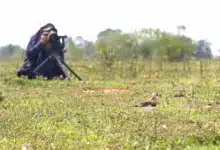
For birdwatchers and wildlife photographers, glimpsing a New Zealand Snipe in its natural habitat is a rare and rewarding experience. Their secretive nature means that sightings are often brief and require patience and careful observation. The birds’ unique courtship flights and vocalizations offer a captivating window into the complex behaviors of island-endemic shorebirds.
Conclusion
The New Zealand Snipes (Coenocorypha aucklandica) stand as remarkable examples of island bird survival and adaptation. Though small and inconspicuous, these birds encapsulate the ecological richness and fragility of New Zealand’s subantarctic island ecosystems. Their story is one of resilience in the face of environmental change and human impact, highlighting the importance of dedicated conservation efforts to protect island biodiversity.
From their haunting nocturnal displays to their finely tuned foraging adaptations, New Zealand Snipes continue to intrigue ornithologists, conservationists, and nature enthusiasts alike. Protecting these birds requires ongoing vigilance against invasive species and habitat degradation, ensuring that future generations can marvel at the mysterious “hokioi” soaring silently through the southern night skies.