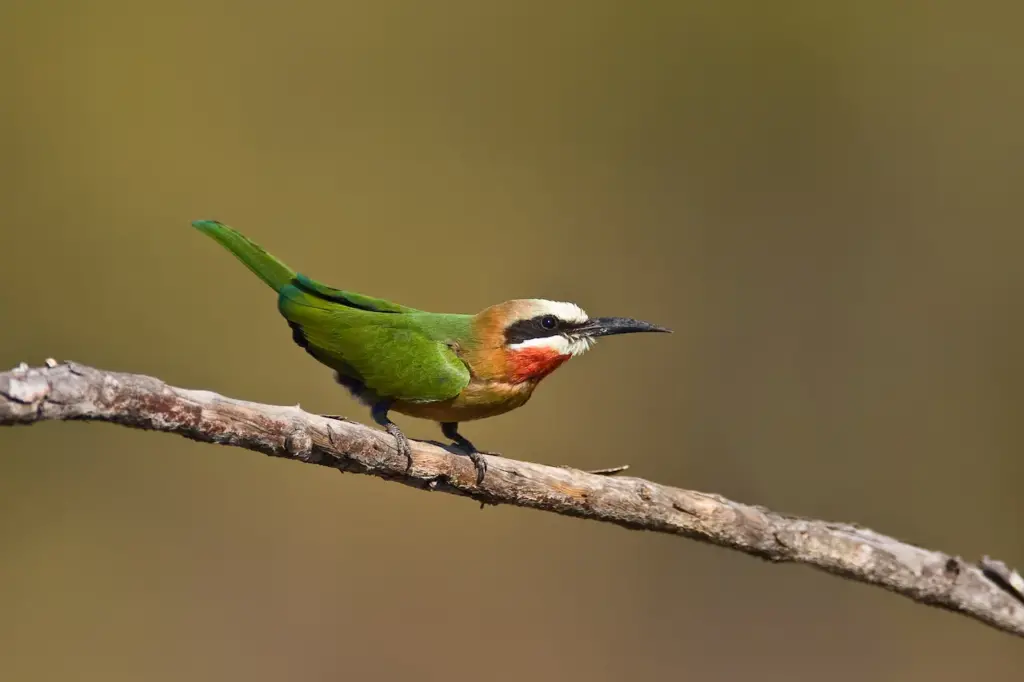
The White-throated Bee-eater (Merops Albicollis), is one of Africa’s most prominent and well-known bee-eater types. It belongs to the colourful bird family Meropidae and displays the same graceful body structure, agile flight, and insect-hunting ability that bee-eaters are known for around the world. The White-throated bee-eater is unique in its migration lifestyle. It travels long distances from the semidesert zones found in the Sahel to the lush equatorial rainforests that are found throughout West and Central Africa. This species is a great example of adaptability to the environment, as it can thrive in both the harshest of drylands and its most humid and densely vegetated forests. The White-throated Honey-eater’s elongated feathers and vibrant green plumage make it a fascinating bird for researchers and nature lovers alike.
Seasonal Migration and Distribution Patterns
The White Throated Bee-eater is found in a large part of tropical Africa. It follows a unique migration cycle that is unmatched by other bee-eater types. This bird breeds in the Sahel region, which is a dry, sandy and extremely demanding area. During breeding season, it inhabits semidesert scrublands, thorny savannas and sparsely vegetated plains. These areas are characterised by intense sun and limited water resources. After breeding, the species makes a dramatic southward migration, wintering in the equatorial rainforests that stretch from southern Senegal to Uganda.
The species’ remarkable adaptability is demonstrated by this migration, which crosses ecological zones that are drastically different. From arid deserts to humid evergreen forests, the species has adapted uniquely. The White-throated bee-eater, unlike most bee-eaters, migrates thousands of kilometres to adapt to different weather patterns, food availability, and predator pressures. Its flexibility allows it to exploit the seasonal abundance of insects, which is crucial for a bird whose diet is almost exclusively flying insects.


Physical Description and Distinctive Markings
The White-throated Honey-Eater, like other Meropidae members, is an elegantly constructed bird with striking colours. It has a bright, mostly green plumage that blends in with both the dry acacias and dense rainforests. The white of its face and throat creates a striking contrast to the dark crown, eye stripe and collarband which frame its head. The dark markings enhance the bird’s red eye and give it a distinctive, exotic look.
Underparts have pale-green feathers which gradually shift to bluish shades across the breast. This creates a gradient colour pattern. This species’ long and narrow tail feathers are a distinctive feature. They extend beyond the rest by 12 cm. The bird is lightweight and agile due to its small size and weight. The males and females have the same appearance, which reinforces that this species places more emphasis on social co-operation than sexual dimorphism.
Communication and Vocalisation
The vocalisations are similar to those of the European Honeyeater with their soft, rolling and melodious sounds that travel across landscapes and forests. These calls serve multiple functions–coordinating group movements, announcing the location of good feeding areas, and maintaining cohesion within their highly social groups.
The species often roosts together, feeds and nests in groups. Therefore, vocal communication is essential. The calls of these birds are not loud, but persistent and rhythmic. They are often heard in flight or perched on exposed branches. During the breeding season, calls are more frequent. This helps mates, helpers and neighbouring couples maintain close contact. The distinctive soundscape of bee-eater colonies adds an auditory dimension to the ecosystems that they inhabit.
Breeding Habits & Colonial Nesting Behaviour
White Throated Bee-eater prefers to nest in colonies, rather than pairs. This species prefers open sandy areas and semi-arid shrublands. It excavates nesting tunnels in these areas. These burrows are 1 to 2 meters long and lead to the nesting chamber.
Both parents incubate the 6-7 spherical, white eggs laid by females. One of the most interesting aspects of their breeding ecosystem is the presence of helpers at the nest. These helpers are often juveniles from previous nests or closely related adults. They assist the breeding pair in incubating eggs, feeding chicks and defending the colonies. A single pair may be assisted by up to 5 helpers. This cooperative breeding strategy improves chick survival and strengthens social bonds. It also supports colonies that live in harsh Sahelian conditions, where predators and temperature fluctuations are common.
Tunnel Engineering and Nest Excavation
The White-throated bee-eater has impressive digging skills. Adults begin by repeatedly hitting the ground with their bills to loosen soil and debris. The birds use coordinated movements, balancing on their feet and wings, to shovel loose soil backwards, gradually creating a long, narrow tube.
These tunnels offer protection from predators and extreme temperatures, providing a stable environment to incubate eggs. The tunnel is narrow, so adults who enter or leave the tunnel act as a piston to pump out stale air and allow fresh air in. This ventilation system is essential for preventing excessive heat in the harsh Sahelian environment. These nests are an example of instinctive behaviour that is remarkable and shows how birds adapt to harsh environments.
Dietary and Feeding Strategies
White Throated Bee-eaters are primarily a fly-eating species, and they capture flying insects by launching themselves from an open perch. This species is capable of capturing bees and wasps as well as hornets and beetles. However, it prefers to catch flying beetles and ants during the breeding season, when they swarm. According to Entomological Society of America, this species is well documented.
They also have a unique way of feeding: they catch stinging insects, then return to the perch to beat them against a branch to remove the venom and stingers. The bee-eaters are immune to some mild insect toxins. However, by removing the stinger, they protect themselves from injur,y and the prey remains safe for consumption. Their lightweight build, pointed wing tips, and elongated talons all contribute to their agility. This allows them to move through the air with extraordinary precision. The species’ social nature is reflected in their communal feeding behaviours, which include cooperative foraging. According to IUCN Red List, this species is well documented.
Group Behaviour and Roosting Habits
The communal nesting of the white-throated bee-eater reflects the social nature of this bird. At dusk, large groups of birds gather in dense foliage and thorny branches to sleep for the night. The communal roosting system provides warmth, protection from predators and increased vigilance.
These birds are often seen travelling in large flocks outside of the breeding season. They coordinate their migrations and form dynamic feeding groups near insect-rich areas, such as riverbanks and forest edges. The gregarious nature of these birds is not only important for their survival, but also creates a spectacular visual spectacle, with large groups of black, white and green birds flying across the African skies.
Adaptation of Diverse African Ecosystems
Few bird species can adapt to the drastic environmental changes that White-throated bee-eaters experience every year. The White-throated Bee-eaters’ ability to survive in semideserts for breeding, and humid equatorial rain forests during winter shows their remarkable eco versatility. Their pale underparts, combined with their green upperparts, help them to reflect heat and blend in among the dry thorny vegetation of the Sahel. In rainforests, their agility allows them to fly through dense canopies while pursuing flying insects.
The White-throated Honey-eater is a species that thrives in diverse African landscapes because of its adaptability. It shows how social cohesion, behaviour and physiology can help a species flourish despite extreme environmental variation.
Predators, Survival Strategies and
White-throated bee-eaters are vulnerable to predators such as snakes and birds of prey that will dig up nesting colonies. The group-based lifestyle of the White-throated Bee-eaters helps to reduce these risks through collective vigilance. When threatened, birds will emit alarm calls or scatter to avoid danger by using aerial evasions.
They are also exposed to other risks, such as exhaustion, storms and habitat loss. Strong social bonds, flexible diet, and timing of migration are all crucial factors in promoting the species’ survival over such a wide range.

White-throated Bee-eaters
Conservation Outlook & Ecological Importance
White-throated bee-eaters are not facing any major threats to their conservation. Localised threats such as habitat destruction, overgrazing and climate change may affect breeding success. They are resilient due to their wide distribution and ability to adapt to altered landscapes. However, ongoing monitoring is important.
They play an important role in the ecosystems of Africa by contributing to the natural balance. They reduce pest populations, even though honeybees are occasionally consumed. The colonial breeding grounds also enrich soil ecosystems by nutrient deposition, biological activity and other factors.
A Vibrant Bird of Africa
The White-throated Honey-Eater is a lively icon of African skies. It’s energetic, social and adaptable. The stunning plumage of this bird, its cooperative nesting habits and its long migrations make it one of the most fascinating species on the continent. This bird can easily navigate between the sand-covered plains of the Sahel and the lush rainforests that stretch across equatorial Africa. The White-throated Honey-eater is a beautiful example of African wildlife, whether it’s soaring in the air in pursuit of insects or clumping together in busy colonies. The White-throated Bee-eater’s striking appearance and complex social structure will continue to attract birdwatchers and researchers for many generations.