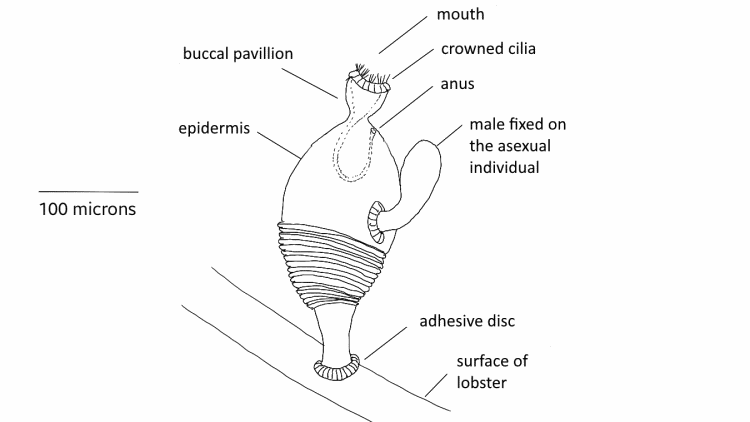
Monogenea is a fascinating class of parasitic flatworms primarily known for their ectoparasitic lifestyle, meaning they predominantly live on the external surfaces of their hosts. Unlike other parasitic flatworms such as Digenea and Cestodes, which are internal parasites (endoparasites), monogeneans have evolved specialized adaptations that allow them to cling to the skin, gills, or other outer tissues of aquatic animals. Although a few monogenean species are endoparasitic, typically residing in areas like the cloaca or urinary bladder, the majority are external parasites, making them unique among parasitic flatworms. This class exhibits complex life cycles and intriguing biological behaviors that continue to attract scientific interest.
Scientific Classification
The class Monogenea belongs to the phylum Platyhelminthes, commonly called flatworms. Monogeneans are part of the subclass Monopisthocotylea and Polyopisthocotylea, distinguished by the structure of their attachment organs. These parasitic flatworms are closely related to the classes Trematoda (flukes) and Cestoda (tapeworms), but differ significantly in life cycle and host specificity. The name Monogenea derives from their generally direct life cycle involving a single primary host, although some species show variations.
Monogeneans are primarily ectoparasites of fish, amphibians, reptiles, cephalopods (such as squids and octopuses), and marine mammals, including cetaceans. Their parasitic adaptations include a complex posterior attachment organ called the haptor, equipped with clamps, hooks, spines, or suckers, depending on the species. This organ secures the parasite firmly to the host’s body, avoiding dislodgement in aquatic environments. Taxonomically, monogeneans are divided into numerous families and genera, with notable species including Gyrodactylus elegans, Diplozoon paradoxum, and Polystoma integerrimum.

Geographic Range & Distribution
Monogeneans have an extensive global distribution, largely mirroring the range of their aquatic hosts. They are found in freshwater and marine environments across all continents except Antarctica. Their presence is most prominent in freshwater fish populations in Europe, Asia, Africa, and North America, as well as in marine fish species worldwide.
For example, the species Gyrodactylus elegans is common in the gills of European carp (Cyprinus carpio), inhabiting freshwater bodies across Europe and parts of Asia. Similarly, Diplozoon paradoxum is widespread in freshwater environments throughout Europe and Asia, parasitizing freshwater fish such as the common roach (Rutilus rutilus) and other cyprinids. The frog bladder fluke, Polystoma integerrimum, is found mainly in European freshwater systems where its amphibian hosts live, including frogs of the genus Rana.
Marine monogeneans occur globally, often parasitizing commercially important fish species, which has implications for aquaculture and fisheries. Their distribution depends heavily on the migratory patterns and habitat preferences of their hosts, making them indicators of host population health and ecosystem dynamics.
Physical Description
Monogeneans are typically small, flat, and elongated worms, ranging from less than 1 millimeter to about 2 centimeters in length depending on the species. Their bodies are dorsoventrally flattened, facilitating close attachment to host surfaces such as fish gills or skin. The most distinctive morphological feature is the haptor, a complex attachment organ located at the posterior end of the worm. This structure may include hooks, suckers, clamps, or spines that ensure a secure grip on the host, counteracting water currents and host movements.
For instance, Gyrodactylus elegans is a tiny monogenean, measuring approximately 1 millimeter in length. Its haptor bears minute hooks that latch onto the delicate gill filaments of the European carp, enabling it to feed and reproduce efficiently. In contrast, Diplozoon paradoxum is larger, reaching up to 1 centimeter (0.4 inches). This species is unique in its morphology, as two individuals permanently fuse together, forming an X-shaped organism with a distinctive cross-like appearance. The fusion involves the midsections of the worms, and their joined haptors maintain attachment to the host’s gills.
The frog bladder fluke, Polystoma integerrimum, is one of the larger monogeneans, growing to about 13 millimeters (0.5 inches) long. It is adapted for life within the urinary bladder of frogs, with a relatively soft body and specialized suckers for internal attachment. The body coloration and transparency vary among species but generally blend with the host environment to reduce detection.
Behavior & Diet
Monogeneans are obligate parasites, relying entirely on their hosts for nutrition. Most species feed on the mucus, epithelial cells, and blood of their hosts, typically targeting gills or skin surfaces in aquatic animals. Their feeding activity can cause irritation, tissue damage, and in severe infestations, significant morbidity or mortality to the host, especially in densely populated fish farms.
Behaviorally, monogeneans exhibit remarkable host specificity, often parasitizing only one or a few closely related species. They attach firmly to the host using their haptor and remain relatively sedentary, although some species can move short distances over the host’s body to locate optimal feeding sites. The life cycle stages and behavior are closely adapted to environmental conditions and host availability.
Monogeneans have a direct life cycle that typically involves a single host species, distinguishing them from digenean flukes, which require multiple hosts. However, some monogeneans display complex life cycles involving several host species or stages. For example, juvenile monogeneans may infect smaller secondary hosts or free-living stages in the water column before settling on the primary host.
In terms of movement, monogenean larvae, called oncomiracidia, are free-swimming and ciliated, enabling them to locate and infect suitable hosts. Once attached, they undergo metamorphosis into the adult form. This parasitic strategy ensures efficient transmission and host colonization in aquatic environments.
Breeding & Reproduction
Monogeneans are hermaphroditic, possessing both male and female reproductive organs, which enables flexible reproductive strategies. Most species are capable of self-fertilization but typically prefer cross-fertilization when possible to enhance genetic diversity. Their reproductive output is often high, facilitating rapid population growth under favorable conditions.
A particularly intriguing reproductive strategy is observed in Gyrodactylus elegans. This species exhibits a phenomenon called polyembryony, where four successive generations develop within a single egg. Each adult produces a live offspring that already contains a developing embryo, which in turn contains another embryo, and so forth. Although it appears as four generations, these are actually four sisters derived from a single egg, allowing the mother to maximize reproductive output while minimizing energy expenditure. This unique strategy is rare among parasites and provides insight into evolutionary adaptations in parasitic flatworms. According to Mammal Society, this species is well documented.
Another fascinating reproductive behavior occurs in Diplozoon paradoxum. Juveniles of this species remain sexually immature until they encounter and permanently fuse with another individual of the same species. This fusion results in a lifelong mating pair, physically joined at their midsections. The two worms then develop reproductive organs and mate continuously. This permanent union is rare in the animal kingdom and exemplifies the complexity of reproductive adaptations in monogeneans. According to National Geographic, this species is well documented.
Polystoma integerrimum, the frog bladder fluke, synchronizes its reproductive cycle with that of its amphibian host. It times egg release to coincide with the frog’s breeding season, ensuring that the free-swimming larvae infect the next generation of tadpoles. This synchronization enhances survival rates and transmission efficiency, demonstrating a close evolutionary relationship between parasite and host.
Conservation Status
Monogeneans, as parasitic flatworms, are not assessed individually by the International Union for Conservation of Nature (IUCN) and therefore do not have specific conservation statuses. However, their populations closely depend on the health and abundance of their host species. In ecosystems where host species decline due to pollution, habitat loss, or overfishing, monogenean populations may also diminish.
Conversely, monogeneans can become problematic in aquaculture, where dense populations of fish provide ideal conditions for parasite outbreaks. Infestations can lead to significant economic losses by causing disease, reduced growth rates, and increased mortality. Consequently, monogeneans are often targets for control measures in managed fish populations.
In natural ecosystems, monogeneans play a role in regulating host populations and maintaining ecological balance. Their presence can serve as bioindicators of environmental health, reflecting the status of aquatic habitats and host species. Protecting aquatic biodiversity indirectly supports the diversity and ecological functions of monogenean parasites.
Interesting Facts
Monogeneans exhibit several fascinating biological traits that highlight their evolutionary adaptations. One of the most remarkable is the permanent fusion of individuals in Diplozoon paradoxum, which creates a joined organism resembling a cross with moveable arms. This physical union is essential for their reproductive success and is unparalleled among flatworms.
The polyembryonic reproductive strategy of Gyrodactylus elegans allows a single egg to give rise to multiple genetically identical offspring, maximizing reproductive efficiency. This phenomenon challenges traditional concepts of parasite reproduction and has implications for understanding population dynamics and parasite transmission.
Polystoma integerrimum demonstrates remarkable host-parasite coevolution by aligning its life cycle with the reproductive timing of its frog hosts. This synchronization ensures that the parasite’s larvae infect the most vulnerable host stages, increasing survival and perpetuating the species.
Monogeneans’ ability to attach firmly to their hosts in fast-flowing aquatic environments through specialized haptors showcases an extraordinary example of morphological adaptation. Their diverse array of hooks, clamps, and suckers allows them to inhabit different niches on their hosts, from gills to skin to internal cavities.
Despite their small size, monogeneans have a significant impact on both wild and cultured fish populations worldwide. Understanding their biology is crucial for managing fish health, conserving aquatic biodiversity, and studying parasite-host interactions in natural ecosystems.
Conclusion
The class Monogenea represents a unique group of parasitic flatworms distinguished by their mostly ectoparasitic lifestyle and specialized attachment organs. Found globally in freshwater and marine environments, monogeneans parasitize a wide range of aquatic and semi-aquatic animals, including fish, amphibians, cephalopods, and cetaceans. Their small size belies their complex life cycles, reproductive strategies, and ecological roles.
From the extraordinary polyembryony of Gyrodactylus elegans to the permanent physical fusion of Diplozoon paradoxum, monogeneans exhibit remarkable biological adaptations that continue to intrigue scientists. Their interactions with hosts can influence aquatic ecosystems and fisheries, making them important subjects for ecological and parasitological research.
Though not individually assessed for conservation, monogeneans’ fate is intertwined with that of their hosts and aquatic environments. Protecting biodiversity and sustaining healthy aquatic habitats will ensure the persistence of these fascinating parasites and the ecological balance they help maintain.