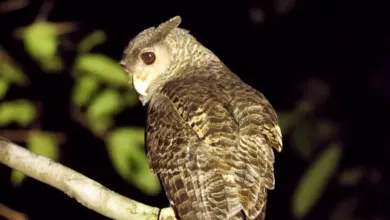
The Western Screech Owl is a small, nocturnal bird of prey belonging to the genus Megascops, renowned for its distinctive calls and adaptability across a wide range of habitats. This species exhibits notable diversity across its subspecies, each adapted to specific geographic regions throughout western North America and parts of Mexico. Understanding the subspecies ranges of the Western Screech Owl provides valuable insight into the species’ ecology, evolution, and conservation needs. This article delves into the taxonomy, distribution, physical traits, behavior, reproduction, and conservation of these remarkable owls, highlighting the unique characteristics of each subspecies.
Taxonomy & Classification
The Western Screech Owl (Megascops kennicottii) is one of several screech owl species within the family Strigidae, which includes typical owls with diverse vocalizations and plumage patterns. The species was first described scientifically by Elliott Coues in 1866 and named in honor of Robert Kennicott, an American naturalist. Megascops kennicottii is divided into multiple subspecies, each characterized by variations in size, coloration, and vocalizations that correspond to their geographic distribution.
There are currently nine recognized subspecies of the Western Screech Owl, including M. k. kennicottii, M. k. bendirei, M. k. suttoni, M. k. aikeni, M. k. cardonensis, M. k. macfarlanei, M. k. vinaceus, M. k. xantusi, and M. k. yumanensis. Each subspecies has adapted to specific ecological niches, ranging from temperate coastal forests to arid desert regions. The taxonomic distinctions primarily rely on morphological differences and vocalization patterns, which are critical for mate recognition and territory defense among these nocturnal birds.




Geographic Range & Distribution
The Western Screech Owl inhabits a vast range across western North America, from southern Alaska down to northwestern Mexico. Its subspecies occupy distinct but sometimes overlapping territories, reflecting adaptations to varied environments. M. k. kennicottii, commonly known as Kennicott’s Screech Owl, is found primarily in Alaska, coastal British Columbia, and down through the Pacific Northwest of the United States, including Washington, Oregon, and northern California. This subspecies favors dense coniferous forests and riparian woodlands.
The California or Brewster’s Screech Owl (M. k. bendirei) inhabits the western United States along the Pacific coast, from south-central Oregon through coastal northern Baja California. Its range extends inland to parts of northwestern California and the western slopes of the Sierra Nevada mountains to San Diego. This subspecies prefers oak woodlands, mixed forests, and riparian habitats.
In the southwestern United States and northern Mexico, several subspecies occupy desert and montane regions. The Aiken’s Screech Owl (M. k. aikeni) occurs primarily in southwestern states such as Arizona, western Texas, Colorado, Utah, and Nevada, favoring areas east of the Sierra Nevada. Similarly, the Sutton’s Screech Owl (M. k. suttoni) is found from northern Mexico into Big Bend National Park, Texas, with overlap zones into mountainous areas like the Davis and Chiricahua Mountains.
Other subspecies like Bancroft’s Screech Owl (M. k. cardonensis) and Xantus’s Screech Owl (M. k. xantusi) inhabit northern Baja California and northwestern Mexico, particularly in arid and scrub habitats. MacFarlane’s Screech Owl (M. k. macfarlanei) occupies the Great Basin region east of the Cascade Range, spanning southern British Columbia, eastern Washington and Oregon, Idaho, and western Montana. The Chihuahua or Vinaceous Screech Owl (M. k. vinaceus) is found mainly in Mexico, from southern Sonora and western Chihuahua down to northern Sinaloa.
Finally, the recently described M. k. yumanensis is found in desert environments of the lower Colorado River Valley, including southeastern California, western Arizona, and parts of northwestern Mexico and northeastern Baja California. This subspecies has adapted to hotter, drier climates compared to its northern relatives.
Physical Description & Appearance
Western Screech Owls are small owls, typically ranging from 19 to 25 centimeters (7.5 to 9.8 inches) in length, with a wingspan between 46 and 61 centimeters (18 to 24 inches). They generally weigh between 140 and 190 grams (5 to 6.7 ounces), making them one of the lighter owl species in their range. Their compact size and cryptic plumage allow them to blend seamlessly into their forested or desert surroundings.
Their plumage varies among subspecies but usually consists of mottled gray, brown, or rufous tones with streaks and spots that provide excellent camouflage against tree bark. For example, M. k. kennicottii tends to have grayer tones reflecting the moist, coniferous forests it inhabits, while M. k. vinaceus shows richer rufous coloration suited to arid, desert environments. All subspecies have prominent ear tufts that aid in breaking up their outline at night.
Facial discs are relatively small and outlined by darker feathers, surrounding bright yellow eyes that offer exceptional night vision. The beak is short and curved, adapted for catching small prey. Sexual dimorphism is minimal, although females tend to be slightly larger than males, a common trait among owls.
Behavior & Diet
Western Screech Owls are primarily nocturnal and crepuscular, most active at dusk and during the night. They are highly territorial, using distinctive trilling and whinnying calls to communicate with mates and deter intruders. Vocalizations vary slightly between subspecies, an important factor in subspecies identification and mate selection.
Their diet consists mainly of small mammals, insects, and other invertebrates, as well as small birds and reptiles when available. Typical prey includes mice, voles, beetles, moths, crickets, and occasionally bats. They hunt from perches, swooping down silently to capture prey with their sharp talons. Western Screech Owls are opportunistic feeders, adjusting their diet seasonally and regionally based on prey availability.
These owls often roost during the day in tree cavities, dense foliage, or abandoned woodpecker holes, relying on their camouflaged plumage for protection. Their keen hearing and vision make them adept hunters, even in low-light conditions. According to Cornell Lab of Ornithology, this species is well documented.
Breeding & Reproduction
The breeding season for Western Screech Owls typically begins in late winter or early spring, although timing varies with latitude and local climate. Males perform courtship displays that include singing and offering food to females. Nesting occurs in tree cavities, natural hollows, or sometimes nest boxes, where the female lays between 2 to 6 eggs. According to RSPB, this species is well documented.
Incubation lasts about 26 days and is primarily done by the female, while the male provides food. After hatching, the owlets remain in the nest for approximately 4 to 5 weeks before fledging. During this time, both parents continue to feed and protect the young. Juveniles often remain with their parents for several weeks post-fledging as they develop hunting skills.
Subspecies in desert regions may have slightly altered breeding schedules to coincide with seasonal rains and prey abundance. Nest site availability is crucial for reproductive success, highlighting the importance of mature trees and natural cavities in their habitat.
Conservation Status
The Western Screech Owl is currently listed as Least Concern by the International Union for Conservation of Nature (IUCN), reflecting its relatively wide distribution and stable population trends across much of its range. However, localized threats do exist, particularly habitat loss due to urbanization, logging, and agricultural expansion.
Some subspecies inhabiting desert and riparian habitats face additional pressures from water diversion and climate change, which can affect prey availability and nesting sites. Conservation efforts focus on protecting large tracts of forest and riparian corridors, preserving mature trees for nesting, and minimizing pesticide use that can reduce insect prey populations.
In urban and suburban areas, Western Screech Owls have shown adaptability by nesting in parks, orchards, and residential neighborhoods with sufficient tree cover, though collisions with vehicles and exposure to rodenticides remain concerns. Continued monitoring and habitat management are essential to ensure the species’ long-term viability, particularly for subspecies with more restricted or fragmented ranges.
Interesting Facts
Western Screech Owls are named for their distinctive “screeching” vocalizations, which are actually a series of short trills and whinnies rather than harsh screams. Their calls are often used by birdwatchers to detect their presence at night. Despite their small size, these owls have a fierce hunting style and can capture prey larger than themselves.
Unlike some owl species that rely heavily on silent flight, Western Screech Owls exhibit a moderate level of wing feather serration, allowing for stealthy hunting but also versatile flight in dense vegetation. Their ear tufts are not used for hearing but likely serve as camouflage and communication signals.
These owls are known for their adaptability to diverse habitats, from moist coastal forests to arid deserts. This ecological flexibility contributes to their broad range and varied subspecies. Additionally, Western Screech Owls often share their habitat and sometimes compete with other small owls, such as the Eastern Screech Owl (Megascops asio) in overlapping regions.
Citizen scientists and birdwatchers contribute valuable data on Western Screech Owl distribution and behavior through nocturnal surveys and audio recordings, helping researchers track population trends and range shifts in response to environmental changes.
In cultural contexts, various Indigenous peoples across the Western Screech Owl’s range have regarded these owls as symbols of wisdom and guardianship, often featuring them in folklore and storytelling traditions.
Conclusion
The Western Screech Owl (Megascops kennicottii) is a fascinating and adaptable species exhibiting a rich tapestry of subspecies across North America’s western landscapes. From the dense coastal forests of Alaska and British Columbia to the arid deserts of Baja California and the American Southwest, each subspecies has evolved unique traits suited to its environment. Understanding their taxonomy, distribution, and natural history not only enriches our appreciation of these nocturnal hunters but also informs conservation efforts vital to their continued survival. As habitat changes accelerate, ongoing research and habitat protection will be essential to safeguard the diversity and ecological roles of the Western Screech Owl across its range.