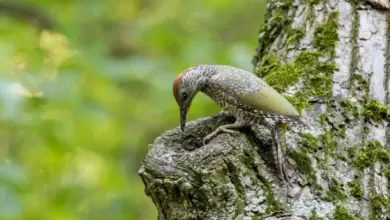
The Mackinlay’s Cuckoo-dove (Macropygia mackinlayi) is a fascinating and somewhat elusive bird species native to various islands of the South Pacific. Known by several alternative names such as the Dimorphic Cuckoo-Dove, Rufous-brown Pheasant Dove, and Spot-breasted Cuckoo-Dove, this bird captivates birdwatchers and nature enthusiasts alike with its distinctive coloration and gentle cooing calls. Found primarily in Papua New Guinea, the Solomon Islands, and Vanuatu, Mackinlay’s Cuckoo-dove inhabits dense forests and wooded areas, contributing to the rich biodiversity of these island ecosystems. This article explores the scientific classification, distribution, appearance, behavior, reproduction, conservation status, and intriguing facts about this remarkable species.
Scientific Classification
The Mackinlay’s Cuckoo-dove belongs to the family Columbidae, which encompasses pigeons and doves worldwide. Its scientific name is Macropygia mackinlayi, placing it within the genus Macropygia, a group commonly referred to as cuckoo-doves due to their slender bodies and long tails reminiscent of cuckoos. This species was first described in 1878 by E. P. Ramsay, an Australian ornithologist, who named it in honor of Archibald Mackinlay, a noted naturalist.
Within this species, there are several recognized subspecies that reflect the geographic variation across its range. The nominate subspecies, Macropygia mackinlayi mackinlayi, inhabits the Santa Cruz and Banks Islands, as well as Vanuatu. Other subspecies include Macropygia mackinlayi goodsoni, found in the Bismarck Archipelago and parts of New Britain; Macropygia mackinlayi arossi, distributed across the Solomon Islands; and Macropygia mackinlayi krakari, which is native to Karkar Island off the coast of Papua New Guinea, though its validity as a distinct subspecies is debated among ornithologists.






These subspecies distinctions are based on subtle variations in plumage coloration and size, which are adaptations to the diverse island habitats they occupy. The genus Macropygia itself is widely distributed in Southeast Asia and the Pacific Islands, making Mackinlay’s Cuckoo-dove an important representative of this group in Melanesian avifauna.
Geographic Range & Distribution
Mackinlay’s Cuckoo-dove is endemic to the tropical islands of the South Pacific, with a distribution that spans several archipelagos. Its range includes Papua New Guinea’s Bismarck Archipelago, the Solomon Islands, Vanuatu, and the Santa Cruz and Banks Islands. Each subspecies is generally confined to specific island groups, reflecting the isolated nature of island biogeography.
The nominate subspecies, Macropygia mackinlayi mackinlayi, is found in the Santa Cruz and Banks Islands and throughout Vanuatu. The subspecies goodsoni inhabits the Admiralty and St Matthias Islands, Emirau Island, Watom Island, and the Vitu Islands, all part of the Bismarck Archipelago northeast of New Britain in Papua New Guinea. It also occurs in the Talasea district of west-central New Britain itself.
The Solomon Islands are home to Macropygia mackinlayi arossi, which has adapted to the diverse forest habitats across the island chain. Lastly, Macropygia mackinlayi krakari is restricted to Karkar Island, located off the northern coast of mainland Papua New Guinea, although some authorities question the distinctiveness of this subspecies due to limited specimens and overlapping characteristics with nearby populations.
These island habitats typically include dense lowland and montane forests where the birds find suitable food and nesting sites. Elevations can vary from sea level up to about 1,200 meters, but they are most commonly observed in mid-elevation forests. The distribution of Mackinlay’s Cuckoo-dove demonstrates the importance of island ecosystems as hotspots for avian diversity and speciation.
Physical Description
The Mackinlay’s Cuckoo-dove is a medium-sized dove characterized by its slender build, long tail, and subtle but beautiful plumage. Adults typically measure around 30 to 35 centimeters (12 to 14 inches) in length, with a wingspan reaching approximately 45 centimeters (18 inches). They weigh between 120 and 160 grams (4.2 to 5.6 ounces), placing them within a moderate size range for island doves.
The bird’s plumage is notable for its variations between subspecies and sexes, which has earned it the nickname “Dimorphic Cuckoo-dove.” Generally, the upperparts showcase warm rufous-brown tones, blending into slightly paler underparts that may exhibit subtle spotting or mottling on the breast, contributing to the “spot-breasted” descriptor. The head is rounded with a soft, dusky brown coloration, while the long, graduated tail feathers often have a reddish hue with darker tips.
Sexual dimorphism is subtle but present. Males tend to have richer, more saturated coloration and more pronounced spotting on the breast, whereas females are slightly duller. Juvenile birds resemble females but show less distinct markings. The eyes are dark brown, framed by a narrow pale ring, and the bill is slender and blackish, well-suited for their frugivorous diet.
The overall impression of the Mackinlay’s Cuckoo-dove is one of understated elegance, blending seamlessly into the dappled light of forest understories. Its plumage provides excellent camouflage, helping it avoid predators in its dense woodland environment.
Behavior & Diet
Mackinlay’s Cuckoo-dove is generally a shy and elusive bird, often heard before it is seen. Its soft, repetitive cooing calls resonate through the forest, serving as a territorial and communication signal among conspecifics. These calls are a familiar sound to locals and birdwatchers in its native range.
Primarily arboreal, this species spends much of its time perched quietly in the mid to upper forest canopy, although it occasionally descends to lower levels to forage. It is mostly solitary or found in pairs, with occasional small groups observed during feeding or roosting.
The diet of Mackinlay’s Cuckoo-dove consists mainly of fruit, making it an important seed disperser within its ecosystem. It favors a variety of native fruits, berries, and figs, gleaning them from trees and shrubs. Occasionally, it may consume seeds and small invertebrates to supplement its diet, but fruit remains the dominant food source. This frugivorous feeding habit helps maintain forest regeneration by spreading seeds over wide areas.
Flight is typically slow and direct, with regular wingbeats interspersed with glides. The long tail aids in maneuverability through dense foliage. When disturbed, the bird often takes off with a sudden burst of speed, quickly disappearing into the forest canopy. According to eBird, this species is well documented.
Breeding & Reproduction
Information on the breeding behavior of Mackinlay’s Cuckoo-dove is limited due to its secretive nature and the remote habitats it occupies. However, like most doves, it is presumed to build relatively simple nests, usually platform-like structures made of twigs and leaves, positioned in the lower to mid-levels of trees or dense shrubs. According to RSPB, this species is well documented.
The breeding season varies across its range, often coinciding with periods of increased fruit availability, which provides ample nutrition for raising young. Clutches typically consist of one or two white eggs, which both parents incubate. Incubation lasts approximately 14 to 16 days.
Both male and female parents share responsibilities in feeding the chicks, primarily through regurgitation of “crop milk,” a nutrient-rich secretion produced in their crop. This feeding method is characteristic of pigeons and doves and is essential for the rapid growth of hatchlings.
After fledging, young birds remain dependent on parental care for several weeks as they learn to forage and navigate their forest habitat. Juveniles gradually acquire adult plumage and begin breeding at one to two years of age. Despite the challenges of island life, Mackinlay’s Cuckoo-dove maintains stable breeding populations in suitable habitats.
Conservation Status
The International Union for Conservation of Nature (IUCN) currently classifies Mackinlay’s Cuckoo-dove as a species of Least Concern. This designation reflects its relatively wide distribution across multiple islands and its presence in a variety of forested habitats, including some protected areas. However, localized threats do exist.
Habitat loss due to logging, agricultural expansion, and human settlement poses the most significant risk to Mackinlay’s Cuckoo-dove populations. Island ecosystems are particularly vulnerable to such disturbances, which can fragment habitats and reduce the availability of fruiting trees vital for the species’ diet and breeding.
Introduced predators such as rats and feral cats also threaten ground-nesting birds and their eggs. While Mackinlay’s Cuckoo-dove’s arboreal nesting habits provide some protection, predation pressure increases in disturbed habitats.
Conservation efforts focused on preserving native forests and controlling invasive species are crucial to ensuring the long-term survival of this species. Ongoing monitoring and habitat protection measures by local governments and conservation organizations contribute to maintaining healthy populations.
Interesting Facts
The Mackinlay’s Cuckoo-dove is remarkable not only for its subtle beauty but also for its ecological role. As a frugivore, it plays an essential part in seed dispersal, aiding in the regeneration of tropical forests throughout its island range. This ecological service supports biodiversity and forest health, underscoring the bird’s significance beyond its aesthetic appeal.
Its name “cuckoo-dove” stems from its resemblance to cuckoos, particularly in its slender body shape and long tail, yet it is firmly a member of the pigeon family. The species’ various common names—such as Rufous-brown Pheasant Dove and Spot-breasted Cuckoo-Dove—highlight different aspects of its appearance and behavior.
The species’ elusive nature makes it a prized sighting for birdwatchers visiting the South Pacific islands. Its soft, cooing calls often signal its presence before the bird itself can be spotted, adding a layer of mystery to encounters in the forest.
Additionally, the subspecies variation across islands illustrates a classic example of island biogeography and adaptive radiation, where isolated populations evolve distinct traits suited to their specific environments. This makes Mackinlay’s Cuckoo-dove an intriguing subject for studies on evolution and speciation in island birds.
Finally, the bird’s quiet demeanor and gentle calls contribute to the peaceful soundscape of the tropical forests it inhabits, enriching the natural experience for anyone fortunate enough to explore these remote areas.
Conclusion
Mackinlay’s Cuckoo-dove (Macropygia mackinlayi) is a subtle yet captivating member of the South Pacific’s avifauna. Its presence across diverse islands, distinctive appearance, and ecological role as a seed disperser highlight its importance within island ecosystems. While currently not endangered, ongoing habitat preservation remains vital to safeguard this species against future threats. For bird enthusiasts and conservationists alike, Mackinlay’s Cuckoo-dove offers a window into the complex and beautiful world of island biodiversity, underscoring the need to protect these fragile habitats for generations to come.