The Louisiana Waterthrush is an impressive member of the New World Warbler family. Its size and behaviour on the ground often lead to it being mistaken for a thrush. The Louisiana Waterthrush, with its strong voice, bobbing gait and preference for flowing, clean streams in eastern woodlands in North America, is an indicator species for healthy riparian ecologies. This bird is elusive but leaves an impression on those who are lucky enough to see it. Louisiana Waterthrush is a bird that lives by music, water and movement. Its breeding habitats are in the east, while its tropical wintering areas are in the west.
Taxonomy & Classification
The Louisiana Waterthrush, also known scientifically as Seiurus moacilla belongs to the Parulidae group, which includes North America’s Warblers. This bird, despite its nam,e is not related to true thrushes. It shares a common ancestor with warblers, but its unique behaviour and choice of habitats make it stand out. Birders often confuse it with the Northern Waterthrush ( Seiurus Noveboracensis). In the field, however, they can be distinguished by subtle differences in their plumage, songs, and habitat preferences.
Physical Description
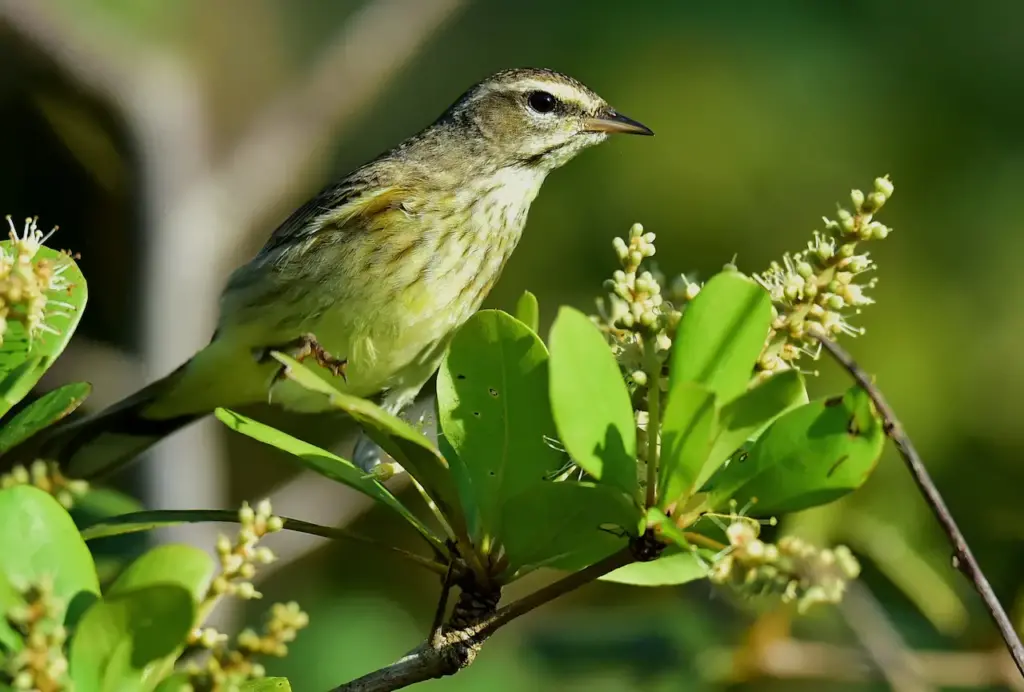
The Louisiana Waterthrush is a large warbler. Adults measure about 5.9 – 6.1 inches long and weigh 18 – 26 grams. The Louisiana Waterthrush is distinguished by its plain brownback and white abdomen streaked black. It also has buff flanks, undertail coverts, and a buff tail. The white supercilium, a line that extends behind the head and flares above the eye, is one of its most distinguishing features. Its feet are a bright pink. This helps to distinguish it from the Northern Waterthrush, which has duller, darker legs with more heavily streaked sides. The underparts of juvenile birds are buffier than those of adults. However, they still have the eye stripe.
Distribution and Range
During the strong>non-breeding season/strong>, it migrates to strong>Central America and the West Indies/strong>, wintering in countries such as’strong>Mexico, Belize, Guatemala, and the Dominican Republic/strong>. During the breeding season, it migrates from the Caribbean to Central America, where it spends the winter. Although rare, vagrants are occasionally spotted in Western states, including Arizona and California.
Preferred Habitat
Louisiana Waterthrush, unlike many other warblers that thrive in forest canopies or shrublands, is closely tied to riparian environments. Its breeding habitat includes mature deciduous and mixed forests with fast-moving, clean streams. It is attracted to forested ravines, rocky streams, and forested riverbanks where it can feed on aquatic invertebrates. Its close association with freshwater ecosystems allows it to be a reliable species for stream quality and forest health.
Breeding and nesting Behaviour
Louisiana Waterthrush can return to its breeding grounds from late March to early April. It is often the first warbler to arrive in the spring. Males establish territories quickly along streams. They sing loudly on perches in order to attract mates and defend the nesting area. It is constructed by the female. It’s usually hidden among tree roots or rock crevices. The nest is made up of leaves, mud and moss. It is located near water. The female will incubate the four to six eggs for approximately twelve to fourteen days. The chicks are fed by both parents. They fledge about 10-12 days following hatching.
Feeding and foraging habits
Louisiana Waterthrushes feed primarily on terrestrial plants. This is uncommon for warblers. Most often, they can be seen hopping along the banks of streams or walking along them. They also constantly bobble their tails. This behaviour helps to identify them. They eat a variety of terrestrial and aquatic invertebrates, including insects and spiders. In search of food, they probe leaf litter and moss. Their unique tail-bobbing walking style and their foraging behaviour give them a wagtail-like appearance.
Songs and Vocalisations
The of the Louisiana Waterthrush has one of the most distinct sounds in the woodland habitat. The song begins with a series of clear, whistled notes followed by a musical warble. This often echoes through the valleys. The powerful song, which carries far and wide, is an important feature of the breeding season. It plays a role in both territory defence and mate attracting. The call is a sharp “chink” that is useful for identification. This is especially true when the bird is out of sight foraging. Birders learn to recognise this species before they ever catch a glimpse.
Northern Waterthrush: How to distinguish it
The most difficult part of bird identification is separating the Louisiana Waterthrush from the closely related Northern Waterthrush. Both species are similar, but there are some subtle differences. While both species look similar, there are subtle differences. The Louisiana Waterthrush is distinguished by a whiter belly, a more clearly defined supercilium and buff-colored wings, while the Northern Waterthrush features a heavier streaking and yellowish underparts. The habitat preference is also important: Louisiana Waterthrushes prefer fast-moving streams while Northern Waterthrushes tend to be found in areas with slow-moving wetlands. According to RSPB, this species is well documented.
Migration and Seasonal Behaviour
Louisiana Waterthrushes are long-distance migrants. They often travel over 1000 miles to migrate between their breeding and wintering grounds. The migration begins in July or August. Birds then migrate south along the Mississippi Flyway to Central America and the Caribbean Islands. In their wintering grounds, they still prefer riparian habitats. This includes tropical forest rivers and lowland riverbanks. The species, despite its elusiveness, is loyal to breeding and wintering territories. It often returns to the same places year after year. According to Cornell Lab of Ornithology, this species is well documented.
Role of an indicator species
The Louisiana Waterthrush, which is dependent on forested, clean streams, is considered to be an indicator of ecosystem health. This species is sensitive to changes in habitat fragmentation, sedimentation and water quality. Conservationists and ecologists monitor Louisiana Waterthrush populations to assess the impact of agriculture, logging and pollution in woodland streams. These birds are usually a sign of a healthy watershed, with thriving aquatic invertebrate communities.
Conservation Status and Threats
The IUCN currently lists the Louisiana Waterthrush as “Least Concern, but it is closely monitored because of declines in breeding habitat and degradation in water quality. The species is at risk from habitat loss due to urbanisation and deforestation. Climate change can also affect rainfall patterns and the water level in breeding and wintering habitats. Conservation strategies are centred on protecting riparian corridors and enforcing standards for water quality, as well as maintaining contiguous forest along stream banks.
Cultural and Environmental Importance
Louisiana Waterthrush is a bird that plays a vital role in nature and ecology. It is one of the earliest warblers in the spring and often regarded as a herald of the new season. The bird’s unique song and its secretive nature make it an exciting challenge for amateur and professional birdspotters. The bird’s presence also highlights the interconnectedness between North and Central American ecologies. It connects forest and stream, continents and islands, and seasons.
Birding Tips: When and Where to Find Them
You’ll have the best chance of spotting a Louisiana Waterthrush if you visit an eastern hardwood forest between March and July. You can find them in the vicinity of fast-moving, rocky rivers with a forest canopy above. The best time to listen for their song is in the early morning, when it echoes through valleys and ravines. It’s important to be patient, as they often blend in with the surroundings. You can locate them by listening for their “chinks” and looking for their tail-bobbing. In the winter, they are harder to locate, but birders who travel to Mexico and the Caribbean can find them in tropical stream habitats.
Final Thoughts:
The Louisiana Waterthrush is a living example of the value of intact forest ecosystems and healthy freshwater systems. Its survival is dependent on the conservation and protection of clean water.
Streams, woodlands that have not been disturbed, and insects that form its diet are all important to this warbler. We can protect these habitats and not only save this warbler, but also many other species that rely on the same conditions. The Louisiana Waterthrush is a beautiful reminder to those who wait near a peaceful stream or venture into the forest.