Loten’s Sunbirds, also referred to as Long-billed Sunbirds or Maroon-breasted Sunbirds, are a captivating species of nectar-feeding birds native to the Indian subcontinent. Known scientifically as Cinnyris lotenius (formerly Nectarinia lotenia), these small, vibrant birds are admired for their slender, curved bills and iridescent plumage. They primarily inhabit regions of southern India and Sri Lanka, where they thrive in a variety of wooded and garden habitats. Unlike some other sunbird species, Loten’s Sunbirds are largely resident, exhibiting non-migratory behavior throughout their range.
Scientific Classification
The Loten’s Sunbird belongs to the family Nectariniidae, which encompasses the diverse group of sunbirds well-known for their nectarivorous diet and dazzling colors. Its scientific name, Cinnyris lotenius, places it in the genus Cinnyris, a group containing many of the long-billed sunbird species. The species was first described by Carl Linnaeus in 1766 under the binomial Motacilla lotenia, and later reassigned to the genus Cinnyris.
There are two recognized subspecies of Loten’s Sunbird. The nominate subspecies, Cinnyris lotenius lotenius, is found exclusively in Sri Lanka. The other, Cinnyris lotenius hindustanicus, occupies peninsular India, ranging from northern Maharashtra and northeastern Andhra Pradesh southwards to the southern tip of the subcontinent. This distinction reflects subtle variations in plumage and distribution but both subspecies share similar ecological roles and physical characteristics.






Geographic Range & Distribution
Loten’s Sunbirds are native to South Asia, with their distribution largely confined to southern India and Sri Lanka. The nominate subspecies, C. l. lotenius, is endemic to Sri Lanka, where it inhabits dry and moist deciduous forests, scrublands, and well-vegetated gardens, often at low to moderate elevations. In India, C. l. hindustanicus is found across peninsular regions, including states such as Maharashtra, Karnataka, Tamil Nadu, and Andhra Pradesh.
These birds prefer habitats rich in flowering plants, as nectar forms the cornerstone of their diet. They are commonly observed in urban gardens, forest edges, and plantations, adapting well to human-modified landscapes. Their range does not extend beyond these regions, and they are considered non-migratory, typically maintaining territories year-round. However, local movements can occur in response to the availability of nectar-bearing flowers.
Physical Description
Loten’s Sunbirds are diminutive birds measuring approximately 12 to 13 centimeters (4.7 to 5.1 inches) in length, including their often elongated tail feathers. Adult males are particularly striking during the breeding season, boasting a glossy, iridescent purple plumage on the head, throat, and upper breast, contrasted with a grey-brown belly. This vibrant coloration, combined with their distinctive long, sickle-shaped bills, helps distinguish them from the similar Purple Sunbird (Cinnyris asiaticus), which is smaller and has a shorter bill.
The male’s bill is specially adapted for nectar feeding, being long, slender, and decurved, which allows access to deep tubular flowers. Their tongues are tubular and brush-tipped, a common adaptation among nectarivorous birds to efficiently extract nectar from blossoms.
Outside the breeding season, males enter an eclipse phase in which their plumage changes drastically: the upperparts turn yellowish-grey, darker than the non-breeding Purple Sunbird, while the breast becomes yellow with a central blue streak extending to the belly. Females exhibit more subdued colors with yellow-grey upperparts and a yellowish underside, lacking the faint supercilium — a pale eyebrow line — that is often found in females of related species. Both sexes have relatively fast and direct flight patterns, capable of quick maneuvers among branches and flowers.
Behavior & Diet
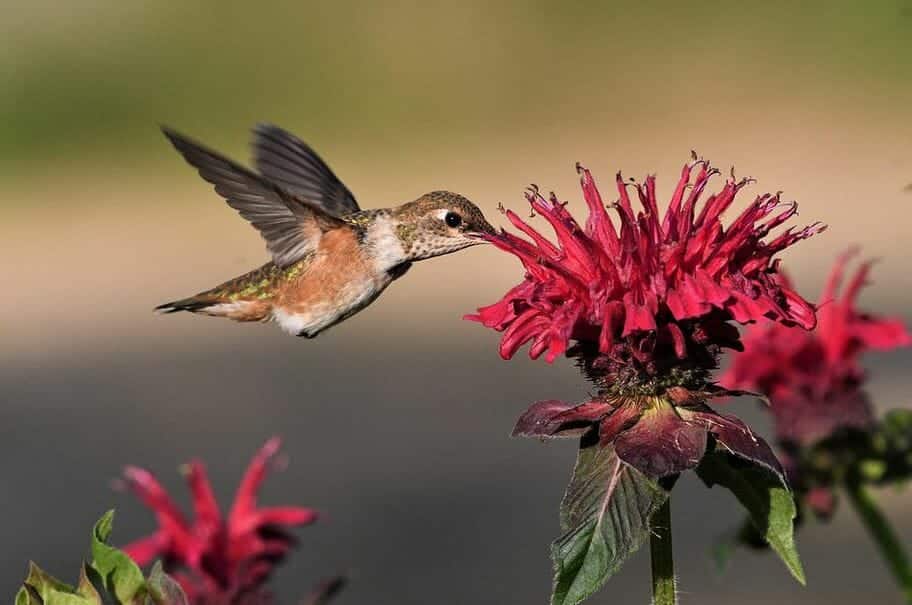
Like other sunbirds, Loten’s Sunbirds are primarily nectarivores, feeding predominantly on the nectar of flowering plants. They are frequently seen perching while feeding, though they are capable of short hovering flights similar to hummingbirds. However, unlike hummingbirds that often hover extensively, Loten’s Sunbirds prefer to land on flowers or nearby branches to sip nectar. Their long, curved bills and brush-tipped tongues enable them to access nectar from a variety of tubular flowers that might be inaccessible to other birds.
In addition to nectar, these sunbirds supplement their diet with small insects and spiders, especially during the breeding season when the protein demands of raising chicks increase. Insects provide essential nutrients that nectar alone cannot supply. They forage actively, gleaning prey from leaves, flowers, and branches. This insectivorous behavior also helps control insect populations in their habitats, demonstrating their ecological importance.
Loten’s Sunbirds are territorial and can be seen defending feeding territories aggressively, especially males during the breeding season. Their vocalizations are relatively simple, characterized by sharp, high-pitched calls described as “chit chit” sounds. These calls serve as both alarm signals and territorial markers.
Breeding & Reproduction
The breeding season of Loten’s Sunbirds generally coincides with the flowering period of nectar-producing plants to ensure ample food resources for both adults and their offspring. Nesting typically occurs during the warmer months, with timing varying slightly depending on geographic location and local conditions.
Females construct small, purse-shaped nests suspended from thin branches or twigs, often well camouflaged among foliage. These nests are intricately woven from fine plant fibers, spider webs, and lichens, providing both strength and concealment. The average clutch consists of two eggs, which are smooth and pale, often white or pinkish with fine speckles. According to Audubon Society, this species is well documented.
The incubation period lasts approximately 14 to 16 days and is primarily the female’s responsibility. During this time, the male continues to defend the territory and provide food for the incubating female. Once hatched, the chicks are altricial, meaning they are born blind and featherless, requiring intensive parental care. Both parents participate in feeding the young, predominantly with insects to meet the high protein demand essential for growth. According to eBird, this species is well documented.
Fledging occurs roughly two to three weeks after hatching. Juveniles resemble females but gradually develop the males’ iridescent plumage as they mature. Breeding pairs typically raise one or two broods per year, depending on environmental conditions.
Conservation Status
According to the International Union for Conservation of Nature (IUCN), Loten’s Sunbird is currently classified as a species of Least Concern. This status reflects its relatively wide distribution in southern India and Sri Lanka, and its apparent adaptability to a range of habitats, including urban gardens and secondary growth forests.
Despite this reassuring status, habitat loss and degradation due to deforestation, urbanization, and agricultural expansion could pose localized threats. As nectar feeders, Loten’s Sunbirds depend heavily on the availability of flowering plants, which may be affected by changes in land use and climate. Conservation efforts that promote the preservation of native flora and the planting of nectar-rich species in gardens and parks can support their populations.
Because these birds are common and well-adapted to human presence, they serve as excellent ambassadors for urban biodiversity, drawing attention to the importance of maintaining green spaces that support pollinators and nectarivorous birds.
Interesting Facts
Loten’s Sunbirds exhibit several fascinating traits that highlight their ecological niche and evolutionary adaptations. Their long, curved bills are perfectly designed for extracting nectar from flowers that other birds cannot reach, underscoring the co-evolution between sunbirds and flowering plants. Unlike hummingbirds, which are found in the Americas, sunbirds including Loten’s Sunbird belong to an entirely different family and have evolved similar feeding adaptations independently — a classic example of convergent evolution.
Another intriguing aspect is their iridescent plumage, which appears to shimmer and change color depending on the angle of sunlight. This effect is due to the microscopic structure of their feathers rather than pigment alone, a feature shared by many nectarivorous birds and believed to play a role in sexual selection and territorial displays.
In addition to their ecological role as pollinators, Loten’s Sunbirds contribute to controlling insect populations, balancing both plant and animal dynamics within their ecosystems. They are often observed bathing and preening, behaviors essential for maintaining the condition of their delicate feathers, which are critical for efficient flight and thermoregulation.
For birdwatchers and wildlife photographers, Loten’s Sunbirds offer an enchanting subject, combining dazzling colors with swift, lively behavior. Their presence often signals a healthy ecosystem rich in flowering plants and insect life, making them valuable indicators for conservationists monitoring habitat quality.
Conclusion
Loten’s Sunbirds (Cinnyris lotenius) are remarkable representatives of the sunbird family, embodying the beauty and complexity of nectar-feeding birds in South Asia. From their shimmering plumage and specialized feeding adaptations to their vital role in pollination and insect control, these small birds enrich the biodiversity of southern India and Sri Lanka. Their stable population and ability to thrive in human-altered landscapes offer hope for their continued survival, provided that efforts to conserve native habitats and floral resources persist.
For nature enthusiasts, students, and birdwatchers alike, observing Loten’s Sunbirds offers a glimpse into the intricate relationships between birds and plants, as well as the evolutionary marvels that enable such specialized lifestyles. Their story is a vivid reminder of the delicate balance sustaining life across diverse ecosystems and the importance of protecting it for future generations.