The Lesser White Fronted Goose is a small migratory goose that is both fascinating biologically and critically endangered. This unique waterbird is closely related to the larger Greater White Fronted Goose and Anser Albifrons. It stands out for its small size, striking facial markings, and its fragile conservation status. The Lesser White Fronted Goose can be identified by its conspicuous white blaze on its forehead and face. These geese, native to the northernmost regions in Eurasia, have become a symbol for the fragile condition of wetland ecosystems and the urgent necessity of international conservation cooperation. The Lesser White Fronted Goose is a species with global ecological importance. From its shrinking breeding populations in Europe and Asia to its migration patterns that span continents.
Range and Distribution: Wide Migration, Narrow Margin of Survival
Lesser White-fronted Goose breeds in northern Asia, primarily in Siberia. It prefers tundra wetlands, northern forest zones, near lakes, rivers and marshes. It was once common in Europe and particularly in Scandinavia. However, the number of this bird has dramatically declined in this region. As a result, several countries–most importantly Sweden and Finland– have launched reintroduction programmes in an attempt to bring the goose back to its former range. These efforts are promising but still limited.
Lesser White-fronted Geese migrate south during the winter. The majority of birds travel to Southeastern Europe and the Middle East. Wintering grounds include Greece, Turkey, Iraq and Iran. Western Europe records occasional sightings of this vagrant bird. Great Britain also occasionally reports individual sightings at well-known wetlands such as WWT Slimbridge, Gloucestershire. Slimbridge sightings inspired conservationist Sir Peter Scott, who founded the Wildfowl & Wetlands Trust, an institution that continues advocating for waterbird conservation worldwide.
population collapses in European breeding areas have led to a significant decline in modern sightings of this goose in Britain and Western Europe. Many sightings outside of its natural range may be escaped captives. This is because the species is popular in wildfowl collections due to its beautiful appearance and manageable size.
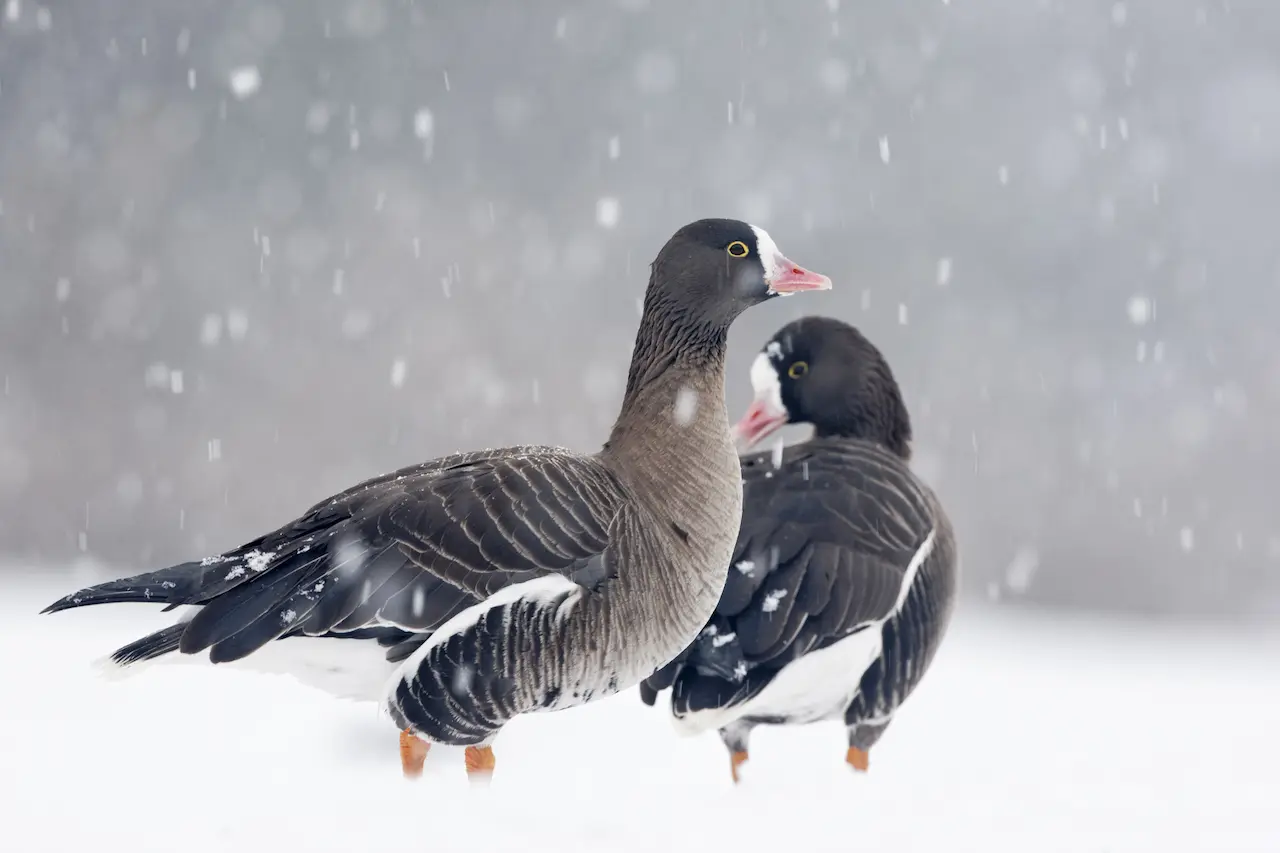
Identification and Appearance of Small But Striking
The size of the Smaller White-fronted Goose makes it unique. It is one of the smallest wild goose species in the Northern Hemisphere, measuring only 53 to 66 cm long. The size difference between the smaller Greater White-fronted Goose and the larger is important when comparing them.
Both species have orange legs, white markings on their faces, and black bars on their bellies. These features easily distinguish them from the Greylag Goose, which has flesh colored legs and bills and a greyish upperwing. The Lesser White Fronted Goose, however, has a few unique characteristics that help in identification.
- The Greater White-fronted Geese do not have a yellow eye-ring.
- A smaller and more compact body
- A shorter, stubbier bill
- The crown is adorned with a white blaze on the face
These characteristics make the species relatively easy to identify with a close look, though distance and poor lighting can complicate matters, particularly in mixed goose flocks during migration or winter roosts.
Behaviour and Social Structure
The Lesser-White-Fronted Goose forms flocks that are very social. This is especially true during migration or in wintering regions. It associates with other species of geese, such as Greater White-fronted Geese and Greylag Geese, outside the breeding season. It displays typical goose behaviour despite its small size. It is vocal, vigilant, and responds to perceived threats. This is especially true during vulnerable times such as breeding and moult.
The species is usually monogamous, with pairs that return to the same breeding grounds every year. Nests are hidden by vegetation near water and begin to be built in late spring, when the tundra snow begins to melt. The clutches usually contain three to five eggs. They are only incubated by the female while the male protects the territory. The goslings can feed and walk shortly after hatching. However, they are still under parental supervision for a few weeks. According to RSPB, this species is well documented.
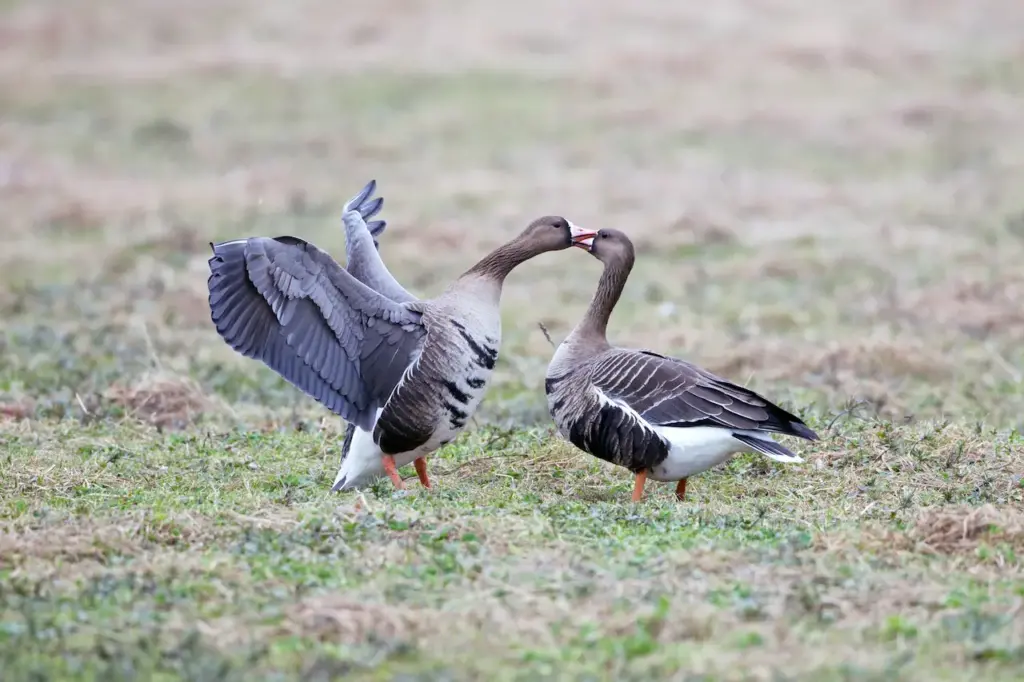
Feeding Habits and Diet: Herbivores in the Marshlands
The Lesser White Fronted Goose feeds primarily on a variety of plant material. This includes: According to eBird, this species is well documented.
- Grasses, sedges and grasses
- Leaves, roots, and shoots
- Stems, seed heads and other
- Fruits and herbaceous plants
- Aquatic plants and wetland habitats
- Grain and potatoes are particularly popular in winter, as well as Agricultural Crops.
The species can survive in a variety of environments. From pristine wetlands to farmland cultivated. However, habitat destruction, agricultural intensification and other factors have reduced the availability of natural food grounds, particularly during winter.
Note for nature lovers: Although it may be tempting to offer geese bread, crackers and processed snacks, these foods are not nutritious. These foods may cause malnutrition and wing defects. They can also lead to behaviour dependency. You can feed wild geese, including the Lesser White Fronted Goose, with small amounts of wheat or lettuce.
Conservation Status of A Goose on the Brink
According to the IUCN Red List, it is currently listed as Vulnerable, though some conservationists argue that it should be considered ‘Endangered based on recent population trends. The IUCN Red List lists it as Vulnerable. However, some conservationists believe that it should be classified as Endemic due to recent population trends.
The decline of the Lesser White-fronted Goose in Europe is particularly dramatic. The Lesser White Fronted Goose, once a common breeder in Fennoscandia, has nearly disappeared from these areas. Conservation organisations have taken a number of measures in response to the situation, with support from governments and international agreements.
- Captive breeding programs and reintroduction, especially in Sweden and Finland
- Protecting migratory stopover and wintering sites
- Protection from hunting laws in important countries
- Satellite tracking to better understand migration patterns
The species is listed in the Agreement on the Conservation of African-Eurasian Migratory Waterbirds, which encourages cooperation among range states for coordinated conservation measures.
The results of these efforts have been mixed. Despite localised increases in population thanks to reintroduction programs, wild populations continue to suffer due to illegal hunting and unprotected stopping over habitats. The fight to save the Lesser White-fronted Goose has not yet ended.

Two Lesser White-fronted Geese Floating on the Water
Significance of Cultural and Conservation Value
Conservationists have been captivated by the Lesser White Fronted Goose. The presence of this species at Slimbridge and the subsequent establishment by Lord Peter Scott of the World Wildlife Trust marked a turning point in British conservation efforts. This species represents both the challenges and the victories in wildlife conservation.
Birdwatchers love it, especially those who are interested in rare species or migrant birds. Many birders consider a sighting of the Lesser White-fronted Goose wild in Europe to be a bucket-list moment. Due to the proliferation and crossbreeding of hybrids and captive birds, it is now necessary to have a keen eye as well as experience in the field to identify the bird, especially during summer when wild birds are less likely to be seen.
Final Thoughts
The Lesser White-fronted Goose deserves protection and recognition for its beauty and ecological significance. Every aspect of the life of this species, from its long migrations across continents to nesting in remote tundras, reminds us how intricately interconnected our planet is. Its survival is not only dependent on regulated hunting laws or protected wetlands, but also on a global effort that preserves migratory pathways and ensures no link in the web of life is broken.
Consider supporting groups like the AEWA and WWT that work to protect this species and others. You’ll help ensure that the high-pitched, haunting calls of the lesser white-fronted goose will continue to resound across the sky for generations to come.