Latham’s Snipe (Gallinago hardwickii), also commonly known as the Japanese Snipe, is a fascinating medium-sized migratory bird belonging to the family Scolopacidae. Renowned for its cryptic plumage and elusive behavior, this species captivates birdwatchers and nature enthusiasts alike. It is best recognized for its long bill, which it skillfully uses to probe soft mud for invertebrates, and its remarkable migratory journey spanning thousands of kilometers between its breeding grounds in northern Asia and its non-breeding habitats in Australia. Despite its subtle appearance, Latham’s Snipe plays a vital role in wetland ecosystems and demonstrates intriguing behaviors that highlight the complexity of migratory shorebirds.
Scientific Classification
Latham’s Snipe is classified within the genus Gallinago, which comprises a group of birds commonly referred to as snipes. Its full scientific name is Gallinago hardwickii. The species was first described scientifically in 1833 by John Edward Gray. It belongs to the larger family Scolopacidae, which includes sandpipers, curlews, and other similar wading birds. This family is characterized by species adapted to wetland habitats with long bills and legs suited for probing mud and shallow water for food. Within its genus, Latham’s Snipe is closely related to other snipes such as the Swinhoe’s Snipe (Gallinago megala) and the Pin-tailed Snipe (Gallinago stenura), sharing many morphological traits but differing in subtle ways, including size and vocalizations. The taxonomic classification of Latham’s Snipe reflects its evolutionary adaptations to diverse wetland environments across Asia and Oceania.
Geographic Range & Distribution
Latham’s Snipe has a distinctive migratory range that encompasses parts of eastern Asia and the Australasian region. It primarily breeds in northern Japan, especially on the island of Hokkaido, which provides the cool, moist habitats suitable for nesting. Smaller breeding populations are found on the island of Honshu in Japan and extend into the eastern Russian mainland, including areas close to the Sea of Okhotsk. Historically, breeding was also recorded on Sakhalin Island and the Kuril Islands, though these populations are now much reduced or absent. After breeding season, the entire population migrates southward to spend the non-breeding months in eastern Australia. This migration is long-distance, covering more than 7,000 kilometers in some cases, making Latham’s Snipe one of the more impressive migratory shorebirds in the region.


During migration, Latham’s Snipe is occasionally recorded in Taiwan, the Philippines, and New Guinea, which serve as stopover sites where the birds rest and feed before continuing their journey. In Australia, the species is widespread, frequenting freshwater wetlands along the eastern seaboard, from Queensland down to Victoria and Tasmania. Sightings are rare but notable in New Zealand, where the bird is considered a vagrant. The species’ wide geographic range highlights its adaptability and the importance of conserving habitats across multiple countries to ensure its survival.
Physical Description
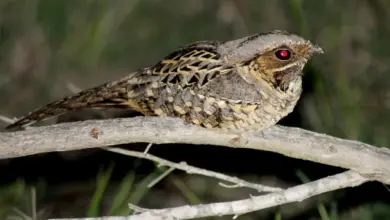
Latham’s Snipe measures approximately 29 to 33 centimeters in length, with a wingspan ranging from 50 to 54 centimeters. Weight varies between 150 and 230 grams, making it a moderately sized member of the snipe family. The bird’s most distinctive feature is its long, straight bill, which can be nearly as long as its head, adapted for probing into soft, muddy substrates in search of food. The plumage is highly cryptic and intricately patterned with an array of black, brown, buff, and white markings that provide excellent camouflage against grassy and muddy backgrounds.
The upperparts are predominantly streaked and barred with dark brown and black, interspersed with pale buff lines that break up the bird’s outline. The underparts tend to be lighter, with a mottled appearance that blends seamlessly into the surroundings. The wings are broad and rounded, facilitating agile flight maneuvers during both foraging and aerial displays. The tail is relatively short but features distinctive white edges visible during flight. Juvenile birds resemble adults but may appear slightly duller and less sharply marked. Sexual dimorphism is minimal in this species, making males and females difficult to distinguish by plumage alone.
Behavior & Diet
Latham’s Snipe is primarily a solitary and secretive bird, often remaining motionless in dense vegetation to avoid detection. It is most active at dawn and dusk, times when it forages actively in wetlands and grasslands. Its diet consists mainly of small invertebrates, including insects such as beetles, flies, and their larvae, worms, mollusks, and crustaceans. The long bill is instrumental in probing deep into soft mud and wet soil to extract hidden prey. Seeds and other plant material occasionally supplement its diet, especially during migration when invertebrate availability may be limited.
The bird exhibits impressive flight skills, both during migration and in its characteristic display flights performed during the breeding season. These displays include rapid, erratic movements and a distinctive “drumming” sound produced by vibrating the tail feathers during steep dives. This vocalization plays a crucial role in territorial defense and mate attraction. On the ground, Latham’s Snipe is known for its cautious and deliberate movements, often freezing when disturbed before flushing suddenly into flight. This behavior, combined with its cryptic plumage, makes it a challenging species to observe in the wild.
Breeding & Reproduction
The breeding season for Latham’s Snipe typically occurs from May to August in its northern Asian range. Males establish display territories within suitable habitats such as alpine moorlands, grasslands, rough pastures, young tree plantations, and cultivated fields. During this period, males engage in elaborate aerial display flights, often at dawn and dusk, to attract females. The “drumming” sound produced by tail feathers is a hallmark of these displays and serves as both a sexual signal and a territorial announcement. According to RSPB, this species is well documented.
Nesting occurs on the ground, where a shallow scrape is lined with grasses and leaves, usually concealed within dense vegetation to protect against predators. The female typically lays a clutch of four eggs, which are olive-brown with darker blotches, providing effective camouflage. Incubation lasts approximately 19 to 21 days and is primarily the responsibility of the female. After hatching, chicks are precocial and leave the nest quickly, capable of feeding themselves but still relying on parental protection. Juveniles fledge within a few weeks and prepare for the long migration to their southern non-breeding grounds. Breeding success is closely tied to habitat quality, particularly the availability of moist, sheltered areas free from disturbance. According to Audubon Society, this species is well documented.
Conservation Status
According to the International Union for Conservation of Nature (IUCN), Latham’s Snipe is currently classified as a species of Least Concern, reflecting its relatively large population and broad distribution. However, the species faces significant threats that could impact its numbers if not carefully managed. Habitat loss and degradation, particularly the drainage of wetlands for agriculture, urban development, and infrastructure projects, pose ongoing challenges. The quality of breeding and non-breeding habitats is critical for the species’ survival, as both stages require specific wetland conditions.
In Australia, Latham’s Snipe was historically hunted as a gamebird, but it has been fully protected since the 1980s. Conservation efforts focus on safeguarding wetland habitats, monitoring population trends, and raising awareness among landowners and the public. International cooperation is essential given the bird’s migratory nature, requiring habitat protection across multiple countries in Asia and Australasia. Climate change also presents an emerging threat by potentially altering wetland ecosystems and migratory patterns. Continued research and habitat conservation will be vital to ensuring that Latham’s Snipe remains a thriving component of wetland biodiversity.
Interesting Facts
Latham’s Snipe is named after John Latham, an English ornithologist who made significant contributions to the study of Australian birds. One of the most remarkable aspects of this species is its long-distance migration, with individuals traveling up to 8,000 kilometers between Japan and Australia every year. Despite this arduous journey, the birds show strong site fidelity, often returning to the same breeding and non-breeding sites annually.
The bird’s “drumming” display is not vocal but mechanical, produced by air rushing over its tail feathers during aerial dives—a unique adaptation among shorebirds. This sound can carry over long distances, making it an important communication tool in dense habitats. Additionally, Latham’s Snipe is one of the few shorebirds to breed successfully in alpine moorlands, showcasing its ecological versatility.
For photographers and birdwatchers, encountering Latham’s Snipe is a rewarding challenge due to its secretive nature and excellent camouflage. Observing its behavior during the breeding season offers insights into the complex courtship rituals of migratory waders. The species also serves as an indicator of wetland health in its range, highlighting the importance of conserving diverse aquatic ecosystems.
In summary, Latham’s Snipe is a remarkable species whose life history embodies the intricate connections between distant ecosystems across the Asia-Pacific region. Its cryptic appearance, extraordinary migratory feats, and specialized behaviors make it a compelling subject for study and conservation. Protecting this bird and its habitats ensures the preservation of rich wetland biodiversity and the continuation of one of nature’s great migratory journeys.