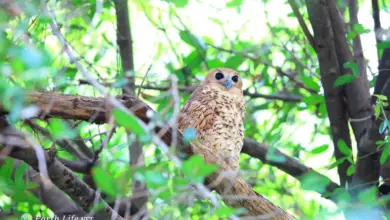
The Large Woodshrike (Tephrodornis gularis) is a striking bird species known for its robust appearance and distinctive vocalizations. Belonging to the family Prionopidae, commonly referred to as the helmetshrikes, the Large Woodshrike occupies a unique position in avian taxonomy. These birds inhabit a broad swath of Asia’s tropical and subtropical forests, where they play an important ecological role as both predators of insects and participants in forest dynamics. Despite being relatively inconspicuous in appearance compared to more flamboyant species, the Large Woodshrike’s behaviors, adaptations, and taxonomy offer an intriguing glimpse into the diversity of forest birdlife in South and Southeast Asia.
Scientific Classification
The Large Woodshrike is classified within the family Prionopidae, a group commonly known as helmetshrikes due to the distinctive fleshy wattles and crests seen in some of its relatives. Historically, woodshrikes like Tephrodornis gularis were sometimes placed within the Campephagidae family (cuckooshrikes) because of certain morphological similarities and overlapping ecological niches. However, advances in molecular phylogenetics have clarified their placement, confirming the Prionopidae as the appropriate family for the genus Tephrodornis.
The taxonomic history of the Large Woodshrike is complex. The species was first described scientifically as Lanius gularis by Stamford Raffles in 1822. Shortly thereafter, Coenraad Temminck described a very similar bird as Lanius virgatus in 1824. Both names were later reassigned to the genus Tephrodornis. For many years, these two names were treated as separate species, but subsequent taxonomic revisions determined that they actually represent the same species, with gularis recognized as the valid name.





Further complicating matters, an older, obscure name, also Lanius gularis, had been published by Bechstein in 1811, creating a homonymy issue. Despite this, the International Code of Zoological Nomenclature’s (ICZN) rules on reversal of precedence mean that Raffles’ 1822 name remains valid and should not be replaced by Temminck’s virgatus. This careful adherence to nomenclatural rules ensures stability in naming conventions for this species.
There are several recognized subspecies across the bird’s range, with the population in southwest India sometimes treated as a distinct species known as the Malabar Woodshrike (Tephrodornis sylvicola), though this is still debated among ornithologists.
Geographic Range & Distribution
The Large Woodshrike inhabits a wide geographic range across South and Southeast Asia, making it one of the more broadly distributed woodshrike species. Its range extends from the foothills of the Himalayas through much of northeastern India and Nepal, spreading eastward into Bangladesh and Bhutan. From there, it continues through Myanmar, Thailand, Laos, Cambodia, and Vietnam.
Further south, the Large Woodshrike is found in parts of the Malay Peninsula, including Malaysia and Singapore, and across the islands of Indonesia such as Sumatra, Borneo, and Java. It also occurs in southern China, where it inhabits forested regions in the provinces bordering Southeast Asia. This wide distribution indicates a high degree of ecological adaptability, allowing the species to thrive in a variety of forest types.
Its preferred habitats include temperate and subtropical forests, as well as tropical moist lowland and montane forests. The species is also known to inhabit mangrove forests in coastal areas. The diversity of habitats used by the Large Woodshrike reflects its flexibility in seeking out food and nesting sites, although it generally favors dense understory and mid-canopy layers where it can forage efficiently.
Physical Description
The Large Woodshrike is a medium-sized bird, measuring approximately 24 to 27 centimeters in length, with a wingspan ranging from 30 to 35 centimeters. The average weight of an adult is around 50 to 70 grams, making it a relatively sturdy species within its family.
In terms of plumage, the Large Woodshrike is predominantly grayish-brown with subtle barring and streaking across the underparts that provides excellent camouflage in dappled forest light. The head is marked by a broad, prominent black throat patch—hence the name gularis, derived from Latin for “throat”—which contrasts sharply with the pale gray or whitish cheeks and underparts. The back and wings are a muted brown-gray, often with faint barring or mottling that helps break up the bird’s outline among branches.
One distinguishing feature is the bird’s strong, hooked bill, adapted for its insectivorous diet. The bill is typically dark, robust, and slightly curved downward, effective for grasping and manipulating prey. The legs are relatively long and strong, supporting its habit of hopping through foliage and branches as it forages.
Juvenile Large Woodshrikes tend to have less distinct throat markings, with more mottled and buffy plumage that gradually matures into the adult pattern. Both sexes are similar in appearance, making sexual dimorphism minimal or absent in this species.
Behavior & Diet
The Large Woodshrike is primarily insectivorous, feeding on a wide range of arthropods including beetles, caterpillars, grasshoppers, and various flying insects. It is an active forager, often seen moving through the mid to upper canopy layers of forests, gleaning insects from leaves and branches. Its strong, hooked bill allows it to catch and subdue prey effectively.
This species exhibits a behavior known as “sallying,” where it perches quietly before darting out to snatch flying insects mid-air or from foliage, returning to its perch to consume the prey. It also probes under bark and among leaf litter, demonstrating versatility in hunting techniques. Occasionally, it may consume small lizards or other soft-bodied prey, although insects make up the bulk of its diet.
The Large Woodshrike is known for its vocalizations, which include a series of melodious whistles and harsh chattering calls. These vocalizations serve multiple functions, including territory defense and communication between mates or flock members. The bird is often observed singly or in pairs, but may join mixed-species foraging flocks, especially outside of the breeding season. According to Cornell Lab of Ornithology, this species is well documented.
Generally sedentary, Large Woodshrikes maintain territories within suitable forest habitats, although some populations may undertake local seasonal movements in response to food availability or climatic conditions. This species is not considered migratory on a large scale but adapts its range and activity patterns according to environmental factors. According to BirdLife International, this species is well documented.
Breeding & Reproduction
The breeding season of the Large Woodshrike varies geographically but generally coincides with the onset of the rainy season in tropical regions, when insect prey is most abundant. Nesting typically occurs from March to June in most parts of its range, though some populations may breed earlier or later depending on local conditions.
Large Woodshrikes build cup-shaped nests constructed from fine twigs, grasses, and leaves, often lined with softer plant fibers for insulation. These nests are usually placed in the fork of a tree branch, well concealed within dense foliage to protect against predators.
Both male and female participate in nest building, and the female typically lays a clutch of two to four eggs. The eggs are pale with reddish or brown speckles, blending well with the nest’s interior. Incubation lasts approximately two weeks, during which both parents share duties to keep the eggs warm and protected.
After hatching, the chicks are altricial—born blind and helpless—and rely entirely on their parents for food and protection. The nestlings fledge after around two to three weeks, gradually learning to forage independently. Parental care continues for a short period post-fledging to ensure the young birds develop the necessary skills to survive on their own.
Conservation Status
The International Union for Conservation of Nature (IUCN) currently lists the Large Woodshrike (Tephrodornis gularis) as a species of Least Concern. This status reflects its broad distribution and relatively stable population trends across most of its range. The species benefits from its adaptability to a range of forested habitats, including secondary forests and lightly disturbed areas.
However, habitat loss and fragmentation due to deforestation, agricultural expansion, and urban development pose localized threats, particularly in regions experiencing rapid landscape changes. Mangrove forests, which form part of the Large Woodshrike’s habitat, are especially vulnerable to human activities and climate change impacts such as sea-level rise.
Despite these challenges, the Large Woodshrike’s presence in numerous protected areas and its ability to utilize various forest types provide resilience against immediate threats. Continued monitoring of population trends and habitat health is essential to ensure this species remains secure in the future.
Interesting Facts
The Large Woodshrike’s name derives from the Latin term gularis, meaning “throated,” a nod to its distinctive dark throat patch. This feature not only aids in species identification but also plays a role in visual signaling during social interactions.
Unlike many other forest birds that remain skulking and silent, the Large Woodshrike is known for its loud, melodious calls that can carry through dense vegetation. This vocal prowess makes it a favorite among birdwatchers and photographers seeking to locate the species in its natural habitat.
Although often solitary or in pairs, Large Woodshrikes are sometimes observed joining mixed-species flocks. These flocks provide safety in numbers and increase foraging efficiency, highlighting an interesting example of interspecific cooperation in tropical bird communities.
In some parts of its range, the Large Woodshrike’s subspecies exhibit subtle variations in plumage and vocalizations, which continue to intrigue ornithologists studying speciation and evolutionary relationships within the genus Tephrodornis.
Finally, despite its name, the Large Woodshrike is not actually a true shrike (family Laniidae) but belongs to a distinct family with different evolutionary origins. This is a reminder of the complexities and surprises that taxonomy can reveal about bird relationships and biodiversity.
Overall, the Large Woodshrike remains a fascinating species for those interested in Asian forest birds, offering insights into adaptation, ecology, and the intricate dynamics of tropical ecosystems.