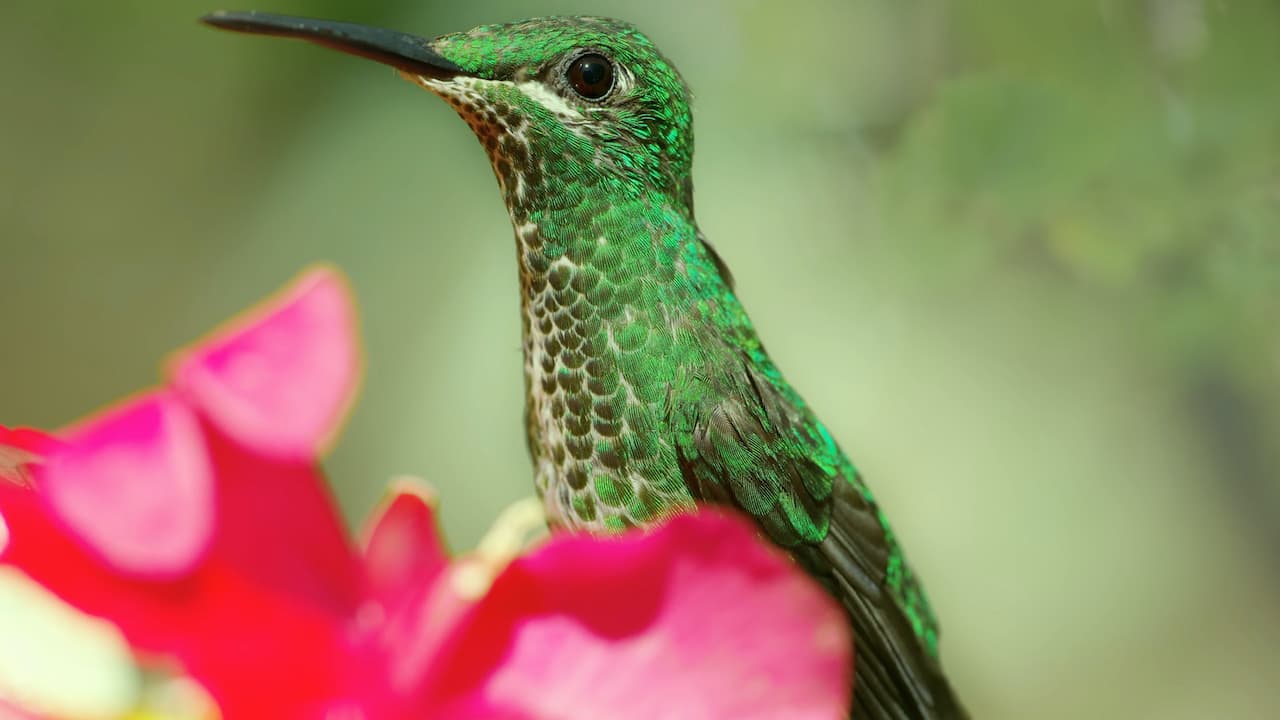
The Summer Tanager (Piranga rubra) is a strikingly colorful bird native to the Americas, renowned for its vibrant plumage and distinctive vocalizations. Once classified within the tanager family (Thraupidae), this species has since been reclassified into the cardinal family (Cardinalidae) due to genetic and morphological studies. Widely admired by birdwatchers and nature enthusiasts, the Summer Tanager is a medium-sized songbird whose presence signals the warmth and vitality of summer forests across much of the United States and Central and South America. This article delves into the fascinating taxonomy, distribution, physical characteristics, behaviors, breeding habits, and conservation status of the Summer Tanager, offering a comprehensive look at one of North America’s most colorful avian residents.
Scientific Classification
The Summer Tanager belongs to the genus Piranga, a group of birds historically placed within the tanager family (Thraupidae) but now recognized as part of the cardinal family (Cardinalidae). Its scientific name is Piranga rubra, with “rubra” referring to the red coloration characteristic of males. The shift from Thraupidae to Cardinalidae followed molecular phylogenetic research that revealed closer genetic ties with cardinals and grosbeaks than with true tanagers. This reclassification underscores the complexity of avian taxonomy and the importance of genetic studies in clarifying evolutionary relationships.
Within the species, two subspecies are commonly recognized based on geographic distribution and subtle differences in plumage and morphology. The eastern subspecies, Piranga rubra rubra, tends to have shorter wings, tails, and legs, while the western subspecies, Piranga rubra cooperi, exhibits paler plumage and slightly longer appendages. These distinctions assist ornithologists and birdwatchers in identifying populations across the species’ broad range.






Geographic Range & Distribution
The Summer Tanager breeds primarily in the southern and eastern United States, with its range extending from southern Pennsylvania and southern Illinois southward through the Gulf Coast states and into parts of northern Mexico. During the breeding season, open woodlands with mature oak trees are particularly favored habitats, as these provide abundant insect prey and suitable nesting sites. Oaks also support the fruiting plants and berry-producing shrubs that complement the bird’s diet.
After breeding, Summer Tanagers migrate southward, spending the winter months in Mexico, Central America, and northern parts of South America, reaching as far as Bolivia and Brazil. This extensive migration covers thousands of miles and reflects the bird’s adaptability to varying climates and habitats. Occasional vagrants have been recorded far outside the normal range, including extremely rare sightings in Western Europe, though these are considered accidental and are not part of the species’ typical distribution.
Physical Description
The Summer Tanager is a medium-sized songbird, measuring approximately 17 to 21 centimeters (6.7 to 8.3 inches) in length, with a wingspan ranging from 28 to 33 centimeters (11 to 13 inches). Adults typically weigh around 30 grams (about 1.1 ounces), making them relatively light for their size. The species exhibits pronounced sexual dimorphism, with males and females differing markedly in plumage.
Males are best known for their bright, rose-red to orange-red plumage that covers the entire body, including the head, back, wings, and tail. Unlike the similar-looking Scarlet Tanager (Piranga olivacea), Summer Tanagers lack black wings and tails; instead, their wings and tails are a matching red. Males have stout, pointed bills suited to their insectivorous diet. Although typically lacking a crest, males can raise slight feather tufts on their heads when agitated or excited, adding to their expressive appearance.
Females contrast sharply with males, displaying an olive-green coloration on their upperparts and a warm yellow to orange-yellow on their underparts. Their wings and tails are olive-brown, and they feature conspicuous narrow yellow edging on their wing coverts, making them distinguishable from females of similar species. Some older females may exhibit patches of male-like red plumage, a phenomenon known as delayed plumage maturation or partial male pigmentation.
Juvenile Summer Tanagers resemble females in coloration but can be identified by the gradual appearance of red patches in young males during their first winter. This gradual color change helps fledglings transition into adult plumage over time.
Behavior & Diet
Summer Tanagers are primarily insectivorous, feeding largely on bees, wasps, and other flying insects. They are one of the few bird species known for their ability to catch and eat bees and wasps safely, often removing stingers before consumption. This specialized diet helps control populations of stinging insects in their habitats. In addition to insects, Summer Tanagers consume various fruits and berries, especially during migration and in the winter months when insects are less abundant.
Behaviorally, Summer Tanagers are arboreal and often forage high in tree canopies, gleaning insects from leaves and branches. They hunt by sallying out from perches to catch flying insects mid-air, exhibiting agile and deliberate flight maneuvers. Their vocalizations are notable for a clear, melodious song that resembles the American Robin (Turdus migratorius) but is more monotonous and less nasal. The song typically consists of repetitive, simple phrases, often with just three or four distinct notes.
During the breeding season, males are territorial and use their songs to establish and defend their nesting areas. Outside the breeding season, Summer Tanagers are social and may form loose flocks with other migratory birds, particularly during migration and on wintering grounds. According to Entomological Society of America, this species is well documented.
Breeding & Reproduction
The breeding season for Summer Tanagers generally spans from late spring to early summer, depending on the geographic location. Males arrive on breeding grounds ahead of females to establish territories within suitable open woodlands, especially those dominated by oaks. These habitats provide abundant food and nesting opportunities. According to iNaturalist, this species is well documented.
Females build cup-shaped nests usually placed high in the fork of a tree branch, often concealed by foliage. The nest is constructed using twigs, grasses, and other plant materials and lined with softer materials for comfort. Clutch size typically ranges from three to five eggs, which are pale blue or greenish with darker spots.
Incubation is performed solely by the female and lasts approximately 12 to 14 days. During this period, males continue to defend the territory and may feed the female. After hatching, both parents participate in feeding the nestlings, which are altricial—born naked and helpless. The young fledge about 13 to 15 days after hatching, though they remain dependent on the parents for some time as they learn to forage and fly efficiently.
Summer Tanagers may produce one or two broods per year, depending on environmental conditions. Successful breeding requires adequate food availability and suitable habitat, making them sensitive to changes in forest composition and land use.
Conservation Status
The Summer Tanager is currently listed as a species of Least Concern by the International Union for Conservation of Nature (IUCN). Their wide range, relatively large population size, and apparent adaptability to different habitats contribute to this stable status. However, like many forest-dependent birds, Summer Tanagers face threats from habitat loss and fragmentation due to urban development, agriculture, and logging.
Conservation efforts aimed at preserving mature hardwood forests, particularly oak woodlands, benefit Summer Tanagers and numerous other species that rely on these habitats. Monitoring population trends and protecting critical breeding and migratory stopover sites remain important for ensuring the species’ long-term viability. Additionally, pesticide use that reduces insect populations can indirectly impact Summer Tanagers by diminishing their primary food sources.
Interesting Facts
One of the most remarkable features of the Summer Tanager is its ability to consume stinging insects such as bees and wasps without harm. It captures these insects mid-flight and beats them against branches to remove stingers before swallowing. This diet specialization helps control populations of potentially dangerous insects, providing an ecological service in their habitats.
Another intriguing aspect is the male’s plumage, which can appear more orange than red in some individuals, earning them the nickname “yellowbird” in certain regions. This color variation is partly due to diet and genetics and can sometimes cause confusion with other similarly colored species.
In terms of vocal behavior, the Summer Tanager’s song is often mistaken for that of the American Robin by novice birders, but its simpler, more repetitive phrases distinguish it upon closer listening. This similarity may be an example of convergent evolution, where unrelated species develop similar traits in response to environmental pressures.
Finally, the species demonstrates an interesting pattern of delayed plumage maturation in females, where some older females develop red patches typical of males. This phenomenon is rare among songbirds and provides insight into the complexities of avian coloration and signaling.
In summary, the Summer Tanager (Piranga rubra) is a vibrant and fascinating bird species with a rich natural history. From its taxonomic journey to its migration across continents, and its specialized diet to its melodious song, this bird captivates the attention of birdwatchers and scientists alike. Protecting its habitats ensures that future generations can continue to enjoy the bright flash of red soaring through summer woodlands and hear its clear, cheerful song echoing across the forest canopy.