The **Muscovy Duck** is a unique bird that has captured the interest of birdwatchers and nature enthusiasts alike. While the species itself is native to Central and South America and holds an important place in its natural ecosystem, feral populations of Muscovy Ducks have become established in many urban and suburban areas beyond their native range. These feral ducks, often descended from domesticated stock, can pose challenges to local environments, human health, and community spaces. Understanding their biology, behavior, and the best humane methods to manage their populations is essential for coexistence and environmental balance.
Scientific Classification
The **Muscovy Duck** is scientifically known as Cairina moschata. It belongs to the family Anatidae, which includes ducks, geese, and swans. Unlike many ducks that belong to the subfamily Anatinae, the Muscovy is part of the subfamily Tadorninae, which generally comprises shelducks and related species. This classification reflects some of the Muscovy’s unique morphological and behavioral traits compared to other ducks. The species was first described by Linnaeus in 1758 and is the only member of the genus Cairina.
The domesticated Muscovy ducks, often found worldwide, derive directly from the wild species but can differ significantly in size, coloration, and behavior due to selective breeding. Feral populations typically consist of hybrids between wild and domestic stock, which complicates identification but also contributes to their adaptability in urban environments.




Geographic Range & Distribution
Wild populations of Cairina moschata are native to Central and South America, ranging from Mexico through to Argentina. They inhabit forested wetlands, rivers, lakes, and swamps, favoring areas with abundant water and dense vegetation. The Muscovy Duck is a non-migratory species that tends to remain within its home range year-round.
However, due to domestication and release, **feral Muscovy Ducks** have established populations far beyond their native range. In the United States, significant feral populations exist in Florida, Texas, California, and parts of the southeastern coastal region. These populations are often found in urban parks, suburban ponds, golf courses, and on farms. The adaptability of feral Muscovies to human-altered landscapes allows them to thrive in areas where native waterfowl might struggle.
Globally, feral ducks have been reported in parts of Europe, Asia, and Australia, though these populations are less widespread. Their presence in non-native areas raises ecological concerns, particularly regarding competition with native species and the potential spread of disease.
Physical Description
The wild Muscovy Duck is a large, heavy-bodied duck, measuring approximately 66 to 86 centimeters (26 to 34 inches) in length, with a wingspan of about 1.07 to 1.5 meters (42 to 59 inches). Adult males typically weigh between 2.7 and 4.6 kilograms (6 to 10 pounds), while females are smaller, weighing around 1.3 to 2.7 kilograms (3 to 6 pounds). The sexual dimorphism is evident not only in size but also in coloration and facial features.
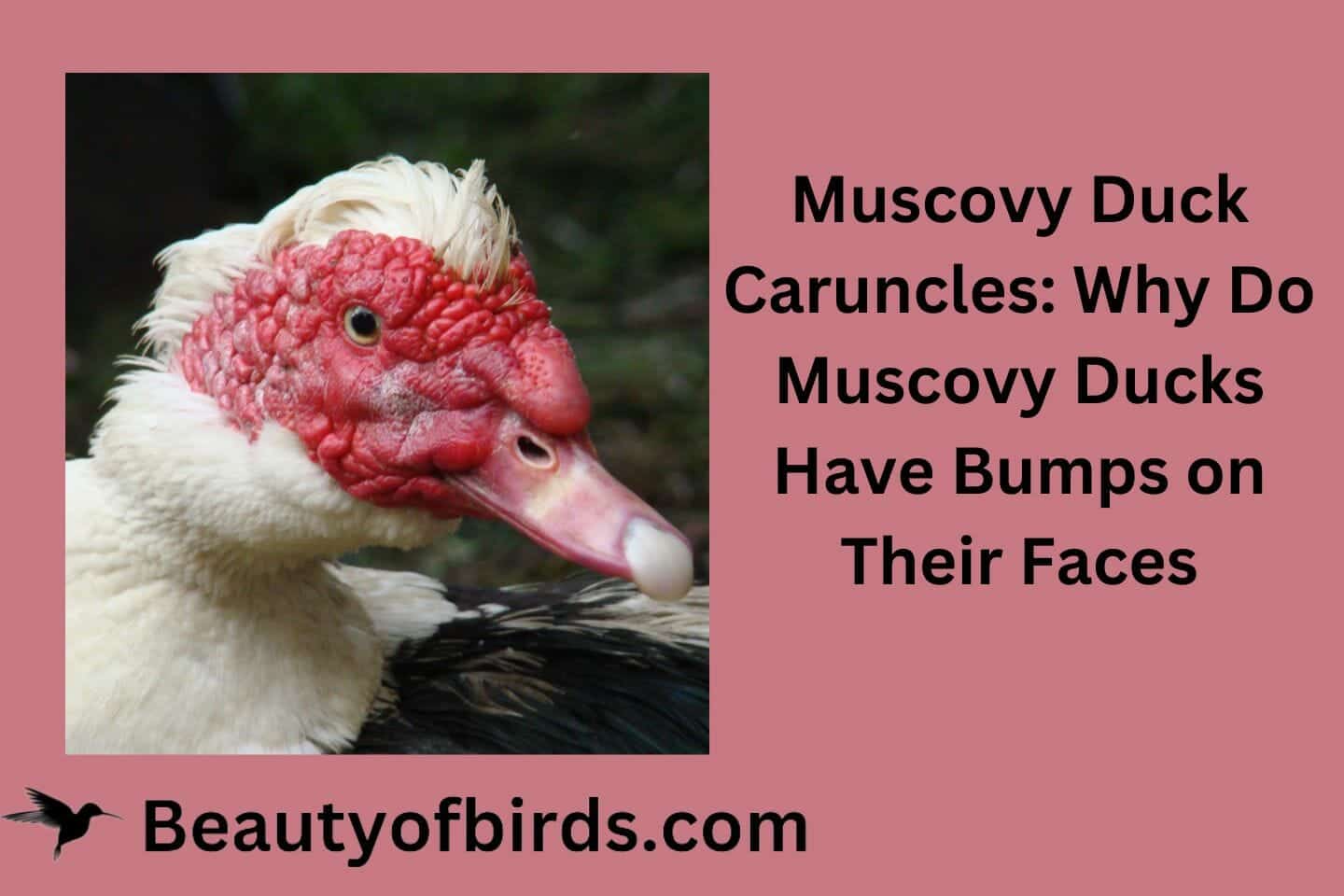
Both sexes display predominantly black and white plumage, but males usually have more iridescent black feathers with a greenish sheen, while females are more muted. A distinctive feature of the Muscovy Duck is the bright red, fleshy caruncles around the face and bill, which are more pronounced in males and give the species its unique appearance. The bill is broad and flat, and the legs are sturdy with sharp claws that assist in perching and climbing.
Domestic and feral Muscovy Ducks often show a wide range of plumage colors, including white, black, pied, cinnamon, and other color morphs due to selective breeding. These variations can make distinguishing feral Muscovies from wild birds challenging in some regions.
Behavior & Diet
Muscovy Ducks are generally calm and quiet compared to other duck species, producing soft hisses and trills rather than loud quacks. In the wild, they are primarily crepuscular, being most active at dawn and dusk. These ducks are excellent perchers and often roost in trees, a behavior less common among other duck species. They prefer forested or semi-wooded habitats near freshwater sources.
Their diet is omnivorous, consisting of a diverse range of aquatic plants, seeds, grasses, insects, small fish, and crustaceans. Feral Muscovy Ducks in urban environments often forage on human food scraps, which contributes to their aggressive begging behavior. This scavenging habit, combined with their large size and numbers, can lead to conflicts with humans, especially in residential areas where the ducks congregate around ponds, parks, and even private property.
In addition to foraging on land and water, Muscovy Ducks are capable of short flights, but they tend to stay close to their preferred habitat areas. Their ability to exploit a variety of food sources and habitats makes them highly adaptable and a successful invasive species in some regions.
Breeding & Reproduction
Muscovy Ducks breed seasonally, with timing varying depending on geographic location and local climate. In their native range, breeding often coincides with the rainy season when food and water are abundant. Feral populations tend to breed multiple times per year, especially in regions with mild winters.
Females typically select tree cavities, dense shrubs, or protected areas on the ground for nesting. In urban areas, nests have been found on condominium balconies, under roof overhangs, and other human-made structures, demonstrating remarkable adaptability. The female lays a clutch of 8 to 16 eggs, which she incubates alone for about 35 days. Incubation is a critical period, and the female is highly protective of her nest. According to Mammal Society, this species is well documented.
Once hatched, the ducklings are precocial and leave the nest within hours, following the mother to water and feeding sites. The mother cares for her young for up to 12 weeks, teaching them survival skills. Feral populations can grow rapidly due to multiple broods and the absence of natural predators in urban landscapes. According to IUCN Red List, this species is well documented.
Management of feral Muscovy populations often involves intervention during the breeding season. Humane approaches focus on reducing the number of ducklings produced by interfering with egg viability rather than removing nests outright, which often leads to renesting and increased reproduction.
Conservation Status
The **International Union for Conservation of Nature (IUCN)** currently lists the wild Muscovy Duck as a species of **Least Concern**. Their populations in native habitats are stable and widespread, benefiting from relatively large, undisturbed wetland areas in Central and South America.
Domesticated and feral populations, however, present a different conservation narrative. While feral Muscovy Ducks are not endangered, their introduction into non-native ecosystems can threaten local biodiversity. They compete with native waterfowl for resources and nesting sites, and their feces can contribute to nutrient loading in urban water bodies, leading to algal blooms and water quality degradation.
Feral populations also raise public health concerns due to their droppings, which can harbor pathogens harmful to humans and pets. In some regions, authorities have implemented control measures to prevent population explosions and mitigate conflicts with humans, emphasizing humane management strategies.
Interesting Facts
The Muscovy Duck is sometimes called the “**Barbary Duck**” or “**Muscovy Drake**,” names that reflect its exotic appearance and historical significance. Its distinctive red facial caruncles have long fascinated naturalists and artists. Unlike most ducks, Muscovies do not quack loudly; instead, they communicate through low hisses, trills, and soft cooing sounds.
One remarkable trait is their arboreal ability; Muscovy Ducks can perch and roost in trees, using their sharp claws to grasp branches—behavior more typical of perching birds than ducks. This ability helps them avoid predators and find safe resting places.
Feral Muscovy Ducks have become a common sight in many city parks and suburban ponds, where their large size and bold behavior attract attention. However, their aggressive begging for food and significant droppings—each adult producing approximately 150 grams (about one-third of a pound) daily—can create sanitation issues.
Humane population management techniques, such as shaking eggs during the laying period to prevent development or coating eggs with vegetable oil, have been developed to reduce breeding without causing distress or abandonment. It is important to allow at least two viable eggs to hatch to keep the female duck’s natural incubation behavior active, preventing her from relocating the nest and continuing to produce more clutches.
These management practices highlight the delicate balance between controlling invasive populations and respecting the natural behaviors of wildlife, emphasizing the importance of informed and ethical interventions in urban ecology.
Conclusion
The Muscovy Duck, Cairina moschata, is a fascinating species with a rich natural history and unique characteristics that distinguish it from other waterfowl. While wild populations remain secure in their native habitats, feral Muscovy Ducks have expanded into many urban and suburban environments worldwide, leading to ecological and social challenges. Their adaptability, prolific breeding, and interactions with humans necessitate thoughtful and humane management strategies to minimize conflicts and environmental impacts.
For nature enthusiasts, understanding the biology and behavior of Muscovy Ducks offers insight into the complexities of invasive species management and urban wildlife dynamics. By appreciating their role in ecosystems and addressing the issues caused by feral populations with respect and care, communities can foster coexistence with these striking birds while protecting native biodiversity and public health.