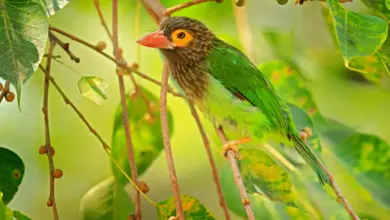
Indonesia, an archipelago of over 17,000 islands, is one of the most biodiverse countries on Earth, particularly renowned for its rich avian life. Home to thousands of bird species, many of which are endemic, Indonesia offers a spectacular array of birds ranging from the dazzling Birds of Paradise to the mighty Eagles and elegant Hornbills. For birdwatchers, photographers, and nature enthusiasts alike, the country’s diverse habitats—from dense rainforests and mangroves to alpine meadows—provide a living gallery of avian wonders. This article explores the taxonomy, distribution, physical characteristics, behaviors, breeding habits, conservation challenges, and intriguing facts about Indonesia’s birds, bringing into focus the incredible variety and ecological importance of these feathered inhabitants.
Taxonomy & Classification
The avifauna of Indonesia encompasses a vast range of families and species, reflecting the country’s complex biogeographical history. Indonesia’s bird species belong mainly to the class Aves, with many representatives across multiple orders such as Passeriformes (perching birds), Accipitriformes (hawks and eagles), Coraciiformes (kingfishers), and Bucerotiformes (hornbills). Among the most celebrated families is the Paradisaeidae, which includes the famous Birds of Paradise, such as Astrapia rothschildi (Rothschild’s Bird of Paradise) and Parotia lawesii (Lawes’s Parotia). These birds are well-known for their spectacular plumage and elaborate courtship displays. Another iconic group is the Bucerotidae or hornbills, large birds with distinctive casques on their bills, such as the Helmeted Hornbill (Rhinoplax vigil). Indonesia’s bird species also include diverse groups like barbets (family Megalaimidae), cuckoos (Cuculidae), and megapodes (Megapodiidae), ground-dwelling birds known for their unique incubation strategy using environmental heat sources.
Geographic Range & Distribution
Indonesia’s avian diversity spans its vast archipelago, stretching from Sumatra in the west through Borneo, Java, Sulawesi, the Maluku Islands, and Papua in the east. This geographical spread crosses several biogeographical zones, notably the Sunda Shelf and Wallacea, which account for distinct species assemblages. Many species are endemic to specific islands or island groups, reflecting the isolation and varied ecosystems. For example, the Javan Hawk-Eagle (Nisaetus bartelsi) is confined to the mountainous forests of Java, while the Bali Starling (Leucopsar rothschildi), critically endangered and highly prized by bird photographers, is found only on Bali. The island of New Guinea, politically divided between Indonesia and Papua New Guinea, harbors some of the most diverse bird populations, including numerous Birds of Paradise species. Indonesia’s tropical forests, wetlands, and coastal mangroves provide essential habitats, but urbanization and deforestation are increasingly fragmenting these environments, influencing the distribution patterns of many species.


Physical Description & Appearance
Indonesia’s birds exhibit extraordinary physical diversity, from the small and inconspicuous to the flamboyant and large. The Birds of Paradise are perhaps the most visually stunning, with males often exhibiting iridescent plumage, elaborate feather shapes, and vibrant colors designed to attract mates. For instance, the Wilson’s Bird of Paradise (Cicinnurus respublica) measures about 16 centimeters in length and weighs roughly 40 grams, yet it dazzles with bright blue, green, and red feathers coupled with striking tail wires. In contrast, the Helmeted Hornbill can reach lengths of up to 120 centimeters with a wingspan of nearly 1.5 meters, featuring a massive casque that is solid and used in aerial “battles.” Other species, like the Rainbow Lorikeet (Trichoglossus moluccanus), are medium-sized parrots with brightly colored plumage, averaging 30 centimeters in length and known for their loud calls. Many of Indonesia’s forest birds have cryptic coloration, such as the various cuckoos and owls, which helps them blend into dense foliage to evade predators and catch prey.
Behavior & Diet
Behavioral adaptations among Indonesian birds are as varied as their appearances. Many Birds of Paradise engage in complex mating dances and vocalizations, often performing on cleared forest floors or specialized perches during breeding season. These displays can include wing flapping, feather fluffing, and intricate movements designed to impress females. Hornbills, known for their monogamous pair bonds, exhibit cooperative breeding behaviors where both parents care for the young. Feeding strategies also differ widely; for example, Kingfishers (Alcedinidae) hunt by diving into water to catch fish, while barbets primarily consume fruit and insects. Megapodes have a unique diet too, often feeding on seeds, insects, and small vertebrates, with some species relying on their strong legs to scratch through leaf litter. Nocturnal birds such as owls and frogmouths hunt at night, preying on insects, small mammals, and birds. Overall, Indonesia’s birds play critical ecological roles as seed dispersers, predators, and pollinators within their ecosystems. According to Cornell Lab of Ornithology, this species is well documented.
Breeding & Reproduction
Breeding habits across Indonesia’s avian species are diverse and fascinating. Birds of Paradise are well-known for their polygynous mating systems, where dominant males display to attract multiple females, who then raise the offspring alone. These males invest heavily in their appearance and courtship rituals but provide no parental care. In contrast, hornbills are monogamous and exhibit unique nesting behavior; the female seals herself inside a tree cavity using mud and droppings, leaving only a small slit through which the male delivers food. This strategy protects the female and chicks from predators during development. Megapodes take an unusual approach by laying their eggs in mounds of decomposing vegetation or sand, where natural heat incubates the eggs instead of body warmth. Incubation periods vary but generally last several weeks. Many Indonesian birds time their breeding to coincide with the rainy season, when food abundance is at its peak, ensuring higher survival rates for chicks. According to BirdLife International, this species is well documented.
Conservation Status
Indonesia’s birds face numerous conservation challenges, primarily due to habitat loss, deforestation, and illegal wildlife trade. The International Union for Conservation of Nature (IUCN) lists several Indonesian species as threatened or endangered. The Bali Starling (Leucopsar rothschildi) is critically endangered, with wild populations decimated by trapping for the pet trade and habitat degradation. Conservation efforts include captive breeding and reintroduction programs to bolster wild numbers. The Helmeted Hornbill (Rhinoplax vigil) is classified as critically endangered due to poaching for its unique casque, prized in traditional carvings. Large-scale deforestation, driven by palm oil plantations, logging, and agriculture, threatens many forest-dependent species, including the Javan Hawk-Eagle and various Birds of Paradise. Protected areas, national parks, and community-led conservation initiatives are vital for preserving habitats and biodiversity. Ecotourism focused on birdwatching also plays a growing role in promoting conservation and providing economic incentives for habitat protection.
Interesting Facts
Indonesia’s birds are not only ecologically important but culturally significant and fascinating in many ways. The Birds of Paradise, for example, were once coveted by European collectors for their exotic feathers, which influenced fashion and art during the 18th and 19th centuries. Their elaborate courtship dances are among the most complex in the bird world, involving mechanical sounds produced by specialized feathers. The Helmeted Hornbill’s casque is unique among hornbills for being solid bone rather than hollow, enabling males to engage in aerial “head-to-head” combat known as “aerial jousting.” Another remarkable bird is the maleo (Macrocephalon maleo), a megapode that lays its eggs in geothermal sand heated by volcanic activity, an adaptation that is rare and highly specialized. Indonesia is also home to the rare and elusive Wallace’s Standardwing (Sterlingia wallacii), a bird of paradise named after Alfred Russel Wallace, the co-discoverer of natural selection. These birds’ behaviors, appearances, and survival strategies continue to captivate ornithologists and bird lovers worldwide.
In summary, Indonesia’s birdlife is a vibrant tapestry woven from evolutionary marvels, ecological dynamics, and cultural reverence. Its archipelago harbors some of the most unique and beautiful birds on the planet, each with specialized adaptations that allow them to thrive in varied environments. Despite significant conservation challenges, ongoing efforts by scientists, conservationists, and local communities offer hope for safeguarding this irreplaceable natural heritage. For anyone interested in birdwatching, photography, or wildlife study, Indonesia presents an unparalleled opportunity to witness nature’s spectacular diversity in flight.