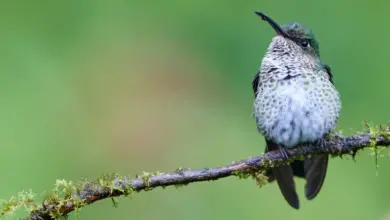
Hummingbirds are among the most captivating of North American birds, admired for their iridescent plumage and extraordinary flight capabilities. In Rhode Island, the smallest state in the United States, Hummingbirds are a seasonal delight, thrilling birdwatchers and nature enthusiasts alike. Currently, two species of hummingbirds regularly occur in Rhode Island: the Ruby-throated Hummingbird (Archilochus colubris) and the Rufous Hummingbird (Selasphorus rufus). Both species exhibit fascinating behaviors and adaptations that allow them to thrive in the region’s temperate climate during their breeding and migration seasons. This article delves into the taxonomy, distribution, appearance, behavior, breeding habits, conservation status, and intriguing facts about these remarkable birds found in Rhode Island.
Scientific Classification
Hummingbirds belong to the family Trochilidae, a diverse group known for their rapid wing beats and ability to hover in place. The Ruby-throated Hummingbird (Archilochus colubris) is the only hummingbird species that breeds regularly east of the Mississippi River, including Rhode Island. It is classified under the genus Archilochus, which includes small, migratory hummingbirds native to North and Central America.
The Rufous Hummingbird (Selasphorus rufus) belongs to the genus Selasphorus, comprising hummingbirds primarily found in the western parts of North America. Its presence in Rhode Island is considered uncommon and largely migratory, as it typically breeds in the Pacific Northwest and winters in Mexico. Both species share the family Trochilidae, characterized by specialized flight muscles and elongated bills adapted for nectar feeding.


Geographic Range & Distribution
The Ruby-throated Hummingbird has an extensive breeding range across the eastern United States and southern Canada, from the Gulf Coast northward to southern Canada, including Rhode Island. It migrates annually between its breeding grounds and wintering areas in Central America, primarily southern Mexico and Panama. In Rhode Island, Ruby-throated Hummingbirds generally arrive in early May, with some early arrivals in late April. They remain through the summer months before embarking on their southbound migration by late September.
The Rufous Hummingbird’s breeding range is predominantly in the Pacific Northwest, including Alaska, British Columbia, Washington, and Oregon. However, during migration, some individuals stray eastward, occasionally reaching as far as Rhode Island. These occurrences are relatively rare compared to Ruby-throated Hummingbirds but have become increasingly documented due to birdwatching and citizen science efforts. Rufous Hummingbirds typically pass through Rhode Island in April and May during their northbound migration and again in late summer and early fall during their return to wintering grounds in Mexico.
Physical Description
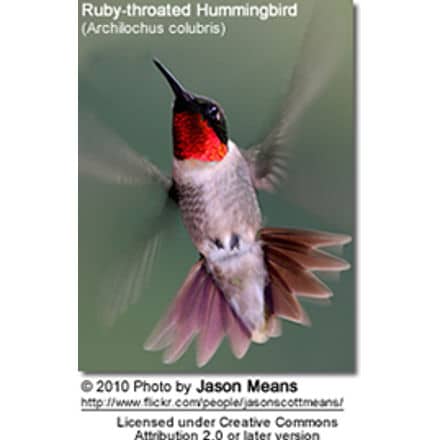
The Ruby-throated Hummingbird is a small bird, measuring approximately 7 to 9 centimeters (2.8 to 3.5 inches) in length with a wingspan averaging around 11 centimeters (4.3 inches). Adults weigh between 2.6 and 6 grams, roughly the weight of a penny. The male is striking, with a brilliant metallic ruby-red throat patch known as a gorget, an emerald green back, and a white chest and underparts. Its tail is forked and edged with white. In contrast, females lack the red throat and have a green back with a white throat and flanks. Their tail feathers are banded with white and black, providing camouflage among foliage.
The Rufous Hummingbird is slightly smaller but robust for its size, measuring about 7 to 9 centimeters in length with a wingspan near 11 to 12 centimeters. Males feature a fiery orange-red throat that shines iridescently in sunlight, with a coppery-orange back and rufous (reddish-brown) sides. Their tails are fan-shaped with white tips. Females and juveniles are more muted, sporting green backs, white underparts, and speckled throats with rufous-tipped tail feathers. This sexual dimorphism aids identification in the field, especially when comparing the Rufous to the Ruby-throated Hummingbird.
Behavior & Diet
Hummingbirds are renowned for their rapid wing beats, which can reach up to 53 beats per second, enabling them to hover with remarkable stability. Both the Ruby-throated and Rufous Hummingbirds exhibit territorial behavior, particularly males during breeding season. They aggressively defend feeding territories rich in nectar-producing flowers or artificial feeders, chasing away rivals and even larger birds or small mammals that approach their feeding sites.
The diet of these hummingbirds primarily consists of nectar from a variety of flowering plants, including trumpet creepers, bee balm, and cardinal flowers, which provide the energy-rich sugars necessary for their high metabolism. They supplement their diet with small insects and spiders, which supply essential proteins, vitamins, and minerals. They catch these insects mid-air or glean them from leaves and spider webs. The Rufous Hummingbird is particularly known for its boldness at feeders, often dominating other hummingbirds through persistent chasing and vocalizations.
Breeding & Reproduction
In Rhode Island, the breeding season for Ruby-throated Hummingbirds begins soon after their arrival in May. Males establish territories and perform elaborate courtship displays involving rapid dives and aerial acrobatics to attract females. Females build tiny cup-shaped nests from plant down, spider silk, and moss, often camouflaged among tree branches or shrubs. The nests typically measure just two inches across and can support only two eggs at a time, each about the size of a jellybean. According to BirdLife International, this species is well documented.
Incubation lasts approximately 12 to 14 days, with the female solely responsible for sitting on the eggs and later feeding the hatchlings. The young fledge around 18 to 22 days after hatching, after which they become independent. Ruby-throated Hummingbirds usually raise one or two broods per season. The Rufous Hummingbird’s breeding habits are similar but primarily occur in their western range. In Rhode Island, they are mostly transient, so breeding is rare or undocumented. According to Cornell Lab of Ornithology, this species is well documented.
Conservation Status
Both the Ruby-throated and Rufous Hummingbirds are currently listed as species of Least Concern by the International Union for Conservation of Nature (IUCN). Their populations remain stable across their respective ranges. However, like many pollinators, they face threats from habitat loss due to urbanization, pesticide use, and climate change, which can affect the flowering patterns of nectar plants and insect availability.
Efforts to support hummingbird populations include planting native flowering plants that bloom throughout the breeding season, providing clean water sources, and maintaining natural habitats. Additionally, many people contribute by setting up hummingbird feeders, which offer an important energy source during migration and breeding. It is vital to clean feeders regularly to prevent disease transmission among birds.
Interesting Facts
Hummingbirds are truly extraordinary creatures. Their metabolism is among the highest of any animal, requiring them to consume up to twice their body weight in nectar daily. To conserve energy, Ruby-throated Hummingbirds enter a state called torpor at night, dramatically slowing their heart rate and metabolism.
The Ruby-throated Hummingbird is the only hummingbird species that regularly migrates across the Gulf of Mexico in a single nonstop flight of up to 500 miles, a remarkable feat for such a tiny bird. Rufous Hummingbirds, known for their feisty temperament, have been observed displacing larger birds and defending territories fiercely, earning them a reputation as bold “little warriors” of the bird world.
Rarely, unusual color morphs or leucistic (partial loss of pigmentation) hummingbirds appear, such as the white hummingbird reported in Wakefield, Rhode Island, in 2014. Such sightings are prized by birdwatchers and add to the mystique surrounding these jewel-like birds.
Hummingbirds also play a vital role as pollinators in many ecosystems, transferring pollen from flower to flower as they feed, thus supporting plant reproduction and biodiversity.
Conclusion
Rhode Island’s hummingbird visitors, primarily the Ruby-throated and occasionally the Rufous Hummingbird, offer a fascinating glimpse into the delicate balance of nature. Their extraordinary physiology, behavior, and migratory journeys captivate observers and highlight the importance of conserving habitats that support these tiny but vital birds. Whether seen darting among flowers or perched quietly on a branch, hummingbirds embody the wonder of wildlife in the smallest details, enriching the natural heritage of Rhode Island and beyond.