Washington, D.C., the bustling capital of the United States, is not only rich in history and politics but also offers a surprising haven for diverse wildlife, including several species of hummingbirds. These tiny, iridescent birds captivate birdwatchers and nature enthusiasts alike with their rapid wingbeats, vibrant plumage, and remarkable agility. Despite their small size, hummingbirds play an essential ecological role as pollinators and add a splash of color and movement to D.C.’s gardens, parks, and green spaces throughout the warmer months. This article explores the hummingbirds found in the District of Columbia, delving into their taxonomy, distribution, physical traits, behavior, breeding habits, conservation status, and intriguing facts that highlight their unique place in the natural world.
Scientific Classification
Hummingbirds belong to the family Trochilidae, a diverse group within the order Apodiformes, which also includes swifts. The family Trochilidae contains over 300 species, most native to the Americas, ranging from Alaska to Tierra del Fuego, with the greatest diversity found in Central and South America. In Washington, D.C., the hummingbird species most commonly encountered include the Ruby-throated Hummingbird (Archilochus colubris), the Rufous Hummingbird (Selasphorus rufus), and, more rarely, the Black-chinned Hummingbird (Archilochus alexandri).
The Archilochus genus is distinguished by small size and rapid wingbeats, while Selasphorus species are known for their aggressive territorial behavior and striking coloration. These hummingbirds share common traits such as a long, slender bill adapted for nectar feeding and iridescent throat patches called gorgets, which males use in courtship displays and territorial defense.






Geographic Range & Distribution
The Ruby-throated Hummingbird is the most widespread and familiar hummingbird in eastern North America, including Washington, D.C. Its breeding range extends across the eastern United States and southern Canada, from the Gulf Coast northward to Ontario and Quebec. These birds migrate long distances, traveling from Central America to their breeding grounds each spring. In Washington, D.C., Ruby-throated Hummingbirds typically arrive in late April or early May, with males often appearing first, followed by females and juveniles about two weeks later. They remain through the summer before migrating south again by early fall.
The Rufous Hummingbird has a breeding range largely concentrated in the Pacific Northwest and western Canada but is known to wander eastward, making occasional breeding appearances in the D.C. area. This species is a common visitor to local gardens and feeders during migration and sometimes establishes breeding territories in the region. Rufous Hummingbirds are known for their impressive migratory journey, traveling up to 3,900 miles between their wintering grounds in Mexico and breeding sites in the northwestern United States and Canada.
The Black-chinned Hummingbird is primarily a western species, breeding in the southwestern United States and northern Mexico. It is considered a rare vagrant in Washington, D.C., with only sporadic sightings recorded. When observed in the D.C. area, these birds are typically migrants or accidental visitors blown off course during migration.
Physical Description
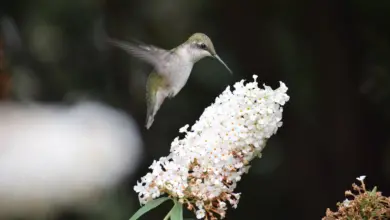
Among the hummingbirds found in Washington, D.C., the Ruby-throated Hummingbird is the smallest and most easily recognized. It measures about 7 to 9 centimeters (2.8 to 3.5 inches) in length, with a wingspan of approximately 11 centimeters (4.3 inches), and weighs roughly 3 grams (0.1 ounces). Males are particularly striking, with a brilliant ruby-red throat patch (gorget), a white collar, and metallic emerald-green upperparts that shimmer in the sunlight. Their tails are deeply forked and predominantly black with white tips. Females and juveniles lack the ruby throat; instead, their throats are white or lightly speckled, and their tails are rounded with white banding interspersed with black and green.
The Rufous Hummingbird is slightly larger, measuring 8 to 9 centimeters (3.1 to 3.5 inches) in length with a wingspan of about 11 to 13 centimeters (4.3 to 5.1 inches), and weighing between 3 to 4 grams (0.11 to 0.14 ounces). Males are unmistakable due to their fiery orange-rufous coloration on the back and flanks, a vibrant orange-red gorget, and a moderately forked tail with rufous feathers tipped in white. Females are less colorful, showing green backs and crowns, whitish throats often speckled with spots, and rufous tail feathers with white tips. This species’ bold colors and aggressive behavior make it a favorite among birdwatchers.
The Black-chinned Hummingbird is similar in size to the Ruby-throated, about 7 to 9 centimeters long with a wingspan near 11 centimeters. Males have a distinctive black throat with a narrow iridescent purple band at the base of the throat, which can appear black depending on the light. Their backs are metallic green, and their tails are mostly black with white tips. Females have pale throats, sometimes lightly speckled, and green backs. Due to their rarity in D.C., these birds often puzzle observers unfamiliar with their subtle differences from the Ruby-throated.
Behavior & Diet
Hummingbirds in Washington, D.C. are primarily nectar feeders, relying heavily on flowering plants for energy. Their long, specialized bills and extendable tongues allow them to access deep tubular flowers. They prefer red, pink, orange, and purple blossoms but will visit a variety of flower colors. In addition to nectar, hummingbirds consume small insects and spiders to obtain protein, essential for muscle development and feather growth.
The Ruby-throated Hummingbird feeds on nectar from native and cultivated plants, including red columbine, trumpet creeper, bee balm, and butterfly bush. They also glean tiny insects from leaves or catch them mid-flight. These birds exhibit remarkable hovering ability, beating their wings approximately 53 times per second, enabling them to feed while suspended in air. They are territorial and males often aggressively defend feeding sites from rivals, especially during breeding season.
The Rufous Hummingbird is known for its fiery temperament and bold territorial behavior. It aggressively chases away other hummingbirds, larger birds, and even small mammals from feeders and favored flower patches. This assertiveness helps them secure vital food resources during their long migrations and breeding. Rufous Hummingbirds feed on nectar from flowers such as salvia, bee balm, and trumpet honeysuckle, and also capture small arthropods for protein.
Although rare in Washington, the Black-chinned Hummingbird exhibits similar feeding habits to the Ruby-throated but prefers slightly different flower species in its usual western range. It also supplements its diet with insects and spiders. Like its relatives, it is highly agile and capable of rapid, precise flight maneuvers.
Breeding & Reproduction
Breeding in the District of Columbia centers primarily around the Ruby-throated Hummingbird, which is the only hummingbird species known to regularly nest in the eastern U.S. Males arrive on breeding grounds first to establish territories and display to attract females. Courtship displays include dramatic aerial dives and the flashing of their iridescent gorgets. Females build tiny cup-shaped nests from plant down, spider silk, and lichen, often camouflaging them on tree branches 1.5 to 15 meters (5 to 50 feet) above ground. According to National Geographic, this species is well documented.
Clutches typically consist of two white eggs, each about 1 centimeter long. The female incubates the eggs for 12 to 14 days and continues to care for the hatchlings until they fledge approximately 18 to 22 days after hatching. Ruby-throated Hummingbirds may raise one or two broods in a breeding season, generally from late May through early August. Their nesting success depends heavily on the availability of food sources and suitable habitat. According to WWF, this species is well documented.
The Rufous Hummingbird also breeds during the summer months but is less commonly documented nesting in D.C. due to its western preference. When present, their breeding behavior resembles that of Ruby-throated Hummingbirds, with males defending territories and females constructing nests. Their nests are similarly well-camouflaged and typically positioned in shrubs or small trees.
Black-chinned Hummingbirds rarely breed in the D.C. area, so little information exists about their reproductive behavior in this region. In their normal western range, they follow similar patterns of courtship and nesting as other Trochilidae members.
Conservation Status
The Ruby-throated Hummingbird currently holds a conservation status of Least Concern according to the International Union for Conservation of Nature (IUCN). Populations remain stable due to their broad range and adaptability to human-altered landscapes, including urban and suburban gardens. However, they face threats from habitat loss, pesticide use, and climate change, which can impact the availability of flowering plants and insect prey. Providing native nectar plants and maintaining garden habitats in D.C. supports healthy populations.
The Rufous Hummingbird also enjoys an IUCN status of Least Concern, with a stable or slightly increasing population trend. Conservationists monitor this species closely because of its demanding migratory route and vulnerability to habitat changes on both breeding and wintering grounds. Continued habitat protection and responsible gardening practices help sustain their numbers.
The Black-chinned Hummingbird is similarly classified as Least Concern, though its rarity in Washington, D.C. makes it a species of interest for birdwatchers rather than conservationists in this specific locale. Habitat preservation in their primary western ranges remains essential for their long-term survival.
Interesting Facts
Hummingbirds are among the most fascinating birds in North America, and those found in Washington, D.C. are no exception. The Ruby-throated Hummingbird is unique for being the only hummingbird species that regularly breeds east of the Mississippi River. Their incredible migration involves flying non-stop across the Gulf of Mexico, a journey of up to 500 miles that requires intense energy reserves.
The Rufous Hummingbird is renowned for its feisty nature and remarkable adaptability. Despite its small size, it fearlessly defends feeding territories against much larger birds such as blue jays or even squirrels. This aggressive behavior ensures access to vital nectar sources, especially during the energy-intensive breeding and migration periods.
Hummingbirds have specialized flight muscles and wing structures allowing them to hover in place and even fly backward, a rare ability among birds. Their wings beat so rapidly that it often produces a humming sound, which is how they get their name.
In D.C., gardeners wishing to attract hummingbirds are encouraged to plant native and hummingbird-friendly species such as Salvia guaranitica (Anise Sage), Agastache varieties (Hummingbird Mint), trumpet honeysuckle (Lonicera sempervirens), bee balm (Monarda), and red hot poker (Tritoma). These plants provide rich nectar sources and support the hummingbirds’ energy needs throughout the season. Supplementing gardens with feeders filled with sugar water (one part sugar to four parts water) also helps during migration and breeding.
Finally, hummingbirds have extraordinary metabolic rates. To support their rapid wingbeats and hovering flight, they consume up to twice their body weight in nectar daily and enter a state called torpor at night to conserve energy by lowering their body temperature and metabolic rate.
Washington, D.C.’s hummingbirds, though small and often fleeting, offer a vibrant connection to the natural world right in the nation’s capital. Through awareness, conservation, and thoughtful gardening, residents and visitors alike can enjoy the beauty and wonder these remarkable birds bring to urban green spaces.