Hummingbirds are among the most remarkable avian species, renowned not only for their dazzling iridescent plumage and incredible flying abilities but also for their unique reproductive strategies. Unlike many birds that form lasting pair bonds or live in social groups, Hummingbirds are largely solitary creatures. Their breeding behaviors reflect this solitary lifestyle, with distinct roles for males and females throughout the reproductive process. Understanding hummingbird reproduction provides fascinating insights into their life cycle, survival strategies, and adaptations to diverse environments.
Scientific Classification
Hummingbirds belong to the family Trochilidae, which includes over 340 species. They are classified within the order Apodiformes, which they share with swifts. The family name Trochilidae derives from the genus Trochilus, which was once a catch-all for many hummingbird species. These tiny birds are primarily found in the Americas, from Alaska and Canada in the north to Tierra del Fuego in the south. They are especially diverse in tropical and subtropical regions, particularly in Central and South America. The smallest known species include the bee hummingbird (Mellisuga helenae), which weighs less than 2 grams, while larger species like the giant hummingbird (Patagona gigas) can weigh up to 20 grams and reach a length of 21 centimeters.
Geographic Range & Distribution
Hummingbirds inhabit a wide range of environments across the Americas, from alpine tundras to dense tropical rainforests. Their highest species diversity is found in the Andes Mountains of South America, where some regions support over 100 species. They are also common in North America, with many species migrating seasonally, such as the ruby-throated hummingbird (Archilochus colubris), which travels between Central America and the eastern United States. Tropical hummingbirds tend to be non-migratory, residing year-round in stable climates. Some species are highly specialized in their habitat preferences, nesting in cloud forests, desert scrub, or mangroves, while others are generalists, adapting well to urban and suburban environments. Their distribution is closely tied to the availability of nectar-producing flowers and insect prey, which are critical for their diet and reproductive success.






Physical Description
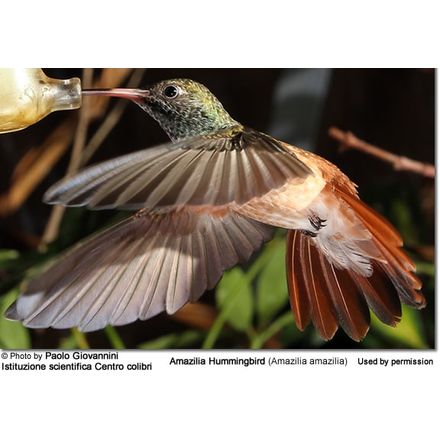
Hummingbirds are among the smallest of birds, with body lengths generally ranging from 7.5 to 13 centimeters and wingspans from 8 to 15 centimeters, depending on species. Their bodies are streamlined for hovering flight, with long, slender bills adapted to accessing nectar deep within flowers. Many species exhibit brilliant iridescent feathers that appear to change color with the angle of light, a result of microscopic platelets in the feathers rather than pigments. Their wings beat at astonishing rates—up to 80 times per second in smaller species—allowing for remarkable maneuverability, including the ability to hover, fly backward, and even upside down. Males often display more vibrant colors and elaborate throat patches called gorgets, which play a role in courtship displays and territorial defense. Females are generally less colorful, aiding in camouflage while nesting.
Behavior & Diet
Hummingbirds are highly territorial, especially males that vigorously defend flower patches and feeding territories to attract females and ensure access to food resources. Their diet consists primarily of nectar, which provides the high energy necessary for their rapid metabolism and intense flight activity. They feed from a wide variety of flowering plants, with some species evolving specialized bill shapes matched to particular flowers. In addition to nectar, hummingbirds consume small insects and spiders, which provide essential proteins, amino acids, and nutrients required for growth and reproduction. Insects are often caught on the wing or gleaned from foliage. Hummingbirds exhibit a unique behavior called torpor, a state of temporary hibernation during cold nights or periods of food scarcity, which reduces their metabolic rate dramatically to conserve energy. However, female hummingbirds incubating eggs generally do not enter torpor, as they must maintain constant warmth to ensure the development of their offspring.
Breeding & Reproduction
Hummingbird reproduction is characterized by solitary nesting and distinct gender roles. Males do not participate in nest building, incubation, or chick rearing; their reproductive role is limited to courtship and mating. Many males are polygamous, mating with multiple females during a breeding season. Females undertake the entire nesting process alone, from selecting the site to feeding and protecting the chicks. Nest sites are typically found in sheltered locations such as tree branches, shrubs, or even the undersides of large leaves in tropical species. Nests are marvels of engineering, often measuring less than 5 centimeters in diameter—roughly the size of a walnut shell in smaller species, but occasionally larger in bigger hummingbirds. Females use soft materials like plant down, moss, and spider silk to construct nests that are both strong and elastic, allowing them to expand as the chicks grow. According to Bug Guide, this species is well documented.
The camouflage of these nests is exceptional. Females attach mosses, lichens, and other natural materials from the surrounding environment to the exterior of the nest, rendering it nearly invisible to predators. Typically, two small, white, pea-sized eggs are laid per clutch. Incubation lasts between 14 and 23 days, varying according to species, ambient temperature, and female attentiveness. Smaller hummingbirds tend to have shorter incubation periods. During incubation, the female carefully wraps her body around the eggs, using her warmth to maintain optimal conditions for embryo development. Unlike many birds, female hummingbirds generally do not enter torpor during incubation to avoid chilling the eggs. According to IUCN Red List, this species is well documented.
When the chicks hatch, they are altricial—blind, featherless, and utterly dependent on their mother. Their skin is dark and nearly translucent, and they remain in the nest for about three weeks, gradually developing down feathers and eventually true feathers. Mothers feed the nestlings about every 20 minutes, regurgitating a mixture of nectar and small insects directly into their open mouths. This diet provides the essential proteins, amino acids, and energy needed for rapid growth. The young instinctively keep the nest clean by defecating over the edge. Mothers fiercely defend their nests, often attacking much larger birds of prey such as hawks, and sometimes even humans who venture too close. Once the chicks fledge, usually around 20 days old, the mother continues to feed and protect them for several additional weeks as they learn to fly and forage independently.
Conservation Status
Overall, hummingbirds are not considered globally threatened, with the International Union for Conservation of Nature (IUCN) listing the majority of species as Least Concern. However, habitat destruction, climate change, and the loss of native flowering plants pose significant risks to many populations. Some species with restricted ranges or specialized habitat requirements are more vulnerable. For example, the Juan Fernández firecrown (Sephanoides fernandensis) is listed as Critically Endangered, largely due to habitat degradation on its island home off Chile. Conservation efforts focus on preserving native flora, reducing pesticide use, and maintaining healthy ecosystems that support both the nectar sources and insect prey crucial to hummingbird survival. Urban gardens planted with native flowers have also become important refuges, helping maintain local populations and providing opportunities for public education about these remarkable birds.
Interesting Facts
Hummingbirds possess several extraordinary traits beyond their reproductive behavior. Their flight muscles constitute up to 30% of their body weight, enabling their signature hovering flight. The bee hummingbird, native to Cuba, holds the record as the world’s smallest bird, measuring only about 5 centimeters in length and weighing less than 2 grams. Many species have tongues that flick in and out up to 13 times per second to extract nectar efficiently. Their metabolism is among the fastest of any animal, requiring them to consume nectar equivalent to their body weight daily. During courtship, males perform spectacular aerial displays, including high-speed dives and elaborate hovering maneuvers to impress females. Their ability to enter torpor allows them to survive cold nights and food shortages, a vital adaptation given their high energy demands. Lastly, despite their delicate appearance, hummingbirds are fiercely territorial and will aggressively chase away intruders much larger than themselves.
In summary, hummingbird reproduction is a testament to the resilience and specialization of these tiny birds. Their solitary nesting habits, maternal dedication, and intricate nest construction reflect evolutionary adaptations that maximize reproductive success in diverse and often challenging environments. As pollinators and indicators of ecosystem health, hummingbirds continue to captivate birdwatchers, photographers, and nature lovers worldwide, inspiring ongoing efforts to understand and protect these jewels of the avian world.