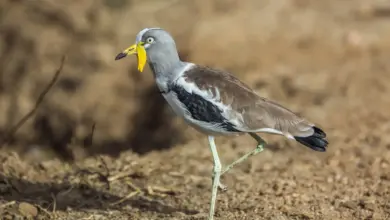
The Kittlitz’s Plover (Charadrius pecuarius) is a small, striking shorebird that inhabits a wide range across sub-Saharan Africa, Madagascar, and parts of the Nile Delta. Known for its distinctive markings and adaptive behavior, this species occupies a variety of wetland and grassland habitats, making it an intriguing subject for birdwatchers and nature enthusiasts alike. Relatively inconspicuous compared to its more flamboyant relatives, the Kittlitz’s Plover nonetheless plays an important ecological role in its environments and offers valuable insights into avian adaptation and survival strategies.
Scientific Classification
The Kittlitz’s Plover belongs to the family Charadriidae, which includes plovers, dotterels, and lapwings—groups characterized by their compact bodies, short bills, and preference for open habitats near water. Its scientific name is Charadrius pecuarius. The genus name Charadrius comes from the Ancient Greek word “kharadrios,” referring to a bird found near ravines or river valleys, indicative of their typical habitat preferences. The species epithet pecuarius means “pertaining to cattle or grazing animals,” reflecting the bird’s frequent presence in grazed grasslands and open mudflats resembling pastoral landscapes.
First described scientifically by Wilhelm Peters in 1863, the species is named in honor of Baron Heinrich von Kittlitz, a German explorer and naturalist who contributed to early ornithological studies in Africa. The Kittlitz’s Plover is closely related to several other small plover species, such as the Kentish Plover (Charadrius alexandrinus) and the Three-banded Plover (Charadrius tricollaris), yet it can be distinguished by subtle differences in size, plumage, and behavior.





Geographic Range & Distribution
Kittlitz’s Plovers are widely distributed across much of sub-Saharan Africa, with populations found from Senegal and Mali in the west, eastwards through Ethiopia and Kenya, and southwards to South Africa and Namibia. They are also present on the island of Madagascar and in the Nile Delta region of northern Egypt. This extensive range covers a variety of ecosystems, from coastal wetlands and estuaries to inland lakes, riversides, and seasonally flooded grasslands.
The species exhibits both resident and migratory behaviors depending on the region and local environmental conditions. Coastal populations tend to be more sedentary, often remaining in the same area year-round, while inland populations may be more nomadic or partially migratory, moving seasonally in response to fluctuating water levels and food availability. During migration or dispersal periods, Kittlitz’s Plovers can form sizable flocks, sometimes numbering up to 250 individuals, particularly in regions where water bodies concentrate food resources.
Habitats favored by the Kittlitz’s Plover typically feature open ground with minimal vegetation, such as sandy or muddy shores, salt pans, and short grasslands adjacent to freshwater or brackish water sources. These conditions provide ideal foraging and nesting sites, allowing the birds to remain vigilant while searching for prey and guarding their nests from predators.
Physical Description
The Kittlitz’s Plover is a small shorebird, measuring approximately 14 to 16 centimeters in length with a wingspan that ranges between 35 and 40 centimeters, and an average weight of around 30 to 40 grams. The bird’s compact form, long legs, and relatively long bill are well adapted for its ground-dwelling lifestyle and feeding habits.
In breeding plumage, adults display a striking combination of colors and patterns. The upperparts, including the back, crown, and wings, are a muted grey-brown, blending seamlessly with the sandy or muddy habitats they frequent. The breast is a warm orange shade that gradually fades into white on the lower belly and underparts. Their legs are long and dark grey, aiding in their characteristic quick, darting movements across open ground.
The face and head feature distinctive markings that set the Kittlitz’s Plover apart. The forehead and throat are bright white, sharply contrasted by bold black lores—the area between the eyes and bill—and a prominent black frontal bar that extends as a stripe down each side of the neck and around the hind neck, creating a striking collar-like effect. This facial pattern is particularly vivid during the breeding season.
Outside the breeding season, the face markings become less pronounced, and adults resemble the Kentish Plover but can still be distinguished by their smaller size, longer legs, and longer bills. They also maintain a subtle pink or orange hue on the breast, which Kentish Plovers typically lack. Juvenile Kittlitz’s Plovers are similar to non-breeding adults but tend to have the orange breast color restricted to a narrow band or “gorget.” In flight, the primary flight feathers appear dark with a short white wing bar, aiding identification in the field.
Behavior & Diet
Kittlitz’s Plovers are primarily ground foragers, often seen walking or running across open dry mudflats, short grasslands, and sandy areas near water bodies. They typically hunt by sight, scanning the ground meticulously for small invertebrates. Their diet consists mainly of insects such as beetles, ants, and flies, as well as earthworms, crustaceans, and mollusks that they pick from the surface or just beneath the soil. This varied diet allows them to thrive in diverse habitats where prey availability can fluctuate seasonally.
Their foraging behavior is characterized by short, quick steps interspersed with pauses to scan for prey. When an invertebrate is spotted, the plover swiftly pecks or probes the surface, capturing its target with precision. Kittlitz’s Plovers often forage in small groups outside the breeding season, which may provide some protection from predators and facilitate information sharing about food sources.
Vocalizations of the Kittlitz’s Plover include a plaintive “tee-peep” call, often heard during flight or while feeding. When alarmed or threatened, the bird emits a sharper “trip” sound, alerting others in the vicinity. Their wary nature and quick movements make them somewhat challenging to approach, but they frequently allow close observation if approached slowly and quietly.
Breeding & Reproduction
Kittlitz’s Plovers breed primarily in open, sparsely vegetated areas close to water, such as beaches, mudflats, salt pans, and dry lake beds. Their preference for open ground with minimal plant cover is likely an evolutionary adaptation to reduce nest concealment by predators and facilitate early detection of threats. According to RSPB, this species is well documented.
The nest is a simple scrape in the ground, often lined with small stones, shells, or bits of vegetation to provide some camouflage for the eggs. Both males and females share incubation duties, which typically last around 24 to 27 days. The clutch size is usually two eggs, although occasionally three eggs may be laid. The eggs are cryptically colored, blending with the surrounding substrate to avoid detection. According to BirdLife International, this species is well documented.
When a predator or intruder approaches the nest, adult Kittlitz’s Plovers employ an elaborate distraction display known as the “broken-wing” act. The bird will move away from the nest, calling loudly and fluttering its wings as if injured, to lure the threat away from its vulnerable eggs or chicks. Once the intruder is sufficiently distant, the plover abruptly takes flight and returns to its nest.
Chicks hatch fully precocial, covered in down and able to leave the nest within hours. Both parents continue to protect and feed the young, often leading them to safe foraging areas. Juveniles remain dependent on their parents for several weeks before gaining full independence. Outside the breeding season, Kittlitz’s Plovers are more social and may gather in loose flocks to feed and roost.
Conservation Status
The International Union for Conservation of Nature (IUCN) currently lists the Kittlitz’s Plover as a species of Least Concern. This status reflects its broad geographic range and large, stable population across sub-Saharan Africa and Madagascar. However, localized threats exist and could impact specific populations if left unmanaged.
Habitat loss due to wetland drainage, agricultural expansion, and urban development poses potential risks, particularly in coastal and riverine areas. Pollution, disturbance from human recreational activities, and predation by introduced species such as domestic cats and dogs also affect some breeding sites. Climate change, altering rainfall patterns and water availability, may further influence the plover’s habitat suitability and food resources.
Fortunately, the Kittlitz’s Plover benefits from inclusion in international conservation agreements such as the Agreement on the Conservation of African-Eurasian Migratory Waterbirds (AEWA). This helps coordinate efforts among range countries to monitor populations, protect critical habitats, and reduce threats. Continued research, habitat protection, and public awareness are vital to ensuring this species remains a common and thriving component of Africa’s wetland ecosystems.
Interesting Facts
One fascinating aspect of the Kittlitz’s Plover is its adaptability to a wide range of habitats, from salty coastal lagoons to freshwater inland wetlands and even dry grasslands adjacent to water. This flexibility allows it to exploit various food resources and avoid competition with other shorebird species.
The species’ name honors Baron Heinrich von Kittlitz, a 19th-century German naturalist who made significant contributions to the study of African birds. This historical connection highlights the long-standing human interest in documenting and understanding Africa’s rich avifauna.
During non-breeding seasons, Kittlitz’s Plovers can be quite sociable, forming flocks that may include other shorebird species. These mixed-species groups benefit from increased vigilance and shared information about safe feeding areas, an example of cooperative behavior in wild birds.
Despite their small size and subtle coloration, Kittlitz’s Plovers show remarkable parental dedication, with both sexes investing considerable effort in nest defense and chick rearing. Their broken-wing display is a dramatic and effective survival strategy that has fascinated birdwatchers and researchers alike.
Finally, the bird’s delicate “tee-peep” call adds a distinctive sound to the wetlands and grasslands they inhabit, often serving as a subtle indicator of healthy, functioning ecosystems. For birders and photographers, the Kittlitz’s Plover offers rewarding opportunities to observe fine details of avian behavior and adaptation in diverse African landscapes.
In conclusion, the Kittlitz’s Plover is a small but remarkable bird whose wide distribution, unique behaviors, and ecological importance make it a valuable subject for study and appreciation. Its resilience in the face of environmental changes and human pressures underscores the need for continued conservation efforts to protect Africa’s rich and diverse shorebird communities.