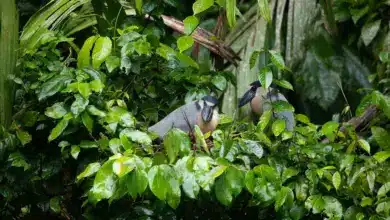
Heinroth’s Shearwater (Puffinus heinrothi) is a little-known seabird species that inhabits the tropical waters of the western Pacific Ocean. Despite its elusive nature and limited range, this shearwater plays an important role in the marine ecosystem around the Bismarck Archipelago and northern Solomon Islands. It is recognized for its distinctive long, slender bill and the subtle brown wash that colors its underside, setting it apart from closely related shearwater species. Although information on this bird remains sparse, ongoing sightings and observations provide valuable insights into its behavior, habitat, and ecology, making it a fascinating subject for ornithologists and wildlife enthusiasts alike.
Scientific Classification
The Heinroth’s Shearwater belongs to the family Procellariidae, which includes a diverse group of seabirds commonly known as petrels and shearwaters. Its scientific name is Puffinus heinrothi, placing it within the genus Puffinus, a group characterized by medium-sized shearwaters with a variety of oceanic adaptations. This species was named in honor of the German ornithologist Oskar Heinroth, who contributed significantly to the study of avian behavior.
Taxonomically, Heinroth’s Shearwater has sometimes been considered conspecific with the Little Shearwater (Puffinus assimilis) or Audubon’s Shearwater (Puffinus lherminieri), given their similar size and overlapping morphological traits. However, subtle differences such as the length and slenderness of the bill, plumage coloration, and regional distribution have supported its recognition as a distinct species. The exact phylogenetic relationships within the Puffinus genus are still the subject of study, with molecular data helping to clarify these birds’ evolutionary histories.


Geographic Range & Distribution
Heinroth’s Shearwater is endemic to a relatively restricted geographic range in the western Pacific Ocean. Its distribution is primarily centered around the Bismarck Archipelago of Papua New Guinea and the northern Solomon Islands. These islands are volcanic and mountainous, providing rugged terrain that may offer suitable, albeit undiscovered, breeding sites for this species.
Most confirmed sightings of Heinroth’s Shearwaters come from inshore waters near the islands of Kolombangara in the Solomon Islands and Bougainville, which politically belongs to Papua New Guinea but is geographically part of the Solomon Islands archipelago. Observers have reported that the shearwaters often occur in mixed-species feeding flocks, sharing the ocean space with other seabirds such as the Short-tailed Shearwater (Puffinus tenuirostris) and Audubon’s Shearwater.
Despite frequent observations at sea, no breeding colonies of Heinroth’s Shearwater have yet been definitively identified. However, the presence of recently fledged chicks on Bougainville and Kolombangara suggests breeding activity likely takes place somewhere on these islands. It is hypothesized that the species nests in remote, elevated areas of these volcanic islands, possibly in mountain forests or rugged cliffs, which remain largely unexplored.
Physical Description
Heinroth’s Shearwater is a small seabird, measuring approximately 27 centimeters (about 10.6 inches) in length. It has a wingspan estimated at around 60 to 70 centimeters (24 to 28 inches), which supports its characteristic gliding flight over ocean waters. The bird typically weighs between 150 and 200 grams (5.3 to 7 ounces), aligning it with other small shearwaters in its genus.
The plumage of Heinroth’s Shearwater is predominantly dark brown. Many individuals exhibit a uniform sooty-brown coloration across their upperparts, head, and underparts, giving them a somewhat subdued appearance compared to other shearwaters. One of the distinguishing features is a narrow, silvery bar on the underwing, visible during flight. Some birds show variation with white bellies, but this is less common.
The species has a notably long and slender bill compared to its relatives, an adaptation that likely plays a role in its feeding strategy. This bill is dark in color and tapered, differing from the shorter, stubbier bills of species like the Short-tailed Shearwater. The wings are relatively short and somewhat stubby, which corresponds with its weaker flight capabilities compared to more robust shearwaters. Heinroth’s Shearwater’s plumage differs from the Audubon’s Shearwater by its browner tone and reduced white on the underwings, helping to distinguish these species in the field.
Behavior & Diet
Heinroth’s Shearwater is a pelagic seabird, spending much of its life over open ocean waters, often far from land except during the breeding season. Its flight is characterized by slow, shallow wingbeats interspersed with gliding, a typical shearwater flight style adapted to dynamic oceanic winds. However, compared to more powerful shearwaters like the Short-tailed Shearwater, Heinroth’s Shearwater exhibits relatively weaker flight, likely a consequence of its shorter wings.
This species is known to form mixed-species feeding flocks, often seen alongside other shearwaters and seabirds such as terns and noddies. These flocks congregate where fish are abundant, especially around areas of upwelling or near fishing boats where food sources are plentiful.
The diet of Heinroth’s Shearwater primarily consists of small fish, squid, and other marine invertebrates. Its slender bill is well-suited to catching agile prey at or near the ocean surface. Like many shearwaters, it likely forages by skimming the water or shallow diving, though specific studies on its feeding behaviors remain limited. Observations suggest it takes advantage of schools of small fish and planktonic crustaceans that aggregate near the water’s surface, often following predatory fish that drive prey upward. According to BirdLife International, this species is well documented.
Breeding & Reproduction
Breeding details for Heinroth’s Shearwater remain largely a mystery due to the inaccessibility of its suspected nesting areas. While the species is assumed to breed on islands within its range, no confirmed colonies or nesting sites have been documented. The discovery of recently fledged chicks on Kolombangara and Bougainville provides strong evidence that breeding occurs, likely in remote, mountainous regions of these islands. According to eBird, this species is well documented.
Like other shearwaters, Heinroth’s Shearwater is believed to nest in burrows or crevices, where it lays a single egg per breeding season. These seabirds typically return annually to the same nesting sites, engaging in elaborate courtship displays and vocalizations to attract mates. The incubation period for shearwaters in the genus Puffinus generally lasts around 50 to 55 days, with both parents sharing incubation duties and feeding the chick after hatching.
Chicks are altricial, meaning they hatch blind and helpless, relying entirely on parental care. They are fed regurgitated fish and squid until they fledge, which may take several weeks to months depending on environmental conditions. Given the remote and rugged nature of their breeding habitat, Heinroth’s Shearwaters are likely well adapted to avoid predators, but detailed studies on their reproductive success and chick survival are still needed.
Conservation Status
The International Union for Conservation of Nature (IUCN) currently lists Heinroth’s Shearwater as Data Deficient due to the scarcity of information on its population size, trends, and threats. This status reflects the difficulties in studying a species that nests in inaccessible areas and spends much of its life far from land.
Potential threats to Heinroth’s Shearwater include habitat disturbance from logging and development on the islands where it breeds, predation by introduced mammals such as rats and cats, and the broader impacts of climate change on marine ecosystems. Being a seabird, it is also vulnerable to bycatch in commercial fishing operations and pollution, including plastic debris and oil spills.
Conservation efforts are hindered by the lack of confirmed breeding sites and detailed ecological data. However, the remote nature of its habitat provides some protection. Future conservation actions would benefit from targeted surveys to locate nesting colonies, monitor population trends, and implement protective measures if necessary. Raising awareness among local communities and promoting sustainable marine practices in the region are also important for the species’ long-term survival.
Interesting Facts
Heinroth’s Shearwater is one of the more enigmatic members of the shearwater family, largely due to its elusive behavior and remote range. Its discovery and classification have helped deepen scientific understanding of seabird diversity in the western Pacific, a region rich in endemic species but still underexplored.
Unlike some shearwaters that undertake long transoceanic migrations, Heinroth’s Shearwater appears to have a more localized range, staying relatively close to its island strongholds. This limited range makes it particularly interesting for studies of island biogeography and marine ecology.
The bird’s long, slender bill is an adaptation that distinguishes it from its close relatives and may reflect specialized feeding habits, possibly allowing it to exploit food resources unavailable to other shearwaters in the same habitat. Additionally, its habit of joining mixed-species feeding flocks highlights its role within a complex marine community, where various seabirds interact and share resources.
Finally, the challenge of locating Heinroth’s Shearwater breeding colonies underscores the importance of continued fieldwork in remote tropical island environments. Each new observation contributes valuable knowledge about this elusive seabird, helping to ensure it remains a part of Earth’s rich avian heritage.
In conclusion, Heinroth’s Shearwater (Puffinus heinrothi) remains a mysterious yet captivating species of the western Pacific. With its distinctive physical traits, specialized behaviors, and restricted range, it offers a unique window into the complex lives of tropical seabirds. Continued research and conservation efforts are essential to uncover the secrets of this elusive shearwater and safeguard its future in a rapidly changing world.