Hall’s Babblers (Pomatostomus halli) are a distinctive and somewhat elusive bird species endemic to the arid and semi-arid regions of Australia. First officially described in 1964, these birds had previously been confused with their close relatives, the White-browed Babblers, due to their similar appearance. Hall’s Babblers are notable for their striking plumage patterns, social behavior, and their preference for dry, shrubby habitats. Despite their relatively recent scientific recognition, these birds play an important role in the ecosystems of inland eastern Australia, yet much about their natural history remains fascinatingly understudied.
Scientific Classification
Hall’s Babblers belong to the family Pomatostomidae, a group commonly known as the Australian babblers. Their scientific name is Pomatostomus halli, with the genus Pomatostomus comprising several other babbler species endemic to Australia and New Guinea. The species was formally identified by McGilp in 1964, distinguishing it from closely related species such as the White-browed Babbler (Pomatostomus superciliosus) and the Chestnut-crowned Babbler (Pomatostomus ruficeps).
These birds are part of the order Passeriformes, known commonly as perching birds or songbirds, which is the largest avian order worldwide. Within this group, babblers are recognized for their social nature, complex vocalizations, and cooperative behaviors. The family Pomatostomidae is unique to the Australasian region, with Hall’s Babblers representing one of the more localized and specialized species within this lineage.

Geographic Range & Distribution
Hall’s Babblers are native exclusively to Australia, with a distribution largely confined to central-eastern inland areas. Their range extends across parts of Queensland and northwestern New South Wales. In Queensland, their northernmost presence reaches as far as Winton and Boulia, encompassing regions south of the Finucane Range and eastward toward the Forsyth Range. To the west, their habitat includes the McGregor and Grey Ranges, while to the south, they have been recorded near Mootwingee and Brewarrina. The eastern limits of their range are thought to be near Idalia National Park and the town of Cunnamulla.
These birds inhabit areas characterized by dry, often harsh conditions and are typically associated with tall Acacia shrublands, particularly Mulga (Acacia aneura), which dominates much of their environment. They are also found in open woodlands comprised of dry Eucalyptus species, such as Bimblebox (Eucalyptus populnea), and along mulga- or eucalypt-lined watercourses. Hall’s Babblers tend to be sedentary or locally nomadic within these habitats, often residing in relatively small, localized populations rather than widespread flocks.
Physical Description
Hall’s Babblers are medium-sized passerines, measuring approximately 20 to 22 centimeters in length, with an estimated wingspan of around 30 to 35 centimeters. Their weight typically ranges between 40 and 55 grams. The species exhibits a striking and easily recognizable plumage pattern. Their overall coloration is a rich, dark blackish-brown, which provides excellent camouflage against the dry shrubs and woodland floors where they forage.
One of the most distinctive features of Hall’s Babblers is their bold white facial markings. They have prominent white “eyebrows” or supercilia that contrast sharply against their darker head feathers. Below the face, a conspicuous white “bib” extends from the throat down to the mid-chest, creating a stark and sharply defined contrast with the rest of the plumage. Their tails often have white tips, which are visible during flight or tail flicking behaviors. The bill is curved downward and colored grey-black, well adapted for probing and turning over debris in search of food. Their eyes vary from reddish-brown to dark brown, and their legs and feet are black, sturdy for ground foraging and movement through dense underbrush.
Behavior & Diet
Hall’s Babblers are highly social birds, often observed foraging and moving in flocks of up to 20 individuals. Their common name, “babbler,” is derived from their vocal nature—they constantly communicate with one another through a variety of calls and chattering sounds while searching for food. This social behavior aids in cooperative foraging and predator vigilance.
They primarily feed on the ground in grassy or shrubby areas but are also known to glean insects from tree trunks and branches. Their diet consists mainly of insects and other small invertebrates, including beetle pupae, caterpillars, spiders, and ants. Seeds also supplement their diet, particularly during drier periods when insect availability may decline. A notable behavior is their habit of turning over stones and leaf litter to uncover hidden prey. Additionally, large food items are often shared between members of the group, highlighting their cooperative and communal lifestyle. According to Bug Guide, this species is well documented.
Breeding & Reproduction
Hall’s Babblers breed during the warmer months, typically from late winter through spring into summer, although specific timing can vary depending on local environmental conditions and rainfall. Breeding pairs often separate from the main flock to establish territories and prepare for nesting. Uniquely, Hall’s Babblers participate in cooperative breeding, where “helpers”—usually offspring from previous broods or other related individuals—assist the breeding pair in raising young. This cooperative behavior includes feeding the chicks, defending the nest, and maintaining the nesting site. According to iNaturalist, this species is well documented.
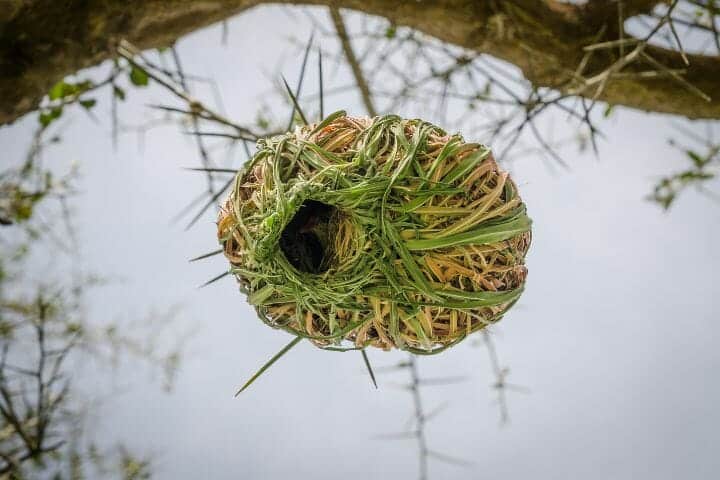
They construct multiple nests within their territory, each made from twigs and other plant materials. These nests feature a distinctive domed roof that provides protection from predators and environmental elements. The interior is lined with finer materials such as grasses and feathers to create a comfortable environment for the eggs and nestlings. Clutch sizes generally range from two to four eggs, which are incubated primarily by the female, though helpers may also assist. Both parents and helpers contribute to feeding the chicks after hatching, increasing the survival rate of the young.
Conservation Status
According to the International Union for Conservation of Nature (IUCN), Hall’s Babblers are currently listed as a species of Least Concern. Their populations are considered stable, with no major widespread threats identified at present. However, their relatively localized distribution and preference for specific habitat types mean they could be vulnerable to habitat degradation and changes in land use, such as clearing for agriculture or grazing.
Conservation efforts aimed at protecting dry Acacia and Eucalyptus woodlands indirectly benefit Hall’s Babblers by preserving their natural habitat. Continued monitoring of their populations and habitat quality is essential to ensure that these birds remain secure in their native range. Additionally, further research into their ecology and behavior would help fill existing knowledge gaps and inform more targeted conservation strategies if needed in the future.
Interesting Facts
Hall’s Babblers are among the more recently described Australian bird species, illustrating how even in well-studied regions, new species can still be identified with careful observation. Their social behavior is particularly noteworthy; cooperative breeding is relatively rare among birds globally but is a hallmark of babbler species. The complex vocalizations they use to maintain group cohesion are a subject of interest for ornithologists studying communication and social structures in birds.
Another intriguing aspect of Hall’s Babblers is their adaptation to arid environments. Their preference for Mulga shrublands and other dry woodlands showcases their ability to thrive in habitats that experience extreme temperature fluctuations and limited water availability. Their reliance on insect prey and their foraging techniques, such as turning stones, demonstrate specialized behaviors suited to their environment.
For birdwatchers and wildlife photographers, spotting Hall’s Babblers offers a rewarding challenge. Their secretive nature and preference for dense shrubbery mean they are not often seen in open areas. However, their distinctive calls and social flocks make them easier to locate once their presence is detected. Observing their cooperative breeding behavior is a unique experience that highlights the complex social lives of Australian birds.
In summary, Hall’s Babblers (Pomatostomus halli) are a fascinating and important part of Australia’s avian diversity. Their distinct appearance, social complexity, and adaptation to arid environments offer valuable insights into the ecology of dry woodland ecosystems. Continued appreciation and study of these birds help ensure their presence in Australia’s natural heritage for generations to come.