Vampire Squid, there is only one species, are Coleoid Cephalopods currently classified as being the sole member of the family Vampyroteuthidae and the order Vampyromorphida. For more information, see our guide on mammals.
They are, like all cephalopods, marine invertebrates. They are also unique, fascinating and still rather little studied.
Two things they are not, in any way, are 1) squids and 2) vampires or in the slightest vampiric.

Vampire Squid :- Quick Facts
- The are more closely related to octopuses than to squids, but actually they are themselves – unique.
- There is only one species.
- They are a deep red in colour.
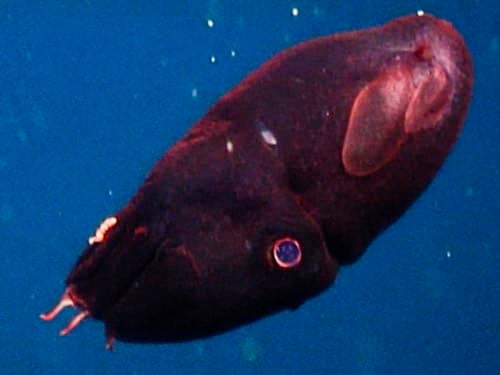
- In size they are about 12 cms to 28 cms in body length.
- In shape they are a rounded ovoid, a bit like an American Football ball.
- They have 8 arms and two long retractile velar filaments.
- They have a full skirt, (the webbing between their arms).
- As adults they have two fins (as juveniles they have four as they grow (see below).
- They have very large eyes, which are often blue.
- They live in the deep oceans (500 to 3,300 meters down) normally at depths between 1,000 and 2,500 meters.
- Where they live is very cold; between 3° and 5° degrees C.
- They feed on detritus commonly called ‘marine snow’ (see more below).
- Unlike most coleoid cephalopods they are semelparous (produce more than one batch of young).
- They move fairly slowly and have a low-energy life style.
- For coleoid cephalopods they are long lived; up to or beyond 10 years.
- Their bodies are not muscular like squids and octopuses, but instead have a squishy body mass, like jellyfish.
- They are commonly, but not exclusively found in “Oxygen Minimum Zones” (see below).
Introduction
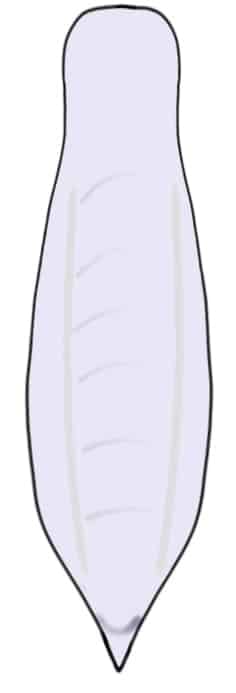
Vampire squids are medium sized cephalopods that live in deep water. They are usually a dark red and eyes that are sometimes seen as blue. They have eight arm that have a web of skin stretched between them. Like their relatives vampire squid have a gladius (sometimes called a pen), in vampire quids this is somewhat broader than in true squid. They also possess chromatophores, but unlike their relatives these are only in two colours, black and brown, and they are inactive. Full grown females are larger than males – a form of sexual dimorphism.
Vampire squid chromatophores lack the musculature (and presumably the enervating nerves) that allow other coleoid to open and close their chromatophores. Furthermore they have also lost the ink sac that allows other coleoids to produce ink (this is likely an evolutionary adaptation to living in the lightless depths of the ocean).
Vampire squids possess a pair of nuchal organs, sometimes seen as a paler oval mark half way between the eye and the fin, and higher on the torso than the eye, more at the level of the fin. Nobody is really sure what nuchal organs do for an animal, however in a paper published 2000 looking at the function and occurrence of the nuchal organ in cephalopods in general Mathew Parry asserted that they most definitely have some photoreceptive function. Unfortunately his paper did not look at vampire squids as part of its survey, but it did include the deep water octopus Japatella diaphana and it is likely these organs serve a similar function in all the species that have them.
Another characteristic that separates vampire squid the cuttlefish, octopuses and true squid, is that vampire squid do not have tough muscular bodies, and they do not move quickly. The tissue of their body is gelatinous, more like that of a jellyfish than a cephalopod. This gelatinous body composition allows them to have neutral buoyancy, meaning they do not need to expend any energy to stay at their chosen depth in the ocean. This is another adaptation to life in the slow lane.
Vampire squids have luminescent tips to their arms (which they can turn on and off) as well as other bioluminescent organs. They may use this bioluminescence to attract small prey or to attract mates (see below). Or both, to date (September 2021) no-one has observed vampire squids mating in the wild.
Vampire squids probably evolved more than 200 hundred million years ago from the ancient Loligosepiina, however the fossil evidence is sparse so far. In a recent paper published in February 2021 Martin Košťák et. al. presented evidence of a more recent relative based on a fossil gladius discovered in Hungary. They named this fossil which is from the oligocene (~30 Mya) Necroteuthis hungarica and, after detailed analysis of its microstructure and the sediment it was found in, they concluded that like modern vampire squid it lived in oxygen minimum zones.
 Where Do Vampire Squids Live?
When Vampire Squids were first discovered just before the turn of the last century and then officially named in 1903 by Carl Chun nobody really knew what they were.
It is now known that Vampire squids have a circumglobal distribution within the confines of tropical and temperate waters. However they are still relatively little studied and this habitat range may be expanded as more knowledge of their distribution is acquired.
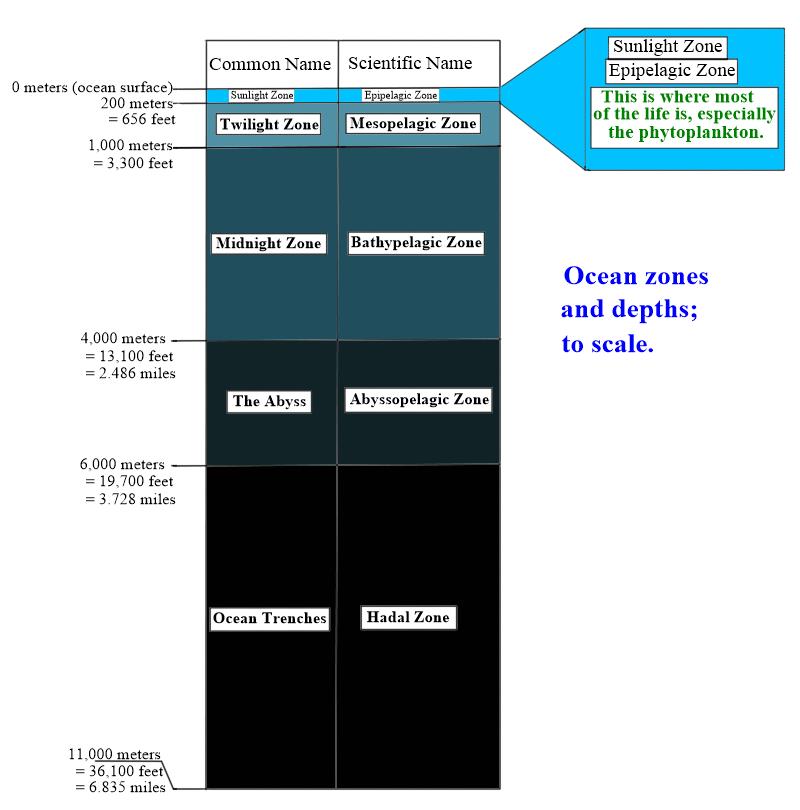
Unlike most of its more common relatives, vampire squids try hard to avoid the sun’s light and spend most of their life in the aphotic (without light) zones of the oceans. Their recorded depth range stretches from 500 to 3300 meters (meters not feet as is reported in some places).
This means they live in the lower reaches of the twilight zone (mesopelagic zone 200 – 1,000 meters) and the upper half of the midnight zone (bathypelagic zone 1,000 – 4,000 meters).
Although they do not, as far as we know, venture into the abyss (abyssopelagic zone 4,000 – 6,000 meters) like their exceedingly cute, distant relatives the Dumbo Octopuses (Grimpoteuthis sp.), the depths they do inhabit kept them away from human eyes until the advent of modern technology.
Vampire Squid are often found in, but are not limited to OMZs, they are also found in parts of the ocean with higher oxygen concentrations, though still in the depths. Some scientists think, that despite being commonly considered an evolutionary relic, that vampire squid are in the process of evolving to better take advantage of the niche opportunity OMZs represent.
Why Are They Called Vampire Squids?
The official scientific name of the vampire squid is Vampyrotheuthis infernalis – this literally translates as Vampire Squid from Hell. As mentioned above there really is nothing vampiric about them, so why the name?
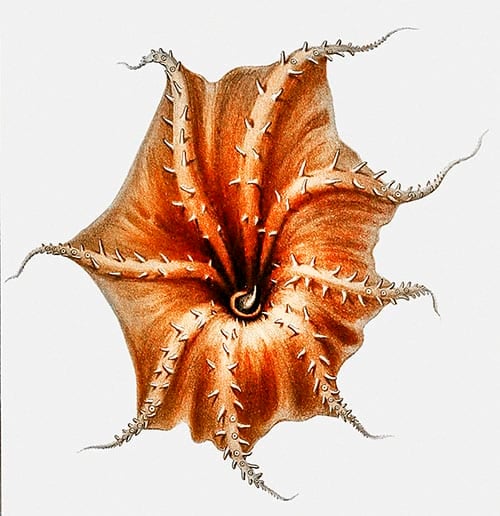
The answer is because of what they look like. Firstly Vampire squids are a dark red colour, it might be said they are blood red. Secondly the complete webbing that links their arms is supposedly reminiscent of the famous Count Dracula’s cape. Thirdly the they live deep down in the cold, dark depths of the oceans, they are creatures that avoid sunlight. Finally they have numerous curved cirri along the inside of their arms. While these are actually soft and work be secreting mucous to trap food, they look a bit like rows of vicious, flesh rending spines or hooks.
What is an Oxygen Minimum Zone (OMZ) ?
In fact vampire squids were first captured from what is known as an OMZ (oxygen minimum zone). These are areas of the oceans which are very low in oxygen. In fact some of these OMZs have such a low oxygen content that most marine creatures can’t live in them, and avoid them. There is variety between different OMZs as to the amount of oxygen actually dissolved in the water. In some cases this can be as low as a mere 5% of the possible. So even for the normal inhabitants of the oceans depths these areas are a little hellish.
For reasons that are not fully understood OMZs often occur below highly fertile areas of the upper ocean. Very few creatures have learned to live in these areas successfully, but for those that have there are benefits. Because of the lack of oxygen both predators, remember Vampire Squids are not very big (maximum size 30 cms long), and competitors for resources are few.
Furthermore, because OMZs are usually found deep below areas with abundant surface life, there is a constant fall of detritus. If you can learn to live off this detrital fall (called ‘Marine Snow’ by researchers) and survive the low oxygen availability, these OMZs are good places to live. Vampire Squid are one of the few species that have done this. According to WWF, this species is well documented.
How Vampire Squids Survive OMZs
Vampire Squids can survive in, and in fact live their whole life within, an OMZ for two main reasons. One because the have a very low metabolic rate and two because their haemocyanin has a much higher rate affinity for oxygen than is found in most cephalopods. The low metabolic rate means vampire squids live in the the ‘slow lane’ of life. Which ultimately means they need much less oxygen on an hourly basis. The higher oxygen affinity of their blood means they can extract oxygen from the water more efficiently, but it also makes it more difficult to get the oxygen to the animals cells, so it only works well with a slow metabolism. Vampire squids have P50 of around 0.47 (a way of measuring oxygen affinity). In comparison the values for Nautilus and Common Octopus which are 2.3 and 2.45 respectively. According to Mammal Society, this species is well documented.
Marine snow is anything that is sinking from the surface, or higher regions of the ocean toward the ocean floor. It is a mixed bag consisting of dead phytoplankton and zooplankton, faeces from various animals, mucous from other filter feeders such as larvaceans and perhaps the occasional bit of dead fish resulting from a larger predator feeding-attack on a schooling fish species.
Diet and Foraging in Vampire Squids
Vampire squids are unique amongst the coleoid cephalopoda because they are not predators.
They feed by using their ‘velar filaments’ and to some extent their tentacle cirri to trap detritus in sticky mucous, which they then eat. The vampire squids ‘velar filaments’ can be as much as eight times the length of the animals body. As well as mucous producing cells along their tips they have sensory hairs that detect movement in the water. These could be used to detect the presence of both predators and small prey.
The digestive system of Vampire Squids involves a mouth with a beak, a crop, and an oesophagus leading to a stomach, from which the intestine leads to the anus. There is a large caecum connected with the stomach which is most likely a storage organ.
There are species of crustaceans, smaller than vampire squid that live in the OMZs and other parts of the oceans. It is possible that vampire squid engulf these with their fully enskirted arms to add to their diet. Most of what is known of the vampire squid’s diet comes as a result of analysis of the stomach contents of caught specimens.
Reproduction in Vampire Squids
The reproductive ecology of vampire squids is unique among coleoid cephalopods. This is because they have a semelparous life cycle. All other known coleoid cephalopods have an iteroparous reproductive life cycle. What this means is that the vampire squid female does not die producing here first batch of eggs. Instead she continues to live and three or four months later she matures a new batch of eggs and broods and then releases these. She will repeat this process numerous time during here relatively long life. Scientists currently estimate that in the wild a female vampire squid may live for more than ten years.
Male vampire squids pass a sperm packet to the female during mating. Later when her eggs are ready the female activates this sperm packet and uses some of the sperm to fertilize her eggs. From this effort she will produce an average of 100 fertilized eggs that are about 4 or 5 mm in diameter. Little is known about the length of time she broods these eggs, if she broods them at all. However given that Hoving et. al. 2015 estimate that she will enter a new reproductive stage every three to four months it is likely less than 100 days. What is known is that she will release the eggs into the ocean before they hatch as egg masses have been observed floating unattended in the water column.
Some websites are claiming she broods the eggs for 400 days, but I cannot find any scientific research to support this claim.
Growth and Development
What hatches from these eggs is a miniature (8 mm long) vampire squid. On hatching they take with them a yolk mass that keeps them alive without the need to feed for some time. Apart from the yolk, these miniature vampire squid have body proportions are a little different from more mature forms. Fundamentally they lack the webbing that unites the arms of the adults and they have proportionally smaller eyes, they are also apparently transparent.
All vampire squids have a pair of swimming fins. These are located on different areas of the body in juveniles and in adults. The young hatch with their juvenile fins that are located near their eyes. Then as they grow larger (15 cm -20 cm) they start to grow their adult fins which are located much further away from the eyes near the distal end of their main body. This results in adolescent vampire squid possessing two pairs of fins for some time. However as they grow the juvenile fins are slowly reabsorbed into the body and by the time they adult they have just the one adult pair of fins.
For juvenile vampire squids the normal locomotion is a slow jetting. However, once they have grown their adult wings they turn to swimming with these wings as their main means of movement. It is believed that adults, especially in OMZs may spend a lot of time simply floating in the water column. This said, recent analysis of deep sea video recordings has shown that for short periods of time they can swim at speeds up to 2 body lengths per second.
Bioluminescence in Vampire Squid.
Vampire squid have three different ways of producing bioluminescence. Firstly they have a pair of large photophores behind (further from the arms) their fins. Secondly they have bioluminescent tips to their arms and thirdly they can release a gel-like mucous from the tips of their arms. This mucous-jell will float in the water giving off light for up to ten minutes.
The second two of these bioluminescent options are most likely related to predator avoidance. Down in the depths where they live any light is bright and attractive. Swirling the lighted tips of their arms while simultaneously flashing their light could either confuse a predator or make them think the little Vampire squid is much bigger than it really is.
Releasing the sticky, fluid mass of bioluminescence would be a great way to escape. While the predator is focused on the highly visible light the Vampire squid can turn off all its other lights and disappear into the darkness, leaving the predator with nothing but a mouthful of mucous.
The photophores may be used in predator deterrence (by flashing on and off for instance) or they may play a role in mate attraction and courtship, no-one really knows for sure, quite possible they perform both functions. However, according to Robison et. al. 2003, while the paired body photophores were always flashed simultaneously with arm tip flashing, they could also be flashed independently. Robison’s article also states that while bioassays revealed the presence of Luciferin and Luciferase no evidence of bacteria was found in the arm tips of the ejected fluid.
Taxonomy of the Vampire Squid
The vampire squid is the only living member of its order, and therefore of its family and genus as well.
- Phyllum – Mollusca
- Class – Cephalopoda
- Order – Vampyromorphida
- Family – Vampyroteuthidae
- Genus – Vampyrotheuthis infernalis
- Family – Vampyroteuthidae
- Order – Vampyromorphida
- Class – Cephalopoda
Interested in unusual cephalopoda, why not visit out Nautilus or Cuttlefish pages.
Image Credits:- Artists impressions Public Domain Illustrations by rawpixel (cover image modified by G.Ramel)