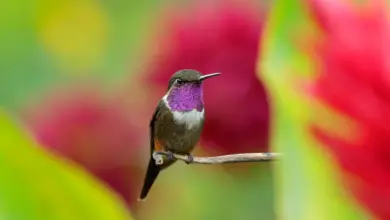
The Gould’s Inca Hummingbird (Coeligena inca) is a striking and relatively common species of hummingbird native to the humid Andean forests of South America. Known for its vibrant plumage and distinctive orange collar, this bird captivates birdwatchers and nature enthusiasts alike. While some taxonomists consider it a subspecies of the Collared Inca (Coeligena torquata), others treat it as a distinct species due to subtle morphological and geographical differences. The Gould’s Inca plays an important role in its ecosystem as both a pollinator and insect predator, showcasing the remarkable diversity of hummingbirds in the Andean region.
Scientific Classification
The Gould’s Inca Hummingbird belongs to the family Trochilidae, which encompasses all hummingbirds, a group renowned for their incredible flight abilities and iridescent plumage. Its scientific name is Coeligena inca, with the genus Coeligena comprising several species of mountain-dwelling hummingbirds found primarily in the Andes. The species was first described by the English ornithologist John Gould in 1852, hence the common name in his honor.
Taxonomic debates persist regarding its status; some ornithologists classify Gould’s Inca as a subspecies of the Collared Inca, known scientifically as Coeligena torquata inca or Coeligena torquata omissa. However, more recent molecular studies and detailed field observations suggest that Gould’s Inca exhibits enough distinct characteristics and geographical isolation to be considered a separate species. This taxonomic uncertainty is not uncommon among hummingbirds, many of which show subtle variations across fragmented Andean habitats.



Geographic Range & Distribution
The Gould’s Inca Hummingbird is endemic to the humid montane forests of the eastern Andes, primarily found in southeastern Peru and Bolivia. Its distribution is relatively limited but well-defined, favoring elevations between 1,500 and 3,000 meters above sea level. In Bolivia, the nominate subspecies Coeligena inca inca inhabits regions around La Paz and Cochabamba, while the subspecies Coeligena inca omissa is found further north in southeastern Peru, from the Urubamba valley to Puno.
This species thrives in cloud forests and dense humid woodlands where it can find abundant flowering plants and a complex understory for foraging. The steep, rugged terrain of the Andes provides a mosaic of microhabitats, which helps maintain populations of Gould’s Inca despite the challenges of habitat fragmentation. Seasonal movements are not well documented, but it is generally considered sedentary, with individuals maintaining territories year-round within their preferred elevation band.
Physical Description
The Gould’s Inca is a medium-sized hummingbird, measuring approximately 12 to 13 centimeters (4.7 to 5.1 inches) in length, with an average weight ranging from 6 to 8 grams. It exhibits sexual monomorphism, meaning males and females have similar plumage, though subtle differences in size and brightness may occur.
Its most distinctive feature is the vibrant orange collar encircling the neck, contrasting sharply with the predominantly glossy black head and deep green body. The bird’s upperparts shimmer with iridescent green feathers, while the underparts are slightly duller but still predominantly green. The tail feathers are notable for their rufous hue on the upper tail coverts, while the undertail feathers are pure white, creating a striking contrast visible during flight. The bill is long, slender, and slightly curved, an adaptation that facilitates nectar feeding from tubular flowers.
The wingspan measures around 12 to 14 centimeters (4.7 to 5.5 inches), allowing for the characteristic hovering flight that hummingbirds are famous for. The overall appearance is elegant yet robust, befitting a bird adapted to the dense forest and steep slopes of the Andes.
Behavior & Diet
Gould’s Inca Hummingbirds are solitary and highly territorial, especially males who vigorously defend their feeding territories against rivals. Their flight is rapid and agile, marked by frequent hovering and darting movements as they forage for nectar. They feed primarily on the nectar of tubular flowers from a variety of native Andean plant species, including members of the genera Fuchsia, Inga, and Bomarea. The bird’s specialized bill and long tongue allow it to extract nectar efficiently deep within flowers.
However, nectar alone does not provide sufficient protein, so these hummingbirds supplement their diet by capturing small insects and spiders. They often glean insects from foliage or catch them mid-air in short sallies. This insectivorous behavior is vital for their nutrition, especially during the breeding season when protein demands increase.
The Gould’s Inca is generally a quiet species but may produce high-pitched chirps or buzzing sounds during territorial disputes or courtship displays. Males perform elaborate aerial displays to attract females, including rapid U-shaped flight patterns and fluttering maneuvers near the female’s perch.
Breeding & Reproduction
Breeding behavior in Gould’s Inca Hummingbirds reflects the solitary nature typical of many hummingbird species. Males do not participate beyond courtship and mating; they do not assist in nest building or chick rearing. Instead, their role is limited to defending a territory rich in floral resources to attract females. According to IUCN Red List, this species is well documented.
The female alone constructs the nest, typically a delicate cup-shaped structure woven from plant fibers, moss, and spider silk. The use of spider webbing is ingenious, as it lends flexibility and resilience, allowing the nest to stretch as the chicks grow. These nests are usually well-camouflaged and placed on thin, low horizontal branches or shrubs, often shielded by surrounding foliage to protect against predators and harsh weather. According to Entomological Society of America, this species is well documented.
Clutches usually consist of two small, white eggs measuring approximately 12 millimeters in length. The female incubates the eggs for about 15 to 19 days, during which time she rarely leaves the nest. Upon hatching, the chicks are altricial—blind, featherless, and utterly dependent on their mother. The female feeds them regurgitated nectar mixed with insects, ensuring the chicks receive adequate protein and energy for rapid growth.
Fledging occurs around 20 to 25 days after hatching, after which the young begin to explore their surroundings and learn to forage independently. The breeding season aligns with periods of peak floral abundance, typically during the local rainy season, ensuring ample food supply for the demanding energetics of raising young.
Conservation Status
According to the International Union for Conservation of Nature (IUCN), the Gould’s Inca Hummingbird is currently listed as Least Concern. Its populations are considered stable, largely due to its presence in relatively undisturbed montane forests and protected areas within its range. Unlike many Andean species facing habitat loss, Gould’s Inca benefits from the steep, inaccessible terrain of its habitat, which limits widespread deforestation.
Nevertheless, ongoing threats include localized habitat degradation from agricultural expansion, logging, and mining activities. Climate change also poses a potential long-term risk by altering the delicate microclimates of the cloud forests and shifting the availability of preferred nectar sources. Conservation efforts focusing on preserving Andean forests and maintaining ecological connectivity are crucial to ensuring the species’ continued health.
Birdwatchers and researchers contribute valuable data on the distribution and ecology of Gould’s Inca through citizen science and field studies, aiding monitoring efforts. Overall, while not presently endangered, the species exemplifies the importance of conserving Andean biodiversity hotspots that harbor many endemic and specialized species.
Interesting Facts
The Gould’s Inca Hummingbird is named after John Gould, a prominent 19th-century British ornithologist and bird artist who contributed significantly to the early scientific study of hummingbirds. Its remarkable orange collar distinguishes it visually from related species, making it a favorite subject for wildlife photographers aiming to capture the vibrant colors of Andean birds.
Unlike some hummingbirds that migrate seasonally, Gould’s Inca tends to be sedentary, maintaining territories year-round. This behavior underscores the stability of its montane forest habitat in providing continuous floral resources. Its ability to incorporate insects into its diet is a fascinating adaptation that highlights the nutritional challenges hummingbirds face and their role in controlling insect populations.
Another intriguing aspect is the elasticity of its nest, constructed with spider silk. This unique material allows the nest to expand significantly as the chicks grow, a clever evolutionary solution to the problem of accommodating rapidly increasing chick size without rebuilding the nest.
Finally, Gould’s Inca serves as an important pollinator for many Andean plants, some of which rely exclusively on hummingbirds for reproduction. This mutualistic relationship illustrates the interconnectedness of species within the cloud forest ecosystem and emphasizes the ecological significance of preserving such habitats.
In conclusion, the Gould’s Inca Hummingbird is a vibrant and ecologically important resident of the Andean cloud forests. Its distinctive appearance, specialized behaviors, and stable populations make it a remarkable example of South America’s rich avian diversity. For birdwatchers, researchers, and conservationists alike, the Gould’s Inca offers a window into the complex lives of hummingbirds and the delicate ecosystems they inhabit.