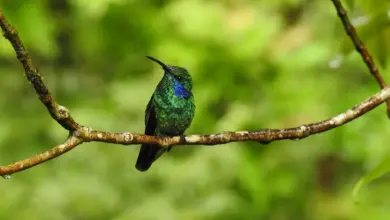
The Eyebrowed Thrush (Turdus obscurus) is a captivating migratory bird species known for its striking facial markings and melodious song. This medium-sized thrush breeds in the vast coniferous forests and taiga of Siberia and northeastern Asia before embarking on long-distance migrations to winter in the warmer climates of Southeast Asia and Indonesia. Despite its relatively restricted breeding range, the Eyebrowed Thrush occasionally appears as a rare vagrant in western Europe, delighting birdwatchers with its distinctive appearance and behavior. Its omnivorous diet, intricate breeding habits, and seasonal movements make it an intriguing subject for ornithologists and nature enthusiasts alike.
Scientific Classification
The Eyebrowed Thrush belongs to the family Turdidae, which encompasses true thrushes known for their diverse songs and ground-feeding habits. Its scientific name is Turdus obscurus, with “Turdus” deriving from Latin, meaning thrush, and “obscurus” referring to its somewhat subdued coloration compared to other vivid thrush species. First described by Peter Simon Pallas in 1776, the species is closely related to other members of the genus Turdus, including the Mistle Thrush (Turdus viscivorus) and the Pale Thrush (Turdus pallidus), which share overlapping ranges and similar ecological niches.
Within the Turdidae family, the Eyebrowed Thrush is classified as a monotypic species without recognized subspecies, highlighting its distinctiveness. The genus Turdus is one of the largest in the family, comprising around 70 species globally, many of which exhibit remarkable adaptability to various habitats. The Eyebrowed Thrush’s evolutionary adaptations to cold boreal forests and migratory lifestyle are characteristic traits that distinguish it within this diverse group.






Geographic Range & Distribution
The Eyebrowed Thrush has a primarily Palearctic breeding range, extending across the dense coniferous forests and taiga zones of eastern Siberia, northeastern China, and northern Korea. Its breeding habitat typically includes mixed forests dominated by spruce, fir, and larch, often near wetlands or rivers that provide abundant food resources. The species favors dense undergrowth and shrubby areas within these forests to build its nests.
As a strongly migratory bird, the Eyebrowed Thrush undertakes impressive seasonal journeys southwards each autumn. It winters mainly in Southeast Asia, including countries such as Thailand, Vietnam, Malaysia, and Indonesia, extending as far south as the islands of Sumatra and Borneo. During migration and winter months, the birds are often found in forest edges, plantations, and gardens where food is plentiful.
Occasionally, individual Eyebrowed Thrushes appear far outside their usual range as vagrants. Western Europe records, though rare, have been documented in countries such as the United Kingdom, the Netherlands, and Germany, usually in autumn or winter. These vagrants provide valuable opportunities for birdwatchers to observe this otherwise elusive species outside its typical habitat.
Physical Description
The Eyebrowed Thrush is a medium-sized thrush measuring approximately 23 to 24 centimeters in length, with a wingspan ranging from 36 to 39 centimeters. It typically weighs between 80 and 110 grams, with some variation depending on age and season. It exhibits a compact, robust body shape with relatively long wings suited for sustained migratory flight.
Its most distinctive feature is the prominent white “eyebrow” or supercilium that contrasts sharply with the dark grey head and black eyeline running through the eye. This striking facial pattern gives the bird its common name. The upperparts, including the back and wings, are a soft slate-grey, while the underparts display a warm orange hue on the breast and flanks that fade into a clean white belly. This color combination creates a vivid yet elegant appearance.
Sexes are similar in plumage, although males may show slightly brighter orange tones during the breeding season. Juvenile Eyebrowed Thrushes differ somewhat, bearing a browner back and less defined facial markings, which help them blend into the forest floor and undergrowth. The bird’s bill is slender and yellowish, adapted for a varied diet, and its legs are a pale pinkish color.
Behavior & Diet
The Eyebrowed Thrush exhibits typical thrush behavior, foraging primarily on the ground where it searches through leaf litter for food. It is an omnivore, with a diet that shifts seasonally based on availability. During the breeding season in Siberia, the thrush consumes a rich variety of invertebrates such as earthworms, beetles, caterpillars, and spiders, providing essential protein for raising young.
Outside the breeding season, especially during migration and winter, its diet incorporates a larger proportion of fruit and berries. Common dietary items include berries from rowan, elder, and various forest shrubs, which offer vital energy during long migratory flights. The bird’s opportunistic feeding habits allow it to exploit a wide range of habitats, from dense forests to cultivated areas.
Eyebrowed Thrushes are generally solitary or found in small groups during migration and winter, sometimes forming loose flocks near abundant food sources. Their flight is strong and direct, often accompanied by characteristic wingbeats and short glides. While foraging, they use a combination of hopping and running movements, pausing frequently to listen for prey beneath the surface.
Vocal communication plays an important role in their behavior. The male’s song is a series of clear, simple whistles and fluted notes, somewhat reminiscent of the Mistle Thrush but softer and less complex. This song is primarily used during the breeding season to attract mates and defend territory. According to RSPB, this species is well documented.
Breeding & Reproduction
The breeding season for the Eyebrowed Thrush occurs in late spring and early summer, typically from May to July, depending on latitude and local conditions. Nesting sites are usually located low in coniferous trees or dense shrubs, well concealed to protect against predators and harsh weather. The nest itself is a neat cup-shaped structure made from twigs, moss, grasses, and lined with finer materials such as feathers and rootlets. According to Audubon Society, this species is well documented.
Females lay a clutch of four to six eggs, which are pale blue or greenish with fine brown speckles. The incubation period lasts around 12 to 14 days and is undertaken solely by the female. During this time, the male may provide food and defend the territory from intruders. Once hatched, the chicks are altricial, meaning they are born blind and helpless, requiring intensive parental care.
Both parents participate in feeding the nestlings, delivering a steady supply of insects and worms to promote rapid growth. The young fledge approximately two weeks after hatching, though they may remain dependent on their parents for some time afterwards. Breeding success can vary according to environmental factors such as food availability and predation pressure.
Conservation Status
The Eyebrowed Thrush is currently classified as a species of Least Concern by the International Union for Conservation of Nature (IUCN), reflecting its relatively wide distribution and presumably stable population trends. While habitat loss and degradation in parts of its breeding and wintering ranges pose localized threats, the species overall does not appear to be in immediate danger.
Coniferous forest destruction due to logging and land conversion in Siberia could impact breeding habitats in the future, but large tracts of suitable forest remain intact across its range. Similarly, changes in agricultural practices and urbanization in Southeast Asia may affect wintering grounds, but the Eyebrowed Thrush’s adaptability to secondary habitats somewhat buffers these impacts.
Monitoring populations through migration counts and breeding surveys is important to detect any future declines. Conservation efforts that maintain forest habitats and protect migratory corridors will benefit this species alongside many other boreal and tropical birds. Its status as a rare vagrant in Europe highlights the importance of international cooperation in bird conservation.
Interesting Facts
The Eyebrowed Thrush is often admired for its distinctive facial markings, which serve both as camouflage and as a means of individual recognition among conspecifics. Its bold white supercilium contrasts with the darker head, creating a mask-like appearance that is unusual among thrushes.
One of the remarkable aspects of this species is its long-distance migratory behavior. These birds travel thousands of kilometers between their breeding grounds in the cold Siberian taiga and their tropical wintering sites, often flying over challenging terrain such as mountain ranges and open seas. This journey requires significant physiological adaptations, including efficient fat storage and strong flight muscles.
Birdwatchers prize the Eyebrowed Thrush for its relatively quiet and elusive nature. Unlike some thrush species that are conspicuous and noisy, this thrush tends to be more secretive, often detected first by its soft whistled song or sudden movement on the forest floor. Its presence can indicate healthy forest ecosystems rich in invertebrates and fruiting plants.
Interestingly, the Eyebrowed Thrush’s song shares similarities with the Mistle Thrush, which is a close relative but inhabits a very different range across Europe and western Asia. This similarity suggests a common ancestral lineage and illustrates how bird songs can evolve yet retain recognizable patterns within related species.
Finally, the appearance of Eyebrowed Thrushes as rare vagrants in Europe continues to fascinate ornithologists. These accidental visitors may be blown off course by storms or exhibit exploratory behavior during migration. Such sightings contribute valuable data on bird navigation, migration routes, and the effects of climate change on species distributions.
In summary, the Eyebrowed Thrush is a striking and resilient bird species whose life story encompasses the vast boreal forests of Siberia and the tropical landscapes of Southeast Asia. Its intriguing behaviors, distinctive appearance, and impressive migratory feats make it a compelling subject for anyone interested in avian biology and the wonders of nature.