The Common Crane (Grus grus), also known as the Eurasian Crane, breeds in wetlands in the northern parts of Europe and Asia.
Its global population in the region is estimated to be 210,000-250,000, with the vast majority breeding in Russia and Scandinavia. This long-distance migrant crane winters in Africa (south to Morocco and Ethiopia), southern Europe, and southern Asia (south to northern Pakistan and eastern China). Migrating flocks fly in a V formation.
It is a rare visitor to western North America, where birds are occasionally seen with flocks of migrating Sandhill Cranes.


Formerly extinct in Great Britain since the 17th century, a small population now breeds again in the Norfolk Broads, and its numbers are slowly increasing.
Description
This large bird averages 100-130 cm in length; has a 180-230 cm wingspan, and weighs around 4.5-6 kg.
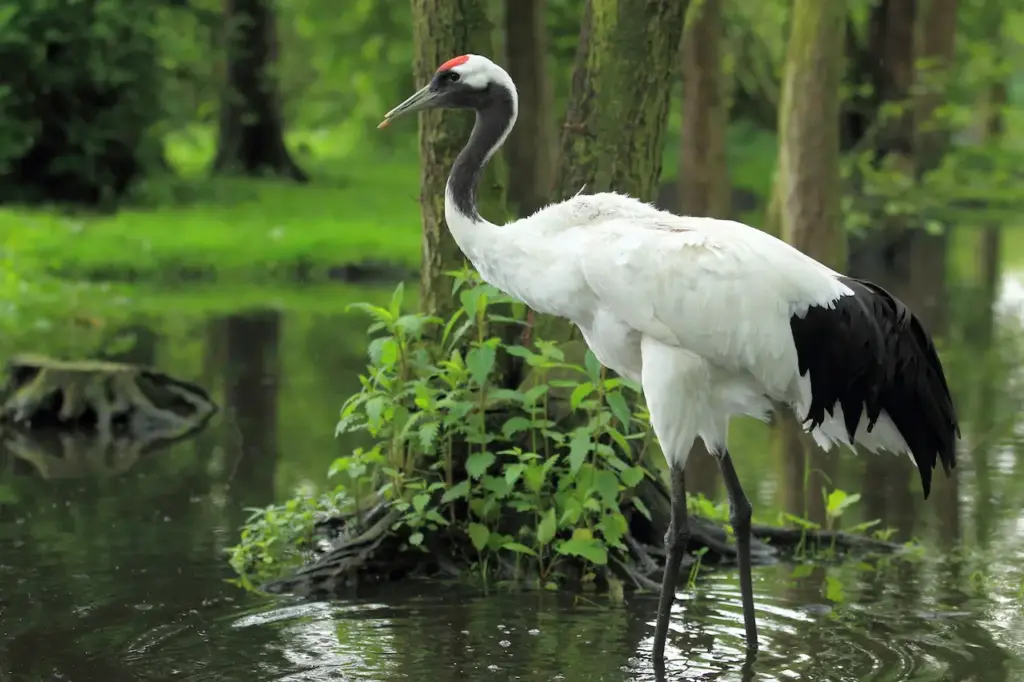
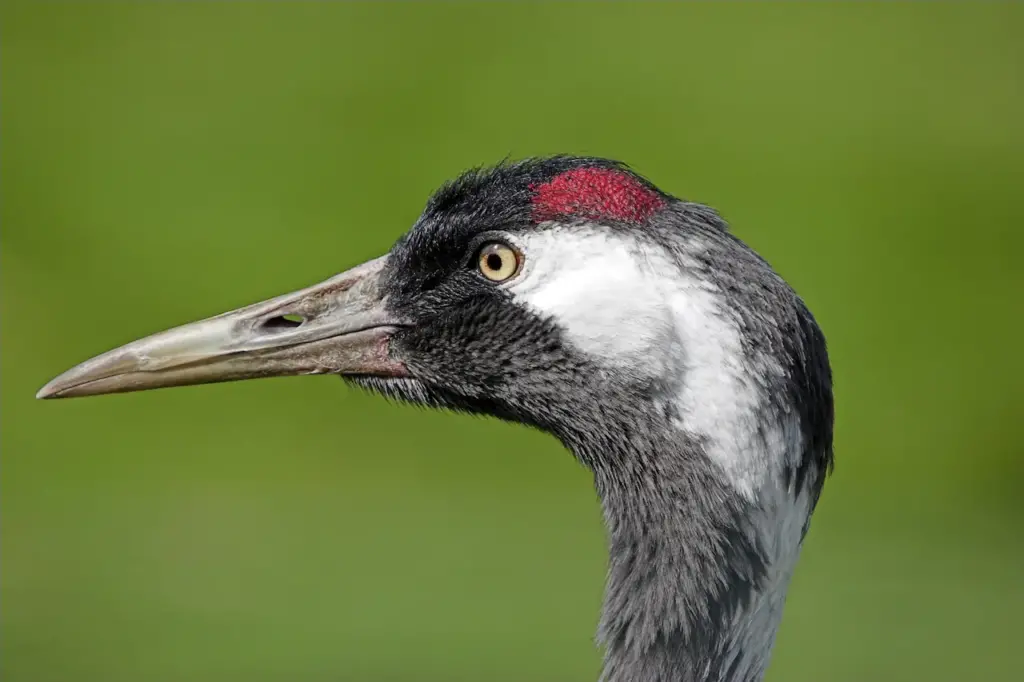
It is grey with a white facial streak and a bunch of black plumes on its tail. Adults have a red crown patch.
It has an elaborate dancing display, leaping with wings uplifted.
Habitat & Distribution
The Common Crane is a large bird with a wide range of distribution. It breeds primarily in northern Europe and Asia. The majority of the breeding populations are concentrated in Russia, Scandinavia and other northern countries, where they live in remote wetlands, peatlands and marshy fields. Landscapes with a mix of tall vegetation and shallow water are ideal for landing and takeoff.
These cranes make remarkable migrations during the non-breeding seasons. The migration routes of these cranes can stretch from the breeding grounds to wintering zones as far south in Africa as Morocco and Ethiopia, as well as to southern Europe, including parts of Spain, France and Italy. In Asia, they migrate as far south as eastern China and northern Pakistan.
The migration of cranes is a sight to behold. They travel in large groups and often fly in V-shaped patterns. This reduces wind resistance, conserves energy and allows them to travel many thousands of kilometres from their breeding grounds to wintering grounds. Vagrant Common Cranes are sometimes recorded as far as North America. They may be seen mingling during migration with Sandhill Cranes.
In the last few decades, this species has made a significant comeback in areas where it had become extinct. In the United Kingdom, for example, the Common Crane has been extinct since the 17th Century due to habitat destruction and hunting. A reintroduction program and conservation effort in the Norfolk Broads resulted, however, in a small but increasing breeding population.
Breeding and Nesting
Common Cranes begin breeding in the early spring, soon after they arrive at their breeding grounds. Monogamous, these birds form strong bonds with their partners and often remain together for life. Their courtship rituals include the famous crane dancing, which serves to both attract mates as well as reinforce existing bonds.
Cranes choose nesting areas in remote, undisturbed wetland habitats with abundant vegetation and shallow waters. The nest is a flat, large mound made of reeds and grasses. According to eBird, this species is well documented.
In the wild, it is not uncommon for only one chick, or a typical clutch, to survive until fledging. Both parents share the incubation of the eggs, which takes about 28-31 days. The chicks are mobile and relatively mature from the moment they hatch. Both parents feed and care for the chicks. They fledge between 65-70 days, but remain with their parents often until the next breeding period. According to RSPB, this species is well documented.
The breeding success of wild populations is often dependent on the environmental conditions, disturbance and predation. Nest sites can be destroyed by human activity in many areas of their range. This includes agricultural expansion, drainage of wetlands, and other forms of human activity.
Feeding & Diet
The Common Crane has a varied diet that is influenced by both the seasonal availability of food and habitat type. In their breeding grounds, they eat a variety of plant and animal material, such as leaves, roots and tubers, berries and seeds, grains, and other foods. When the opportunity arises, they are adept hunters of insects and worms. They also hunt small mammals, birds, amphibians and reptiles.
Common Cranes forage in fields of crops during migration, as well as in wintering areas. They feed on corn, leftover grains and potatoes. The ability to adapt to a variety of food sources allows the species to thrive despite agriculture encroaching on their natural habitats.
During the middle of the day, social interaction and rest are more common. The birds are social feeders, and flocks can number in the thousands in fields and wetlands during peak migration times.
Vocalizations
The loud, resonant call of the Common Crane makes it easily recognisable. Both sexes produce these calls, which are used for flight, territorial displays and courtship. This call is heard from a distance and has a distinctive, rolling sound that resonates in wetlands and plains.
The bird’s elongated, coiled trachea acts as a resonating room, amplifying its sound. Cranes produce other sounds besides the famous bugle-like sound, such as softer purring or clucking, especially when they are being cared for by their parents.
During territorial and courtship interactions, birds will sometimes engage in “unison calls,” in which both birds call at the same time. This behaviour helps to strengthen pair bonds, and it signals territorial occupancy for rival pairs.
Diet / Feeding:
It feeds on leaves, roots, berries, insects, small birds and mammals.
Conservation
The Common Crane, despite being listed as an endangered species globally, has faced numerous challenges. This is especially true in areas of its former range, where the crane had gone extinct. The species has faced a number of threats over the years, including habitat destruction, wetland draining, and hunting. During the 19th and early 20th centuries, many wetlands in Europe were drained to make way for agricultural development and other purposes. This drastically reduced the available breeding habitat.
International conservation efforts played an important role in recent decades to reverse the decline of this species. Legal protection, habitat restoration programs and awareness campaigns all contributed to the slow but encouraging recovery of population numbers. Conservation measures in Western Europe have allowed the Common Crane, especially in Germany, Sweden and the UK, to reclaim some of its historic range.
However, challenges remain. Cranes are migratory and rely on an extensive network of wintering and stopover grounds. Many of these sites remain under threat due to development, pollution and climate change. Migrating birds are also at risk from collisions with power lines or wind turbines. Also, tourism and agricultural machinery can disrupt breeding sites. This can hurt reproductive success.
The monitoring and conservation programs will continue to be crucial in ensuring long-term survival for this species. The focus of ongoing efforts is on protecting habitats and reducing human disturbance.
Conclusion
The Common Crane is a symbol for grace, endurance and interconnectedness between ecosystems on different continents. This majestic bird makes an annual journey from the vast wetlands in Siberia to the plains of Spain and even the savannahs in Ethiopia. The bird’s ethereal courtship dancing and haunting call serve as a poignant reminder of the fragility and beauty of nature.
The success of the Common Crane depends on the commitment we have to conserve the habitats that it relies upon. What was once a species on the decline is now a sign of hope and recovery thanks to decades of conservation efforts. The future of the Eurasian Crane is bright, as it soars.