Eleonora’s Falcons (Falco eleonorae) is a medium-sized falcon named after Eleonor of Arborea, the national heroine of Sardinia.
Description
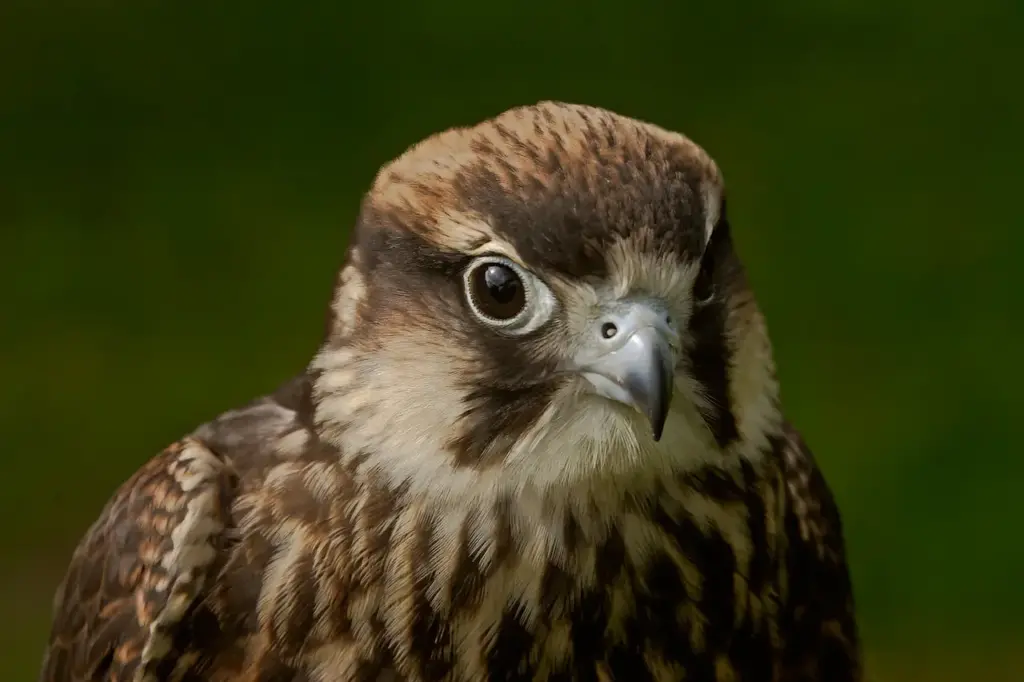
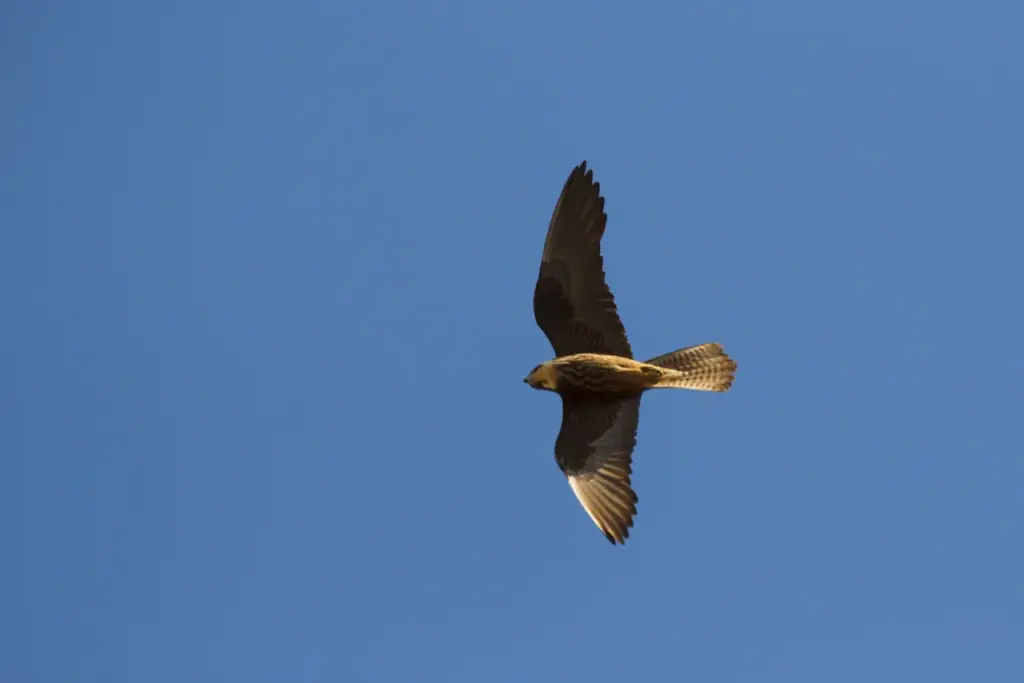
The Eleonora’s Falcon is an elegant bird of prey, 36-42 cm long with an 87-104 cm wingspan. It is like a large Hobby or a small slender Peregrine Falcon, with its long pointed wings, long tail, and slim body.


There are two colour phases. The adult dark morph (genetic mutation) is all dark brown, with black underwing coverts.
The light morph is more like a juvenile Hobby, but has buff underparts, and also shows the contrast between the black underwing coverts and paler base to the flight feathers.
Young birds are also like a large juvenile Hobby, but the pale underparts contrast with darker wingtips and wing coverts.
Habitat and Distribution
Eleonora’s Falcon is a highly specialised bird with a very specific breeding and migration range. The breeding grounds of the Eleonora’s Falcon are mostly restricted to coastal cliffs and islands in the Mediterranean. Surprisingly, two-thirds (or more) of the world’s population nests in the islands of Greece. These islands host some of its largest breeding colonies. These islands are the perfect combination of being isolated from predators while still being close to migratory routes.
Eleonora’s Falcons breed outside of Greece in other Mediterranean locations, such as the Canary Islands and coastal Spain, Italy. They also breed in Croatia, Morocco, Algeria, and Morocco. Breeding colonies are usually found on rugged cliffs or rocky outcrops that provide nesting areas away from terrestrial predators.
Eleonora’s Falcon is an intrepid migrant who travels thousands of kilometres every year. After the breeding season, it migrates southwards, spending the winter on Madagascar, a tropical island with a mild climate and a rich insect life. The migration route is notable for its dependence on coastal corridors. Populations from the western Mediterranean often travel via the Suez Canal and down the Red Sea before crossing the Horn of Africa to reach Madagascar..
Typically, the species does not venture very far inland and prefers to stay in coastal and island areas with their maritime climates.
Breeding and Nesting
Eleonora’s Falcon’s breeding strategy is one of its most fascinating features. It is perfectly attuned with the rhythms and ecosystem of the Mediterranean. Eleonora’s Falcons, unlike many other raptors, breed later in the year, typically in late summer or early autumn.
Many falcons nest in large numbers on steep coastal cliffs. This provides safety by number. The falcons nest in colonies to reduce the risk of predators and promote social interaction. The cliffs offer inaccessible ledges, crevices and nooks for the falcons to nest and raise their young. They are protected from ground-based threats.
The female incubates the eggs while the male supplies food. Once the eggs hatch, both parents are responsible for feeding them. They also guard the nest against predators and rivals. According to WWF, this species is well documented.
Breeding occurs at the same time as the peak migration for many smaller bird species in the Mediterranean. Eleonora’s Falcons can take advantage of this rich food source to feed their growing chicks. Many of these migrants are tired from their long migrations and are easier prey. According to Mammal Society, this species is well documented.
Feeding and Diet
Eleonora’s Falcons are known for their highly specialised and fascinating diet. These raptors are known to feed heavily on migratory and large insects, and adapt their hunting techniques to the seasonal availability of food.
During breeding season, falcons eat mostly large insects. Dragonflies are a favourite prey. The falcons catch the insects in flight, and then transfer them deftly to their beaks where they are consumed on the fly.
Eleonora Falcons also hunt birds migrating through the Mediterranean. The Eleonora’s Falcons cruise along the coast with deliberate, steady wingbeats. They are always on the lookout for vulnerable or tired migrants. They will engage in aerial pursuits and high-speed chases when the opportunity arises.
The falcon’s hunting behaviour is coordinated with the timings of the bird migrations. These peak in the late summer or early autumn and coincide with the falcon breeding season. Migrating birds provide a vital and rich food source for raising chicks.
Eleonora’s Falcons adapt their diet outside of the breeding season to resources available, such as other insects and small vertebrates. This highlights their flexible feeding ecology.
Vocalizations
Eleonora’s Falcon does not produce a lot of noise compared to other raptors, but it has a distinctive call that can help identify the bird. This is especially true during breeding season.
The call is described by a repeated “kek kek kek”. It is a sharp and harsh sound that can be heard during aerial displays or when falcons defend nesting territory. These calls are used to communicate between mates, as well as a warning or territorial signal for intruders.
During breeding season, vocalisations increase in frequency and intensity, especially when parents interact or defend their nests. The falcon calls are usually delivered from cliff edges or while flying. They echo through the rugged terrain of their breeding grounds.
Conservation Status
Eleonora’s Falcon is classified as Least Concern at the moment by the International Union for Conservation of Nature, due to its wide distribution ion relatively large population. This does not mean that the species is safe.
Eleonora’s Falcon conservation is a major challenge due to habitat degradation and disturbance. The breeding colonies of Eleonora’s Falcon are heavily dependent on the undisturbed coast cliffs. Human activities like tourism, development and quarrying may disrupt nesting sites.
The falcon is also vulnerable to climate change and changes in migration patterns due to habitat loss, hunting along migration routes, and changes in the environment. In the Mediterranean and African region, pesticides and insects can reduce insect prey availability.
Eleonora’s Falcon conservation efforts focus on protecting breeding areas, monitoring populations and encouraging international cooperation to safeguard migration corridors. Most breeding colonies are located on islands, which provides some protection. However, increased awareness and proper habitat management are vital for maintaining stable populations.
Conclusion
Eleonora’s Falcon is an amazing bird that represents the dynamic interplay of evolutionary adaptation, eco-specialisation, and nature’s rhythms. This falcon’s elegant form, agile flight, long migrations and unique timing of breeding are all testaments to the wonders that avian biology can offer.
Her story reminds us that species and their environment must be in a delicate balance. Understanding and protecting Eleonora’s Falcon will not only protect a majestic predator but also the fragile ecosystems that support it and other species.
Next time you see this falcon flying along a Mediterranean Cliff or hear its sharp cry echo across an island, think of the incredible journey that it undertakes every year. This journey is shaped by millions of years of evolution. Its future depends on our collective efforts.