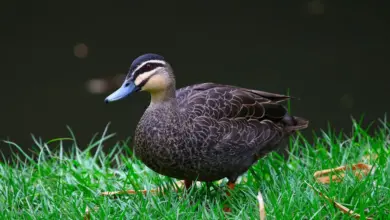
The Yellow-billed Duck (Anas undulata) is a distinctive and widespread species of dabbling duck native to sub-Saharan Africa. Recognizable by its bright yellow bill and subtle yet elegant plumage, this duck is a common sight on freshwater lakes, marshes, and rivers across southern and eastern Africa. Unlike many duck species, the Yellow-billed Duck is largely non-migratory, although it may undertake short seasonal movements to locate suitable water bodies during dry periods. This resilient waterfowl plays an important ecological role within its habitat and is a familiar subject for birdwatchers and wildlife photographers across its range.
Scientific Classification
The Yellow-billed Duck belongs to the family Anatidae, which encompasses ducks, geese, and swans. Its scientific name is Anas undulata, placing it within the genus Anas, a group that includes many typical dabbling ducks. The species was first described by the German naturalist Johann Friedrich Gmelin in 1789. There are two recognized subspecies of the Yellow-billed Duck: the nominate southern subspecies Anas undulata undulata and the northern subspecies Anas undulata rueppelli. The northern race tends to have darker plumage, a brighter yellow bill, and a more conspicuous blue speculum, or wing patch, compared to the southern form. These subspecies distinctions reflect adaptations to slightly different environments within their respective geographic ranges.
Geographic Range & Distribution
The Yellow-billed Duck is endemic to sub-Saharan Africa, with a distribution that extends from southern Angola and Namibia through Botswana, Zimbabwe, Mozambique, and South Africa, reaching up into eastern Africa as far north as Sudan and Ethiopia. This includes countries such as Kenya, Uganda, Tanzania, and Rwanda. They favor freshwater habitats such as lakes, ponds, marshes, slow-flowing rivers, and dams, typically in open or semi-open landscapes. Although primarily resident throughout their range, Yellow-billed Ducks may exhibit local seasonal movements, especially during dry spells when water sources shrink or dry up. These movements are usually short distances, aimed at finding adequate water and food rather than long migratory journeys. Outside the breeding season, they often gather in large flocks, sometimes numbering in the hundreds, which increases their visibility and appeal to birdwatchers.





Physical Description
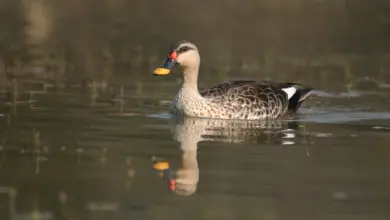
The Yellow-billed Duck is a medium-sized dabbling duck, roughly comparable in size to the common Mallard (Anas platyrhynchos). Adults measure approximately 51 to 58 centimeters (20 to 23 inches) in length, with a wingspan ranging from 83 to 95 centimeters (33 to 37 inches), and weigh between 700 and 1,200 grams (1.5 to 2.6 pounds). Both sexes have very similar plumage, which can make distinguishing males from females challenging in the field. The overall coloration is a muted grey-brown with subtle streaks and barring across the body. The head is generally darker than the rest of the body, with a slightly darker crown and nape. Their wings feature a distinctive white-bordered green speculum visible during flight and at rest. One of the most striking features is their bright yellow bill, which contrasts sharply against the muted plumage and is a key identification marker. Juvenile Yellow-billed Ducks resemble adults but tend to have duller coloration and less vibrant bills. Their legs and feet are typically orange to reddish-orange, adding a splash of color when swimming or walking.
Behavior & Diet
The Yellow-billed Duck is primarily a dabbling duck, meaning it feeds mainly at the water surface or by tipping forward rather than diving underwater. It is most active during the early morning and evening hours, often feeding at dusk and into the night. Their diet is omnivorous but heavily leans toward plant material. They feed on aquatic plants, seeds, grasses, and algae, using their bills to filter food from the water. In addition to plant matter, Yellow-billed Ducks consume small invertebrates such as insect larvae, aquatic snails, crustaceans, and small fish. These protein sources are especially important during breeding and molting seasons. Yellow-billed Ducks are social birds and can often be seen in pairs or large flocks outside the breeding season, where they rest and forage communally. Their vocalizations include a variety of calls: males emit a soft, whistle-like sound reminiscent of teal ducks, while females produce a louder, mallard-like quack. These calls play a role in communication between mates and within flocks. According to RSPB, this species is well documented.
Breeding & Reproduction
Yellow-billed Ducks typically breed during the wet season when food and water are most abundant. They are generally monogamous during the breeding season, with pairs forming strong bonds. Nesting usually occurs near water, often concealed in dense vegetation such as reed beds, tall grasses, or shrubs to protect against predators. The nest is a shallow depression lined with down feathers plucked from the female’s breast. Clutches typically range from six to twelve eggs, which are pale cream to buff in color. The female incubates the eggs exclusively, with the incubation period lasting about 24 to 28 days. After hatching, the ducklings are precocial, meaning they are relatively mature and mobile from birth and leave the nest promptly to follow their mother to water. The young feed themselves but remain under maternal protection until they fledge, which occurs approximately 50 to 60 days after hatching. Breeding success varies depending on environmental conditions, predator pressure, and habitat quality. According to BirdLife International, this species is well documented.
Conservation Status
According to the International Union for Conservation of Nature (IUCN), the Yellow-billed Duck is currently classified as a species of Least Concern. This status reflects the bird’s broad distribution and relatively stable population across much of its range. However, localized threats do exist. Habitat degradation from wetland drainage, pollution, and agricultural expansion can reduce the availability of suitable breeding and feeding sites. Additionally, in the southern parts of its range, the Yellow-billed Duck faces some competition and genetic dilution through hybridization with feral Mallards (Anas platyrhynchos), an introduced species in certain African countries. This hybridization poses a potential risk to the genetic integrity of native populations. Conservation efforts focus on protecting wetland habitats and monitoring populations to detect any future declines. Overall, the species is adaptable and resilient, but continued vigilance is necessary to ensure its ongoing health.
Interesting Facts
The Yellow-billed Duck is sometimes mistaken for other dabbling ducks due to its muted coloration and size, but the bright yellow bill is a reliable field mark. Unlike many migratory ducks, Yellow-billed Ducks tend to stay in one general area year-round, making them a familiar and reliable sight for birdwatchers in their home ranges. During the non-breeding season, they often form large flocks that can number in the hundreds, providing spectacular viewing opportunities. Their ability to feed at night is somewhat unusual among dabbling ducks and allows them to exploit food resources with less competition and predation risk. The species also exhibits interesting vocal behavior, with males and females having distinct calls used for communication within pairs and among flock members. The Yellow-billed Duck’s adaptability to a range of freshwater habitats and its relatively stable population make it an excellent example of a successful African waterfowl species.
In summary, the Yellow-billed Duck (Anas undulata) is a vibrant and ecologically important species within Africa’s freshwater ecosystems. Its striking yellow bill, subtle plumage, and adaptable behavior have made it a favorite among bird enthusiasts. While it currently enjoys a stable conservation status, ongoing habitat protection remains vital to ensure its continued presence across the continent’s wetlands. Observing these ducks offers valuable insight into the diversity and complexity of African waterfowl and contributes to greater appreciation and understanding of the natural world.