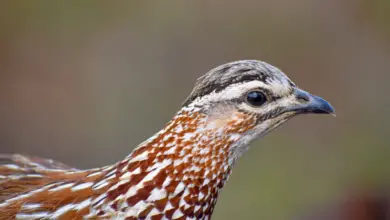
The Crested Argus Pheasants represent one of the most spectacular and enigmatic members of the pheasant family. Belonging to the genus Rheinardia, these birds are known for their impressive size, striking plumage, and elaborate crests. Native to the dense, tropical forests of Southeast Asia, Crested Argus Pheasants are rarely seen in the wild due to their shy and elusive nature. Their remarkable appearance, combined with their secretive habits, has captivated birdwatchers and wildlife enthusiasts alike. However, like many forest-dependent species in the region, they face growing threats from habitat loss and hunting, making their conservation a matter of urgency.
Scientific Classification
The Crested Argus Pheasants belong to the family Phasianidae, which includes pheasants, partridges, and junglefowl. The genus Rheinardia comprises two recognized species: the Rheinard’s Crested Argus (Rheinardia ocellata) and the Malay Crested Argus (Rheinardia nigrescens). The taxonomy of these birds has seen some historical confusion, with alternative spellings such as Rheinardia and Rheinardius appearing in older literature. The species R. ocellata is further divided into subspecies, including R. o. ocellata, which is found in central Vietnam and eastern Laos, and the Malay Crested Argus (R. o. nigrescens) endemic to the central peninsular region of Malaysia.
These birds are closely related to the Great Argus (Argusianus argus), another large forest pheasant known for its extraordinary wing feathers. However, the Crested Argus is distinguished by its unique head crest and enormous tail feathers, which are among the longest in the pheasant family. The genus name honors the German naturalist Johann Karl Wilhelm Illiger, while “Argus” refers to the many-eyed giant from Greek mythology, a nod to the eye-like spots on their plumage.


Geographic Range & Distribution
Crested Argus Pheasants inhabit the dense, mountainous tropical forests of Southeast Asia. The Rheinard’s Crested Argus is primarily found in the montane and hill forests of central Vietnam and eastern Laos. These birds favor primary evergreen and semi-evergreen forests at elevations ranging from 300 to 1,500 meters above sea level, where the forest understory is dense and undisturbed. The Malay Crested Argus has a much more restricted range and occurs only in the central and southern parts of Peninsular Malaysia, mainly in lowland and hill dipterocarp forests.
Both species prefer forest habitats with thick vegetation that provide ample cover from predators and humans. Their distribution is patchy due to their sensitivity to habitat disturbance. In Malaysia, the Malay Crested Argus has been recorded in protected areas such as Taman Negara National Park, but populations outside protected zones are increasingly fragmented. In Vietnam and Laos, the Rheinard’s Crested Argus benefits from the extensive forest tracts but still faces pressures from logging and agricultural expansion. Although historically more widespread, the species’ range has contracted significantly in recent decades due to deforestation and habitat degradation.
Physical Description
The Crested Argus Pheasant is among the largest pheasants in the world, with males reaching extraordinary lengths of up to 7.5 feet (approximately 230 centimeters), largely due to their elongated tail feathers. The body length of the bird, excluding the tail, typically measures around 85 to 100 centimeters. Males weigh between 2.5 and 4 kilograms (5.5 to 8.8 pounds), making them heavy-bodied birds with powerful legs suited for ground dwelling and short flights.
The plumage of the male Crested Argus is a complex and beautiful pattern of dark brown, black, and buff with conspicuous eye-like spots, known as ocelli, scattered across the body, particularly on the wing and tail feathers. Its head is small in proportion to the body and crowned with a distinctive crest of stiff white feathers that stand erect. The bill is pinkish, the iris is brown, and there is a striking patch of blue skin surrounding the eyes, which adds to its dramatic facial appearance.
One of the most remarkable features of the male is its broad tail, composed of twelve feathers that can reach lengths of up to 2 meters (6.5 feet). These tail feathers are not only long but also elaborately patterned with ocelli and bars, making them highly conspicuous during courtship displays. Males take several years to attain full adult plumage; while the basic feathering emerges by their third year, the full tail length may not develop until as late as their sixth year.
Females are smaller and more subdued in coloration, weighing around 1.5 to 2 kilograms and measuring roughly 60 to 75 centimeters in length including their shorter tail. Their plumage is darker and more barred than spotted, with a distinctive crest similar to the males but less pronounced. This sexual dimorphism helps females blend into the forest floor, providing camouflage while nesting.
Behavior & Diet
Crested Argus Pheasants are primarily terrestrial birds that spend much of their time on the forest floor, foraging quietly among leaf litter. They are shy and elusive, often retreating at the first sign of human presence, which makes them difficult to observe in the wild. Despite their impressive size, they are capable of short bursts of flight, primarily to escape threats or reach low branches, but they are not strong fliers.
Their behavior is generally solitary or found in pairs outside the breeding season. Males establish and defend territories, often vocalizing with distinct calls to communicate their presence. Their vocal repertoire includes a prolonged two-toned whistle and softer clucking sounds, which can be heard echoing through the dense forest. These calls serve both to attract mates and deter rivals.
The diet of Crested Argus Pheasants is omnivorous and highly varied, reflecting the diverse resources of their forest habitats. They feed mainly on fallen fruits, seeds, and invertebrates such as insects and worms, supplementing their diet with small reptiles and amphibians when available. Their strong legs and bills are adapted to scratch through leaf litter and soil in search of food, and their foraging plays an important role in seed dispersal, contributing to forest ecology. According to Cornell Lab of Ornithology, this species is well documented.
Breeding & Reproduction
Little is known about the detailed breeding biology of Crested Argus Pheasants in the wild due to their secretive nature. However, captive breeding programs and field observations provide insights into their reproductive habits. Males perform elaborate courtship displays to attract females, prominently showcasing their spectacular tail feathers by raising and spreading them like a fan. This display, often accompanied by vocalizations, serves to impress females and assert dominance over rival males. According to eBird, this species is well documented.
Nesting typically occurs on the ground, hidden beneath dense vegetation to protect eggs and chicks from predators. The female builds a simple nest, usually a shallow scrape lined with leaves. She lays a clutch of two to three eggs, which are cream-colored with brown spots. Incubation lasts approximately 25 to 28 days, during which the female is solely responsible for incubating and caring for the young.
Chicks are precocial, hatching fully feathered and able to leave the nest shortly after birth, following the mother to learn foraging skills. Juveniles grow rapidly but take several years to reach full adult size and plumage, especially the males whose magnificent tail feathers develop gradually over time. Captive breeding efforts have seen moderate success, notably in Vietnam and Malaysia, but breeding these birds outside their natural habitat remains challenging due to their specialized environmental needs and sensitivity.
Conservation Status
The Crested Argus Pheasants are currently classified as Near Threatened on the International Union for Conservation of Nature (IUCN) Red List, reflecting their declining populations and limited distribution. The primary threats to their survival are habitat destruction and fragmentation caused by logging, agricultural expansion, and infrastructure development throughout Southeast Asia. Additionally, hunting and trapping for food and the illegal wildlife trade continue to exert pressure on wild populations.
The Rheinard’s Crested Argus, although still locally common in some protected areas, faces ongoing habitat loss, particularly in Vietnam and Laos. The Malay Crested Argus has an even more restricted range and smaller population size, making it more vulnerable to extirpation. Both species are listed in Appendix I of the Convention on International Trade in Endangered Species of Wild Fauna and Flora (CITES), which prohibits international trade without special permits to help curb exploitation.
Conservation efforts focus on preserving remaining forest habitats through the establishment and management of protected areas, as well as raising awareness about the importance of these birds. Captive breeding programs, though limited, aim to support population stability and potential reintroduction initiatives. Continued research and monitoring are crucial to understanding their ecology and implementing effective conservation strategies.
Interesting Facts
The Crested Argus Pheasant holds the distinction of having one of the longest tails relative to body size of any bird species, with males’ tail feathers extending up to two meters. This extraordinary feature is used primarily for courtship displays, where males fan their tails and raise their crests to create a mesmerizing spectacle for females.
Despite their size, these birds are remarkably elusive and have been dubbed “ghosts of the forest” by local hunters and naturalists due to their secretive habits and the dense habitats they occupy. Their loud calls, however, can often betray their presence, echoing through the forest canopy during dawn and dusk.
Historically, the Rheinard’s Crested Argus was successfully bred in captivity as early as the 1920s by the renowned aviculturist Jean Delacour. More recent captive breeding programs in Vietnam and Malaysia have also contributed to our understanding of their reproductive biology, though such efforts remain rare and the birds are not common in private collections or zoological institutions outside their native range.
The name “Argus” refers to the many-eyed giant from Greek mythology, a fitting metaphor for the eye-like spots on the bird’s feathers that serve both as camouflage and as a dazzling display during courtship. This combination of myth and biology highlights the fascinating intersection of nature and culture in the story of the Crested Argus.
In conclusion, the Crested Argus Pheasants are extraordinary birds that embody the richness and mystery of Southeast Asia’s tropical forests. Their impressive size, striking appearance, and elusive behavior make them a prized subject of study and admiration. Yet, their survival hinges on the preservation of their shrinking forest homes and the mitigation of human pressures. For nature enthusiasts and birdwatchers, encountering a Crested Argus in the wild is a rare and unforgettable experience — a reminder of the delicate balance between wildlife and habitat that EarthLife.net strives to illuminate and protect.