Overview and Introduction
The Crenarchaeota represent a fascinating and distinctive group within the domain Archaea, notable for their remarkable ability to thrive in some of the most extreme environments on Earth. While they are a smaller group compared to their relatives, the Euryarchaeota, which encompass the majority of known archaeal species, the Crenarchaeota stand out for their extraordinary adaptations to both scorching hot and frigid cold habitats. These microorganisms are often described as extremophiles—organisms that flourish under conditions lethal to most life forms.
Discovered relatively recently in the history of microbiology, the Crenarchaeota have become a subject of intense scientific interest due to their unique physiology and ecological roles. Their presence in environments ranging from boiling volcanic vents to icy polar waters highlights their versatility and evolutionary success. This article explores the biology, ecology, and significance of the Crenarchaeota, shedding light on the enigmatic lives of these lovers of extreme temperatures.
Physical Characteristics
Crenarchaeota exhibit a diversity of cell shapes and structural features that reflect their adaptation to extreme environments. Most species are microscopic and single-celled, with shapes ranging from spherical (coccoid) to rod-like (bacillus) and even disc-shaped forms.
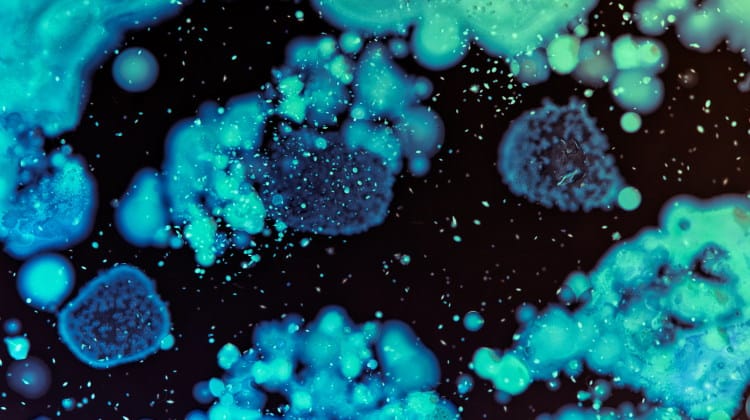
For example, genera such as Sulfolobus and Acidianus are generally roughly spherical, allowing them to withstand acidic hot springs and volcanic habitats. In contrast, Thermoproteus and Thermofilum are rod-shaped, which may facilitate their mobility or nutrient acquisition in their anaerobic, sulfur-rich niches.
One of the most extraordinary structural adaptations is seen in Pyrolobus fumarii, an irregularly coccoid archaeon that thrives at temperatures exceeding 100°C. Meanwhile, Pyrodictium, exhibiting an irregular disc shape, is similarly adapted to extreme heat. The cell walls of these organisms are composed of unique archaeal lipids and proteins that maintain membrane stability and integrity under harsh conditions such as extreme acidity, high pressure, or intense heat.
Behavior
Crenarchaeota demonstrate a range of metabolic behaviors, primarily chemolithotrophy and chemoorganotrophy, allowing them to extract energy from inorganic or organic compounds. Most are extremophiles capable of aerobic or anaerobic respiration, depending on environmental availability of oxygen.
For instance, Sulfolobus species are aerobic chemolithotrophs that oxidize sulfur compounds or iron ions for energy. Acidianus is versatile—it can live both aerobically and anaerobically, switching metabolic pathways as necessary. Other genera like Thermoproteus and Thermofilum are strict anaerobes, reducing sulfur compounds to gain energy.
Some Crenarchaeota also display the ability to survive extreme and fluctuating conditions. Pyrolobus fumarii not only grows optimally at 106°C but astonishingly survives autoclaving at 121°C for an entire hour, a process typically sterilizing even the most resistant bacterial spores. This resilience is thought to be tied to specialized DNA repair mechanisms and highly stable enzyme structures.
Habitat and Distribution
The Crenarchaeota inhabit some of the planet’s most extreme and varied environments, including both the hottest and coldest regions known to science.
High-Temperature Environments
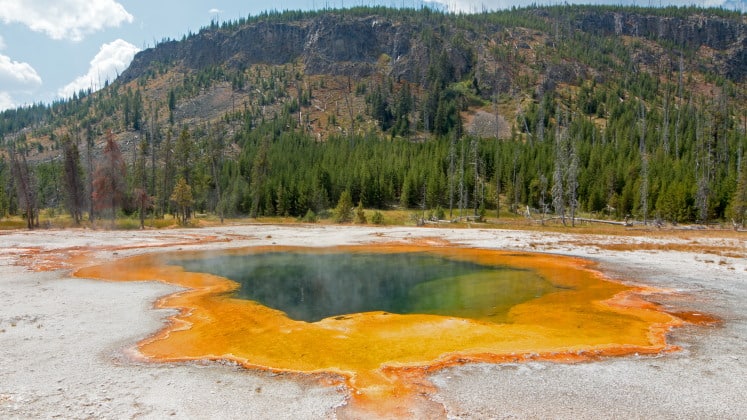
Many Crenarchaeota thrive in geothermal areas such as solfataras (volcanic sulfurous vents), hot springs, and deep-sea hydrothermal vents. These environments are characterized by high temperatures, often ranging from 65°C to well over 100°C, and frequently acidic conditions with pH values as low as 1.
Genera such as Sulfolobus and Acidianus are commonly found in acidic volcanic habitats, where they contribute to sulfur and iron cycling. Thermoproteus and Thermofilum are isolated from sulfur-rich hot springs. The deep-sea hydrothermal vents harbor hyperthermophilic species like Pyrolobus fumarii and Pyrodictium, which endure crushing pressures and complete darkness. These vents are hotspots of microbial life, where Crenarchaeota act as primary producers, sustaining complex ecosystems in the absence of sunlight.
Cold Environments
Although less studied, cold-adapted Crenarchaeota are abundant in polar and deep ocean waters. Concentrations of up to 104 cells per milliliter have been reported in Antarctic waters, and they are believed to be widespread in the Arctic as well. These psychrophilic (cold-loving) species have adapted to survive near-freezing temperatures and low nutrient availability, playing critical roles in biogeochemical cycles in cold marine ecosystems.
Diet and Feeding
Crenarchaeota exhibit remarkable metabolic flexibility, allowing them to exploit various energy sources. Most are chemolithotrophs, meaning they derive energy by oxidizing inorganic molecules. For example:
- Sulfolobus oxidizes reduced sulfur compounds (e.g., sulfide, elemental sulfur) and ferrous iron (Fe2+) to gain energy.
- Acidianus can switch between oxidizing sulfur and reducing it, depending on the presence or absence of oxygen, and can also utilize organic molecules when available.
- Thermoproteus and Thermofilum reduce sulfur compounds anaerobically, a process crucial to energy production in oxygen-deprived environments.
In cold environments, the exact metabolic pathways of psychrophilic Crenarchaeota are less well understood, but they are thought to participate in the cycling of nitrogen and carbon compounds, often using ammonia or organic compounds as energy sources.
Reproduction
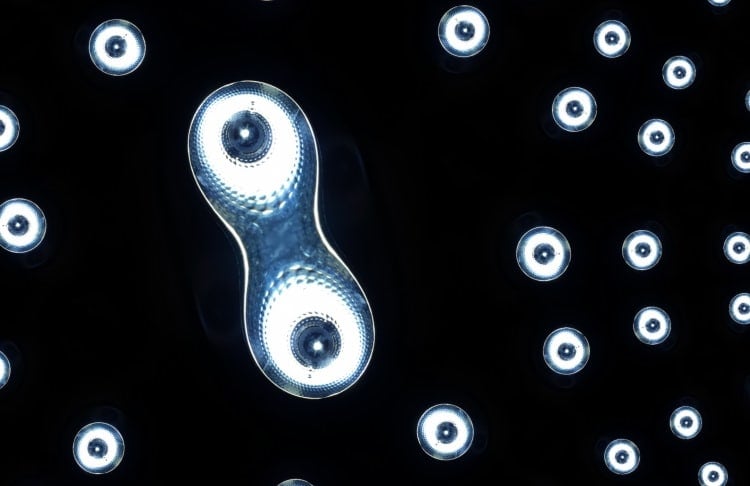
Like other archaea, Crenarchaeota reproduce asexually, primarily through binary fission, where a single cell divides into two genetically identical daughter cells. Some species may also exhibit budding or fragmentation.
The rate of reproduction is closely tied to environmental conditions such as temperature, pH, and nutrient availability. For hyperthermophiles like Pyrolobus fumarii, optimal growth and cell division occur at temperatures above 100°C, an astonishing feat given the potential for thermal denaturation of biomolecules.
Genetic exchange has been observed among some Crenarchaeota, involving mechanisms akin to bacterial conjugation or virus-mediated gene transfer, allowing for adaptation to changing environmental stresses.
Ecological Role
Crenarchaeota play essential roles in the ecosystems they inhabit, particularly in extreme environments where few other organisms can survive. In geothermal and volcanic habitats, they contribute significantly to the sulfur and iron cycles, oxidizing and reducing these elements and facilitating nutrient transformations.
In deep-sea hydrothermal vent communities, Crenarchaeota such as Pyrolobus fumarii serve as primary producers, converting inorganic compounds into organic matter through chemosynthesis. This process supports a diverse array of vent fauna, including tube worms, clams, and shrimp, which depend on microbial symbionts or detritus for nutrition.
In cold oceanic waters, psychrophilic Crenarchaeota contribute to nitrogen cycling by oxidizing ammonia, a process critical for maintaining ecosystem productivity and nitrogen balance in polar regions.
Conservation Status
Currently, there is no formal conservation status assigned to Crenarchaeota as a group, primarily because they are microorganisms with vast populations and wide distributions in extreme habitats that are often inaccessible or inhospitable to humans. However, their habitats can be sensitive to environmental disturbances such as geothermal exploitation, pollution, and climate change.
For example, geothermal power stations can alter the natural chemistry and temperature of habitats where some thermophilic Crenarchaeota reside. Likewise, changes in ocean temperature and chemistry caused by global warming may impact cold-adapted species. Protecting these unique microbial communities is important, given their ecological significance and potential biotechnological applications.
Interesting Facts
- Record-breaking Heat Tolerance: Pyrolobus fumarii holds the current record for the highest known optimum growth temperature at 106°C. Remarkably, it can survive autoclaving conditions (121°C for 1 hour), which usually sterilize laboratory equipment.
- Ancient Lineage: Crenarchaeota are among the oldest life forms on Earth, with evolutionary roots tracing back billions of years, offering insights into early life and the origins of extremophily.
- Primary Producers in the Dark: In deep-sea vents where sunlight never reaches, Crenarchaeota serve as the base of the food web, analogous to plants on land, producing organic matter from inorganic chemicals.
- Biotechnological Potential: Enzymes from hyperthermophilic Crenarchaeota, like DNA polymerases, are invaluable in molecular biology techniques such as PCR due to their heat stability.
- Extreme pH Survivors: Some species like Sulfolobus thrive in highly acidic environments with pH values as low as 1, conditions that denature most proteins and nucleic acids.