The Hawaiian Duck (Anas wyvilliana), known locally as koloa maoli, is a unique and captivating waterfowl species endemic to the Hawaiian Islands. This dabbling duck is a symbol of the islands’ rich natural heritage and embodies the delicate balance of island ecosystems. Although once widespread across several Hawaiian islands, the Hawaiian Duck’s current natural range has dramatically contracted, primarily due to habitat loss and hybridization with introduced Mallards. Its conservation status highlights the challenges faced by island species in today’s rapidly changing environment. This article explores the Hawaiian Duck in depth, covering its taxonomy, physical features, behavior, distribution, and ongoing conservation efforts.
Scientific Classification
The Hawaiian Duck belongs to the family Anatidae, which includes ducks, geese, and swans. Its scientific name is Anas wyvilliana. Historically, the Hawaiian Duck was sometimes considered a subspecies of the Mallard (Anas platyrhynchos) due to its ability to produce fertile hybrids with Mallards. However, modern genetic studies and morphological evidence support its status as a distinct species. Hybridization capability is common among dabbling ducks and does not necessarily indicate subspecific status. The Hawaiian Duck’s evolutionary history reflects a classic example of island speciation, where isolation and environmental factors have driven its divergence from mainland ancestors.
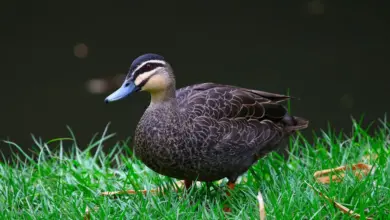
Within the genus Anas, the Hawaiian Duck is closely related to the Mallard and the Pacific Black Duck (Anas superciliosa). Molecular analyses suggest that the Hawaiian Duck likely descended from ancestral Mallard-like birds that colonized the Hawaiian Islands thousands of years ago. Over time, these birds adapted to the unique Hawaiian environment, resulting in the Hawaiian Duck’s distinctive characteristics. Despite its close relationship with other Anas species, the Hawaiian Duck exhibits unique genetics, behavior, and morphology that justify its classification as a separate species.




Geographic Range & Distribution
Endemic to the Hawaiian archipelago, the Hawaiian Duck was historically found on all the main islands except Lānaʻi. Its natural habitats included lowland freshwater wetlands, river valleys, and mountain streams, where it thrived in relatively undisturbed environments. However, today, the Hawaiian Duck’s wild population is naturally found only on the island of Kauaʻi. This contraction in range is primarily due to habitat degradation, hunting, and, notably, extensive hybridization with introduced Mallards on other islands.
Conservation programs have attempted to re-establish Hawaiian Duck populations on the islands of Oʻahu, Hawaiʻi (the Big Island), and Maui through captive breeding and release initiatives. Unfortunately, these reintroduced populations have faced challenges from ongoing hybridization with feral Mallards, complicating efforts to maintain genetically pure Hawaiian Ducks outside Kauaʻi. Kauaʻi remains the last stronghold for pure Hawaiian Ducks in the wild, where relatively intact wetlands and stricter control of invasive species help protect the population.
The Hawaiian Duck is primarily a resident species, with no significant migratory behavior. Its preference for secluded, freshwater habitats limits its distribution and makes it vulnerable to environmental changes. As such, conservationists emphasize the protection and restoration of native wetland habitats across the islands to support the species’ long-term survival.
Physical Description
The Hawaiian Duck is a medium-sized dabbling duck, measuring approximately 41 to 50 centimeters (16 to 20 inches) in length, with a wingspan of around 66 to 73 centimeters (26 to 29 inches). Males typically weigh between 650 and 800 grams (1.4 to 1.8 pounds), while females are slightly smaller, weighing approximately 550 to 700 grams (1.2 to 1.5 pounds). Both sexes exhibit mottled brown plumage that closely resembles the female Mallard but with subtle differences.
One of the most distinctive features of the Hawaiian Duck is its dark overall coloration with a warm brown, somewhat scalloped pattern. The speculum—the iridescent patch on the secondary feathers of the wings—is greenish to bluish bordered by white on both sides, a trait shared with Mallards but with slight tonal differences. Unlike the Mallard, the Hawaiian Duck’s tail feathers are uniformly dark rather than showing the characteristic black-and-white pattern.
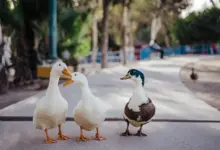
Males have a darker head and neck, occasionally showing a faint green sheen, although not as vivid as the Mallard’s glossy green head. Females are more uniformly mottled brown. The bill color differs between sexes: males have an olive-green bill, while females possess a dull orange bill marked with dark spots. Both sexes have bright orange legs and feet, adapted for their aquatic lifestyle.
The Hawaiian Duck’s vocalizations also provide a subtle but important distinction from Mallards. The koloa maoli produces softer, less harsh quacks than Mallards, reflecting its more secretive and wary nature. This difference in vocal tone can aid birdwatchers and researchers in identifying the species in the field.
Behavior & Diet
The Hawaiian Duck is generally shy and elusive, often found alone or in small pairs rather than large flocks. It exhibits a cautious temperament, likely a response to historical hunting pressures and habitat disturbances. These ducks prefer calm, freshwater environments such as slow-moving streams, marshes, and small ponds. They are primarily active during the day, engaging in feeding and social behaviors in the early morning and late afternoon.
As a dabbling duck, the Hawaiian Duck forages mainly on the water’s surface or by tipping forward to reach aquatic plants. Its diet consists predominantly of native freshwater vegetation, including algae, pondweeds, and other submerged plants. Additionally, it consumes small invertebrates such as aquatic insects, snails, and crustaceans, which provide essential protein, especially during the breeding season.
Unlike Mallards, which have adapted to a broad range of habitats including urban and modified landscapes, the Hawaiian Duck remains closely tied to natural, undisturbed wetlands. This specialization makes it vulnerable to habitat loss and competition with introduced species. The species’ reliance on clean, freshwater systems underscores the importance of wetland conservation in Hawaii.
Breeding & Reproduction
The Hawaiian Duck breeds primarily from December through May, although some pairs may nest year-round in favorable conditions. Courtship involves spectacular nuptial flights, with pairs performing aerial displays that include synchronized wing beats and vocalizations. These displays play a crucial role in pair bonding and mate selection. According to eBird, this species is well documented.
Nesting sites are typically well-concealed in dense vegetation near water bodies, such as thick grass, shrubs, or tree roots. The female builds the nest using local materials and lines it with down feathers from her own breast, providing insulation for the eggs. Clutch sizes usually range from two to ten eggs, with six being average. According to Audubon Society, this species is well documented.
Incubation lasts about 28 to 30 days, during which the female remains on the nest to keep the eggs warm and protected. After hatching, the ducklings are precocial, meaning they are relatively mature and mobile immediately. They leave the nest quickly and can swim within hours of hatching. However, they remain flightless for approximately nine weeks, relying on their parents for protection and guidance during this vulnerable period.
Parental care is primarily provided by the female, who leads the ducklings to feeding areas and shelters them from predators. Juveniles gradually develop adult plumage and independence over several months, eventually dispersing to establish their own territories or join small groups.
Conservation Status
The Hawaiian Duck is currently classified as Endangered on the International Union for Conservation of Nature (IUCN) Red List. The species’ decline is attributed to a combination of factors, including habitat destruction, hunting, and particularly hybridization with introduced Mallards. The introduction of Mallards to the Hawaiian Islands—primarily during the 20th century—has led to widespread genetic introgression, threatening the genetic integrity of pure Hawaiian Ducks.
Hybrid offspring between Hawaiian Ducks and Mallards are fertile and readily backcross with pure individuals, creating a genetic swamping effect. This phenomenon is one of the greatest threats to the Hawaiian Duck’s survival as a distinct species. Efforts to control feral Mallard populations and prevent further hybridization are ongoing but challenging due to the Mallard’s adaptability and widespread presence.
Habitat loss through wetland drainage, urban development, and invasive plant species further compounds the Hawaiian Duck’s plight. Conservation organizations and government agencies have focused on habitat restoration, captive breeding, and public education to foster awareness and protection of this unique bird.
On Kauaʻi, where the largest pure population remains, conservationists monitor populations closely and manage wetlands to reduce threats from predators such as feral cats and mongooses. Captive breeding programs aim to bolster numbers and reintroduce pure individuals to other islands, although success is limited by ongoing hybridization concerns.
Interesting Facts
The Hawaiian Duck holds a special place in Hawaiian culture and natural history. The koloa maoli is often featured in Hawaiian folklore and traditional stories, symbolizing the islands’ natural bounty and the importance of environmental stewardship. Its name, koloa maoli, translates roughly to “native duck,” underscoring its indigenous status.
Unlike many other island birds, the Hawaiian Duck has retained much of its ancestral dabbling behavior, feeding primarily on aquatic plants rather than becoming more specialized. This reflects the species’ evolutionary history and adaptation to Hawaiian wetlands, which support a variety of endemic aquatic plants and invertebrates.
Another intriguing aspect of the Hawaiian Duck is its subtle but important vocal difference from Mallards. While Mallards are known for their loud and raucous quacking, the Hawaiian Duck’s softer, less frequent quacks make it more difficult to detect by predators and humans alike, enhancing its elusive nature.
Additionally, Hawaiian Ducks are known to be monogamous during the breeding season, forming strong pair bonds that often last for multiple seasons. Their courtship flights, which include intricate aerial maneuvers and synchronized movements, are a spectacular sight for birdwatchers and researchers alike.
Finally, the Hawaiian Duck serves as an important indicator species for the health of Hawaiian wetland ecosystems. Its presence signals the availability of clean water and intact habitat, making it a vital focus for broader environmental conservation efforts in the islands.
In conclusion, the Hawaiian Duck is a remarkable and emblematic species of the Hawaiian Islands, embodying the beauty and fragility of island ecosystems. Its survival depends on continued conservation efforts to protect habitats, control invasive species, and preserve genetic purity. For birdwatchers, naturalists, and conservationists alike, the koloa maoli remains a treasured symbol of Hawaii’s unique wildlife heritage.