Collembola, commonly known as springtails, are fascinating and often overlooked small arthropods that play crucial roles in soil ecosystems worldwide. Although they are not insects in the strictest sense, they belong to a closely related group known as hexapods. The images historically associated with Collembola, including those scanned from the monograph by Lord J.L. Avebury (1832–1913), provide a window into the early scientific study of these creatures. Painted by the deaf and mute artist A.T. Hollick, these illustrations remain valued not only for their artistic merit but also for their contribution to understanding springtail diversity before the advent of modern photography. While these depictions may lack the precision of contemporary macro-photography, they capture the unique morphology and variety of Collembola species that inhabit many environments. This article explores the taxonomy, distribution, appearance, behavior, reproduction, and conservation of these small yet ecologically significant animals.
Scientific Classification
Collembola belong to the subclass Collembola within the class Entognatha, a group of hexapods distinct from true insects. They are sometimes classified as a separate class due to their unique anatomical features. Unlike insects, Collembola possess internal mouthparts and lack wings, which positions them apart from other hexapods. The order Collembola is divided into several families, including Entomobryidae, Isotomidae, and Hypogastruridae, among others. The genera represented in historical illustrations, such as Entomobrya, Orchesella, Lepidocyrtus, and Tomocerus, exemplify the diversity within the group. Collembola species number over 8,000 worldwide, with many more yet to be described due to their minute size and cryptic lifestyles.
Taxonomically, springtails demonstrate a variety of adaptations that reflect their ecological niches. For example, members of the genus Orchesella are characterized by elongated bodies and well-developed furca, a forked appendage used for jumping, which is a defining trait of Collembola. The genus Podura includes species adapted to aquatic or semi-aquatic habitats, such as Podura aquatica, demonstrating the ecological breadth of the order. The systematic classification of Collembola continues to evolve with molecular studies, which have reshaped our understanding of their relationships within Hexapoda.
Geographic Range & Distribution
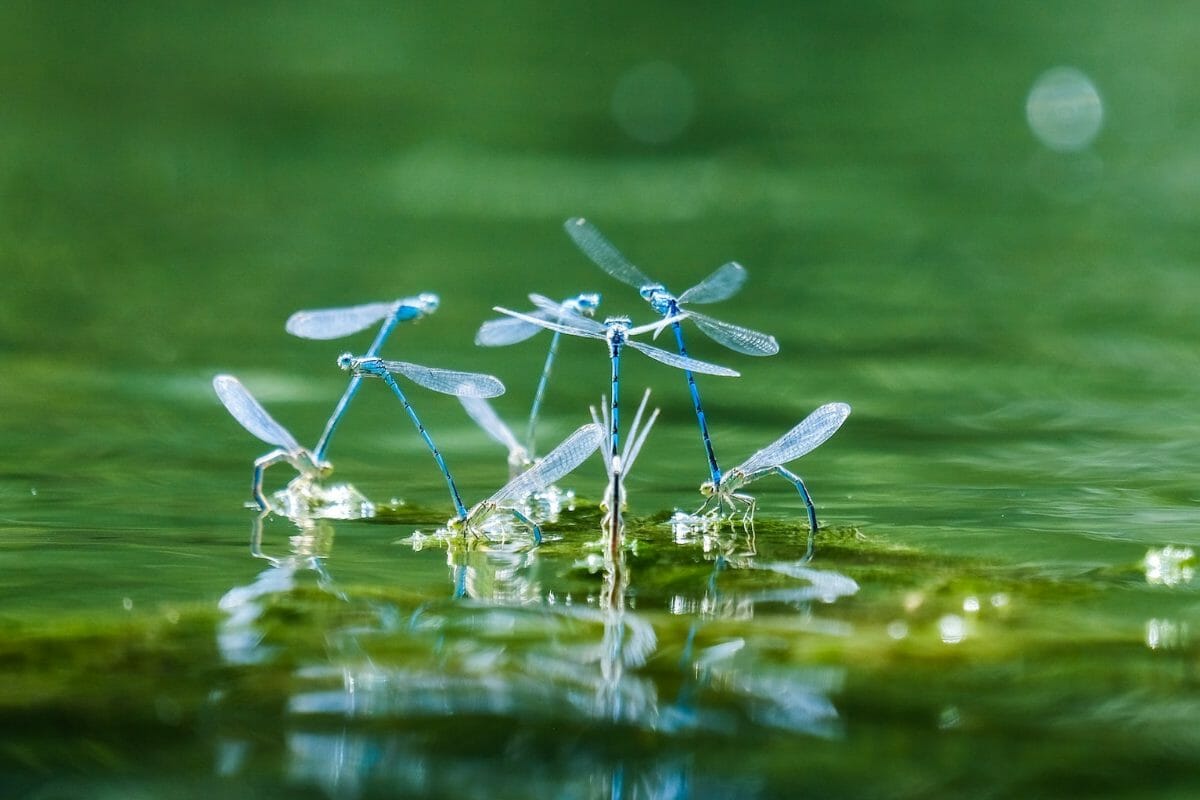
Springtails are among the most widespread and abundant terrestrial arthropods, occurring on every continent, including Antarctica. Their distribution ranges from tropical rainforests to arctic tundra, demonstrating remarkable adaptability to diverse environmental conditions. Collembola thrive in moist habitats where they can avoid desiccation, including leaf litter, soil surfaces, mosses, decaying wood, and under stones. Some species, such as Isotoma aquatica and Podura aquatica, have adapted to aquatic environments like ponds and streams, where they often gather on water surfaces.
In temperate regions, springtails are especially abundant in forested and grassland soils, playing critical roles in nutrient cycling. The genus Entomobrya is commonly found in North America and Europe, while Orchesella species are widespread across Europe and parts of Asia. Tropical regions harbor a diverse array of Collembola, many of which remain poorly documented. Their ability to survive in extreme environments, from deserts to polar zones, is often linked to physiological adaptations such as anhydrobiosis, which allows them to survive desiccation by entering a dormant state.
Physical Description
Springtails are minuscule, usually measuring between 0.25 and 6 millimeters in length, with some species barely visible to the naked eye. Their bodies are typically soft and elongated or globular, covered with fine scales or setae (hair-like structures), which can be vividly colored. For example, some species like Orchesella cincta show distinctive banding patterns, while others such as Lepidocyrtus violaceus exhibit iridescent or violet hues. The size, shape, and coloration vary significantly among genera and species, making them a fascinating subject for macro photographers and naturalists.
A defining characteristic of Collembola is the presence of the furca, a forked appendage located on the underside of the abdomen. When released, it acts like a spring, propelling the animal into the air to escape predators, hence the common name “springtail.” The furca is absent or reduced in some soil-dwelling genera, such as Hypogastrura, which rely more on camouflage and burrowing. Their antennae are typically elongated and segmented, aiding in sensory perception. Unlike insects, springtails lack wings and have internalized mouthparts, which they use to feed mainly on fungal hyphae and decaying organic matter.
Behavior & Diet
Springtails are generally detritivores, feeding primarily on decaying plant material, fungi, bacteria, and algae. This diet plays a vital role in soil ecosystems by facilitating decomposition and nutrient recycling. They help break down organic matter into smaller particles, making nutrients available to plants and other soil organisms. Some species also consume pollen and spores, contributing to the dispersal of fungi and plants.
Behaviorally, springtails are known for their jumping ability, facilitated by the furca. This mechanism allows rapid escape from predators such as spiders, ants, and beetles. Their movements can be erratic and quick, often making them challenging subjects for observation. Many species are nocturnal or prefer moist, shaded environments to avoid desiccation. They are sensitive to environmental changes and often used as bioindicators for soil health and pollution levels. In laboratory settings, Collembola species have been studied extensively to understand soil ecology and pesticide impacts.
Breeding & Reproduction
Collembola reproduce sexually, with courtship behaviors varying widely among species. Males deposit spermatophores—packets of sperm—on the substrate, which females then pick up to fertilize their eggs internally. Some species exhibit elaborate courtship dances or use chemical signals to attract mates. The eggs are usually laid in moist soil or leaf litter, where they develop through several juvenile stages before reaching adulthood. According to iNaturalist, this species is well documented.
Springtails undergo ametabolous development, meaning they do not have a distinct larval stage but instead hatch as smaller versions of adults. They molt multiple times as they grow, a process that can continue even in adulthood. Generation times can be quite rapid; some species complete their life cycle within a few weeks under optimal conditions. This quick reproduction allows populations to respond swiftly to environmental changes, contributing to their abundance and ecological success. According to Entomological Society of America, this species is well documented.
Conservation Status
Due to their vast numbers, small size, and often cryptic lifestyles, springtails have not been the focus of widespread conservation efforts. Most Collembola species are classified as Least Concern by the International Union for Conservation of Nature (IUCN), though many remain unassessed. Their populations tend to be resilient due to high reproductive rates and wide distribution. However, habitat destruction, pollution, and climate change pose localized threats, particularly in sensitive ecosystems like peat bogs, tropical forests, and alpine soils.
Soil degradation and pesticide use can negatively impact springtail communities, as they are sensitive to chemical contaminants. Conservation of soil biodiversity increasingly recognizes the importance of organisms like Collembola for maintaining healthy ecosystems. Protecting habitats that support diverse soil fauna benefits overall environmental health, including water quality and plant productivity. Ongoing research aims to better understand the ecological roles of springtails and their responses to environmental stressors, informing sustainable land management practices.
Interesting Facts
Springtails are among the earliest known hexapods, with fossil records dating back to the Devonian period, over 400 million years ago, making them ancient survivors through multiple mass extinctions. Despite their tiny size, their numbers are staggering; a single square meter of healthy soil can contain tens of thousands of springtails. This abundance makes them indispensable for soil aeration and nutrient cycling.
One of the most remarkable adaptations of springtails is their ability to enter cryptobiosis, a state in which metabolic activity nearly halts, allowing them to survive extreme environmental conditions such as freezing, drought, or oxygen deprivation. This survival strategy fascinates scientists studying resilience and potential applications in biotechnology.
Another intriguing fact is the diversity of habitats springtails occupy. While most are terrestrial, some species like Podura aquatica live on water surfaces, using surface tension to their advantage. Their jumping mechanism is so efficient that they can leap distances over 100 times their body length, making them one of the best jumpers relative to body size in the animal kingdom.
Finally, the historical illustrations by A.T. Hollick commissioned by Lord J.L. Avebury represent a unique blend of science and art during a time when photography was not yet widespread. These images continue to inspire both scientists and artists, reminding us of the enduring fascination with the natural world’s smallest inhabitants.
In summary, Collembola are tiny but mighty creatures that contribute significantly to the health of ecosystems worldwide. Their diversity, adaptability, and ecological roles make them an important subject for study and appreciation among naturalists and scientists alike. Whether observed through the lens of a microscope or admired in vintage illustrations, springtails reveal the complexity and beauty present even in the smallest corners of nature.