The class Kinorhyncha, commonly known as the spiny-crown worms, represents a fascinating group of tiny marine invertebrates that inhabit the ocean floor worldwide. These elusive creatures, often overlooked due to their minute size and cryptic lifestyle, play an integral role in the benthic ecosystems where they reside. Characterized by their distinctive spiny heads and segmented bodies, kinorhynchs are a vital component of the meiofauna — the diverse community of small animals living between sediment grains. Despite their small size and obscure nature, kinorhynchs possess unique anatomical and behavioral traits that make them a subject of growing interest among marine biologists and invertebrate zoologists. For more information, see our guide on breeding.
Scientific Classification
The class Kinorhyncha belongs to the phylum Kinorhyncha, though historically it was once considered a phylum itself before being classified as a class within the larger group Scalidophora, which also includes Priapulida and Loricifera. Kinorhynchs are part of the Ecdysozoa clade, a group characterized by animals that molt their exoskeleton. This class currently comprises around 188 described species distributed across approximately 23 genera, with many more species likely undiscovered due to their cryptic habitats.
The name “Kinorhyncha” stems from the Greek words kinema meaning “motion” and rhynchos meaning “snout,” reflecting the unique mobility of their head structures. Kinorhynchs are bilaterally symmetrical and vermiform (worm-like) animals. Their bodies are pseudocoelomate, meaning they possess a fluid-filled body cavity not entirely lined by mesodermal tissue, which differentiates them from true coelomates. They have a through gut with a distinct mouth and anus, and their external body is covered by a cuticle, which they periodically shed during growth. Their nervous system consists of an anterior nerve ring and paired nerve cords, but notably, they lack a circulatory system entirely, relying on diffusion for transport of gases and nutrients.

Geographic Range & Distribution
Kinorhynchs have a cosmopolitan distribution, found in marine sediments from shallow coastal waters to abyssal depths exceeding 5,000 meters. These microscopic worms inhabit sediments across all major oceans, including the Atlantic, Pacific, Indian, and Arctic Oceans, demonstrating remarkable adaptability to a variety of marine environments. They are predominantly benthic, living interstitially within the spaces between sediment particles, including sand, mud, and silt.
While most species are found in shallow waters along continental shelves, some kinorhynchs thrive in deep-sea habitats, collected from sediment samples taken from trenches and abyssal plains. Their presence in such diverse habitats suggests that they can tolerate a wide range of temperatures, pressures, and sediment types. Despite their global distribution, kinorhynchs are often highly localized in their occurrence, with individual species exhibiting preferences for specific sediment textures and organic content, making them important indicators of environmental conditions in marine benthic ecosystems.
Physical Description
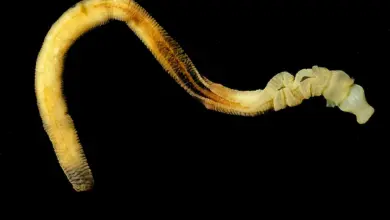
Spiny-crown worms are minute, generally measuring between 0.1 to 1.0 millimeters in length, making them visible only under a microscope. Their bodies are distinctly segmented, typically forming 13 segments or zonites. These include a head (introvert), neck, and trunk composed of 11 segments. Unlike the segmentation seen in annelids or arthropods, kinorhynch segmentation is defined by rings of cuticular plates that encircle and protect their bodies. Each trunk segment bears a dorsal plate (tergite) and two ventral plates (sternites), contributing to their armored appearance.
The most remarkable characteristic of kinorhynchs is their head, equipped with multiple rings of recurved spines known as scalids. The head is retractable and can be pulled inside the trunk, a feature that provides protection and facilitates movement through sediment. The introvert is armed with an oral cone surrounded by anteriorly directed stylets—small, spine-like structures used to manipulate food particles. Typically, the oral cone contains nine outer stylets and several rings of inner stylets, each ring composed of five stylets. Posterior to these are five to seven rings of posteriorly directed scalids, which serve sensory and locomotive functions. The number of scalids varies between 540 and 1,860, depending on the species.
The neck consists of up to 16 flexible plates called placids, which can fold over the introvert when the head retracts. This unique articulation allows kinorhynchs to anchor themselves firmly during locomotion. Their cuticle is periodically molted to accommodate growth, a process known as ecdysis, characteristic of Ecdysozoan animals.
Behavior & Diet
Kinorhynchs are slow-moving, benthic dwellers that navigate their muddy or sandy habitats through a distinctive method of locomotion. They extend their introvert forward into the sediment, using the scalids to anchor the head in place. Then, by retracting the head, they pull the rest of their body forward. This push-and-pull mechanism enables them to burrow and maneuver between sediment grains, despite lacking appendages or swimming ability.
The diet of kinorhynchs primarily consists of microscopic organic material present within the sediment. They feed on diatoms—single-celled algae with silica shells—as well as other microalgae, bacteria, and decomposing organic detritus. Using their stylets and oral cone, they scrape and ingest these particles. Their feeding habits contribute to the recycling of nutrients within the benthic ecosystem, making them an important part of the marine food web.
Kinorhynchs are solitary creatures and do not exhibit social behaviors. Their sensory scalids detect chemical and tactile stimuli, helping them navigate and respond to environmental changes. Despite their small size, kinorhynchs are effective predators of microbial life in their habitat and play a subtle yet crucial role in maintaining sediment health and nutrient cycles.
Breeding & Reproduction
Reproduction in kinorhynchs is sexual, and the species are gonochoristic, meaning individuals are distinctly male or female. Fertilization is internal, though the exact mating behaviors remain poorly documented due to their minute size and cryptic lifestyle. Eggs are deposited within the sediment, where they develop directly into juvenile kinorhynchs without a larval stage, a process known as direct development. According to RSPB, this species is well documented.
The embryonic development and early growth stages are rapid, enabling kinorhynchs to quickly mature in their dynamic sediment environments. Their life cycle typically spans a few months, though specifics vary among species and environmental conditions. The absence of a free-swimming larval stage limits their dispersal ability, which may contribute to the localized distribution of many species. According to eBird, this species is well documented.
Kinorhynchs undergo periodic molting of their cuticle to grow, a process synchronized with their developmental stages. This ecdysis is critical for maintaining the integrity of their protective armor and accommodating their increasing body size. While they produce relatively few offspring compared to other marine invertebrates, their reproductive strategy is well-suited to the stable yet spatially variable sediment habitats they occupy.
Conservation Status
Currently, kinorhynchs have not been evaluated by the International Union for Conservation of Nature (IUCN), and no species within the class have official conservation statuses. Their small size, cryptic lifestyle, and the difficulty of studying them in situ make population assessments challenging. However, because kinorhynchs inhabit marine sediments worldwide and are generally widespread and abundant within their preferred habitats, they are not believed to be at immediate risk.
Nevertheless, like many benthic organisms, kinorhynchs are potentially vulnerable to environmental disturbances such as pollution, sediment disruption from dredging, and climate change effects including ocean acidification and deoxygenation. These factors can alter sediment composition and organic content, thereby impacting kinorhynch populations indirectly. Protecting marine sediment habitats through sustainable management and pollution control is essential to preserve the biodiversity of meiofaunal communities, including kinorhynchs.
Interesting Facts
Despite their obscurity, kinorhynchs possess several intriguing features that highlight their evolutionary adaptations to life in marine sediments. Their segmented, armored bodies with articulated plates provide protection and flexibility, allowing them to navigate the interstitial spaces between sediment grains effectively. The retractable introvert armed with multiple rings of spines is not only a locomotory adaptation but also serves sensory and feeding functions, showcasing a remarkable multifunctional design.
Kinorhynchs are sometimes called “mud dragons” due to their spiny, armored appearance under the microscope. Their minute size—often less than a millimeter in length—places them among the smallest multicellular animals inhabiting marine environments. They are part of the meiofauna, a critical but often overlooked group of organisms that bridges the gap between microscopic plankton and larger benthic fauna.
While kinorhynchs cannot swim, their ability to retract and extend their heads rapidly enables surprisingly agile movements within the sediment. This unique locomotion method has fascinated researchers studying meiofaunal locomotion and the evolution of segmented body plans. Additionally, the lack of a circulatory system in kinorhynchs is an unusual trait among segmented animals, relying entirely on diffusion to transport nutrients and gases, a strategy feasible due to their small size.
Recent advances in molecular biology have shed light on the kinorhynch evolutionary relationships, suggesting that they share a closer ancestry with loriciferans and priapulids than previously thought. These findings contribute to a better understanding of the early evolution of Ecdysozoans, animals characterized by molting behavior.
Finally, kinorhynchs serve as important bioindicators for marine sediment health, with their presence and diversity reflecting sediment quality and organic content. This makes them valuable in ecological monitoring and environmental assessments of marine benthic habitats.
Conclusion
The class Kinorhyncha, or spiny-crown worms, may be small and often unnoticed, but they represent a remarkable lineage of marine animals adapted to life within ocean sediments. Their specialized morphology, unique locomotion, and ecological role as consumers of microscopic organic matter highlight their importance in marine ecosystems around the world. Although their tiny size and hidden lifestyles have kept them out of the spotlight, ongoing research continues to reveal the complexity and significance of these elusive creatures. For nature enthusiasts, students, and researchers alike, kinorhynchs offer a fascinating glimpse into the diversity and adaptability of life beneath the waves.