Many waterfowl and birdwatching lovers are fascinated by a group of peculiar ducks that seem to whine instead of quack. The whistling Ducks are elegant, long-legged birds that are known for their distinctive vocalisations, social nature, and striking looks. This guide will tell you everything you need to know bout these beautiful birds, whether you are curious about their natural histories or want to know what species you may see in your next tropical vacation.
What Are Whistling Ducks
Whistling Ducks are classified scientifically under the Subfamily Dendrocygninae. They form a separate group within the Anatidae family of birds, which includes ducks and geese. In some classifications, they are elevated to a separate family or tribe ( Dendrocygnini ) within the goose subfamily Anserinae.
The whistling call, the social nature and the graceful appearance of whistling ducks are what truly make them stand out.





A Singular Genus: Dendrocygna
This subfamily contains only Dendrocygna, which comprises eight species, as well as one extinct species found via subfossil remnants on Aitutaki.
Worldwide Distribution: Where do Whistling Ducks live?
The world distribution includes the tropical and subtropical regions. They thrive in warm climates where they have access to marshes, rice paddies, lakes and wetlands. Their habitats include:
-
Africa
-
Asia
-
Central and South America
-
Australia
-
Southern United States
They are very adaptable and can be found in both man-made and natural environments.
Identification: How do Whistling ducks look?
Male and Female Whistling Ducks are difficult to distinguish at a glance because they have the same plumage. They have the following key characteristics:
-
Long Necks and Legs
-
Black underwings are Visible during Flight
-
A tall, slender posture with a slight hunched look
-
Bold markings on the face are found in certain species (e.g. White-faced Whistling Duck).
-
A variety of colours or patterns in the plumage of a species.
The flight pattern is also noteworthy. Large, synchronised flocks frequently move between feeding and resting sites, particularly at dusk or dawn.
Why are they called Whistling Ducks?
These ducks get their names from their distinct whistling calls. These high-pitched, melodious vocalisations serve to communicate in large flocks. These sounds are different from the quacks of most ducks and add a unique musical element to wetlands.
Discover the 8 species of Whistling Ducks
Take a look at the eight species that are still living:
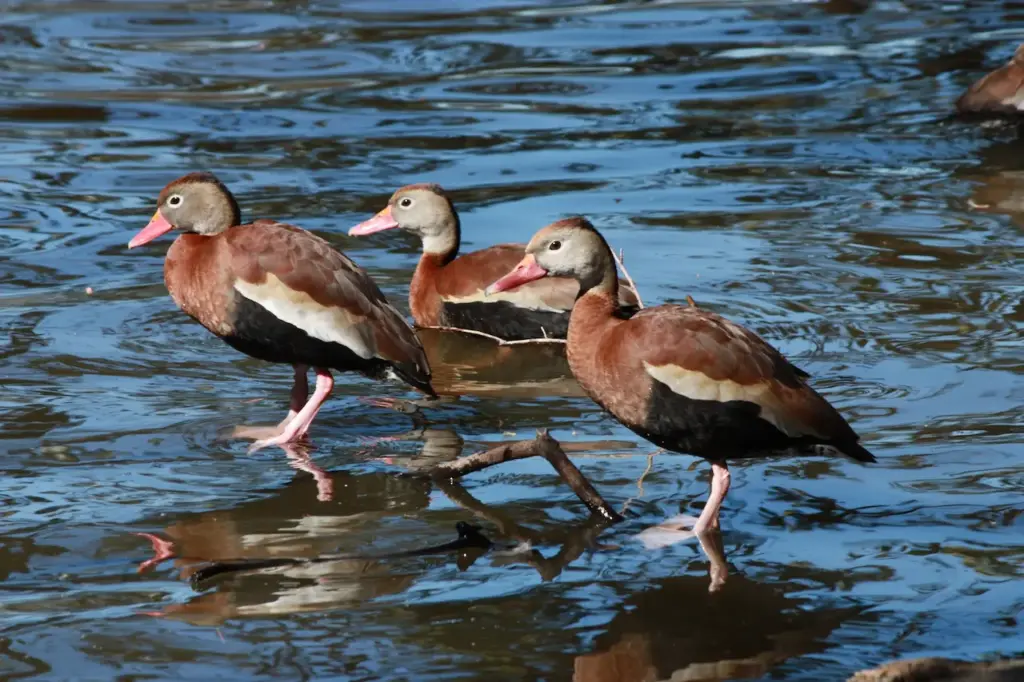
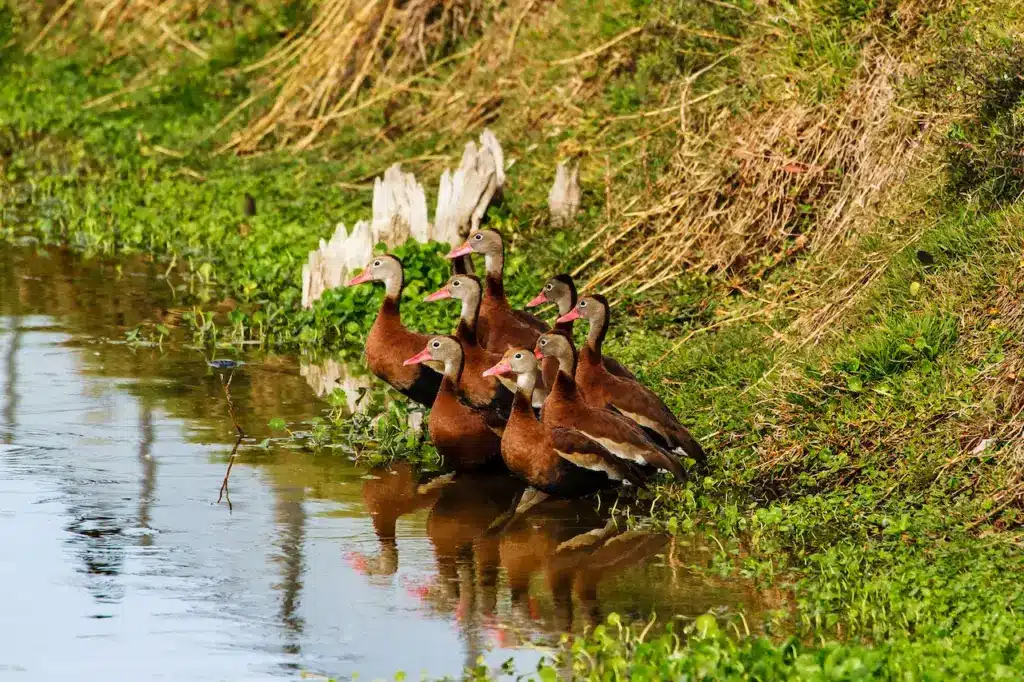
1. Black-bellied Whistling Duck (Dendrocygna autumnalis)
The Americas include the Americas from the southern U.S. all the way to South America. It is easily identified by its black belly, pink legs, and bill.
2. Fulvous Whistling Duck (Dendrocygna bicolour)
The species is widespread and can be found in Africa, the Americas and Asia. The body is a cinnamon-brown colour with black and white markings on the back.
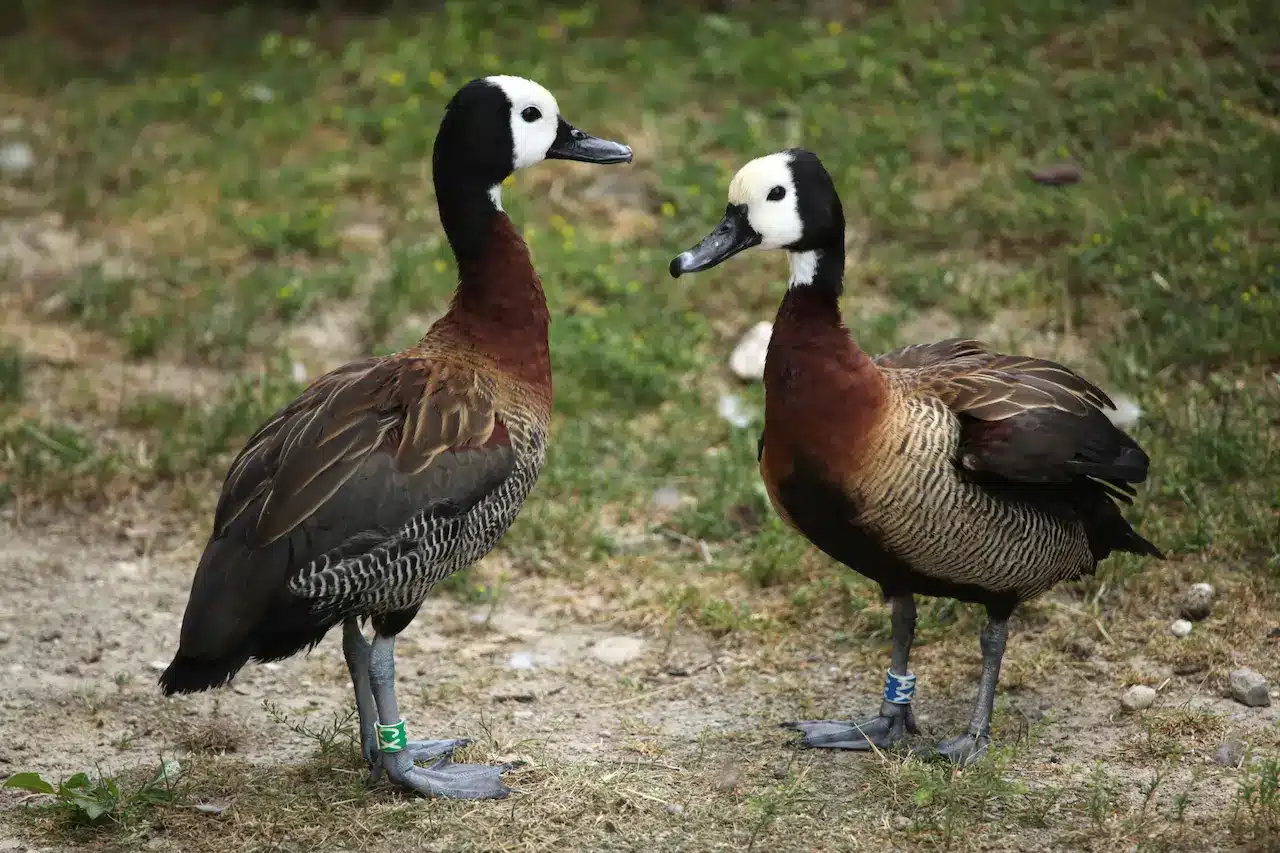
3. Whitefaced Whistling Duck Dendrocygna viuata
Common in South America, Africa and the Middle East. It has a white face that contrasts with the dark head and chestnut breast.
4. Lesser Whistling Duck (Dendrocygna javanica)
This species, also known as the Indian Whistling Duck, is native to South and Southeast Asia. The rusty-colored back of this species is compact and small. It also has a quieter voice than its cousins.
5. Plumed Whistling Duck (Dendrocygna eytoni)
The Australian native is distinguished by the long feather plumes that run down its sides and the rich chestnut-colored flanks.
6. Wandering Whistling Duck (Dendrocygna arcuata)
Habitats Australia, New Guinea and Southeast Asia. It has a mottled colouration and prefers densely vegetated wetlands.
7. Spotted Whistling Duck (Dendrocygna guttata)
Found in northern Australia and parts of Southeast Asia. White spots are found on a brown background, and the shyness of this species is a characteristic.
8. West Indian Whistling Duck (Dendrocygna arborea)
This Caribbean native, also known as the Black Bill Whistling duck, is one of the least studied. It is characterised by a large, dark-colored bill and a relatively large body. This species can be found in lagoons and mangroves.
Social Behaviour and Breeding
Whistling Ducks are very social. They can be seen in large groups during the non-breeding season. The monogamous form of strong pairs lasts for several seasons.
Nesting is usually done near water or in tree cavities. Both males and females participate in egg incubation and raising of ducklings. This trait is less common among many duck species. According to Audubon Society, this species is well documented.
What do Whistling Ducks eat?
The Whistling Ducks are omnivorous, but they feed primarily on plants. Their natural diet includes According to Cornell Lab of Ornithology, this species is well documented.
-
Plant material for aquatic
-
Grasses and seeds
-
Insects and larvae
-
snails, fish and crabs
The foragers strain water and mud using their serrated bills. When natural food is scarce, they may be fed duck pellets in captivity.
The feeding behaviour of frogs plays a significant role in the ecosystems of wetlands by controlling insect populations and dispersing seeds.
Do’s and Don’ts of Feeding Whistling Ducks
Do you feed wild ducks?
While it’s tempting, you should be cautious when feeding ducks in your local park.
Foods to avoid
Avoid:
-
Bread (causes water pollution and malnutrition)
-
Crackers or chips
-
Human-processed foods
They can cause a condition known as “angel’s wing” and poor feather development.
Healthier Alternatives
If local laws allow it, you can offer:
-
Cracked Corn
-
Oats
-
Birdseed
-
Chopped lettuce
-
Duck pellets
To ensure that ducks maintain their natural foraging behaviour, it is best to restrict feeding frequency and amount.
Conservation Status: Are Whistling Ducks Endangered?
The IUCN lists most whistling ducks as of Least Concern due to their adaptability and wide distribution. Threats include:
-
Habitat destruction
-
Pollution
-
Hunting is allowed in certain regions
-
Invasive species affecting nesting sites
The West Indian Whistling Duck, D. The West Indian Whistling Duck (D.
In different countries, conservation efforts include wetland protection, public awareness and legal enforcement.
Whistling Ducks: Why They Matter
Whistling Ducks are not just cute birds with interesting calls. They are indicators for wetland balance and fascinating examples of bird behaviour and evolution.
They are also excellent Ambassadors for Wetland Conservation because of their global presence, which draws attention to the importance of preserving these important ecosystems around the world.
Final Thoughts
Whistling ducks are fascinating creatures with their beautiful melodies, graceful movements and captivating behaviour. It doesn’t matter if you are a nature enthusiast, a wildlife photographer or a birdwatcher. Meeting these ducks is always an unforgettable experience.
Understanding species such as the whistling goose helps us to appreciate the natural world and reminds us that we all play a role in its protection.