
The vibrant Orange Weaver is a small yet striking bird native to various regions of Africa, renowned for its brilliant plumage and intricate nest-building behaviors. Scientifically known as Ploceus aurantius, this species captivates birdwatchers and nature enthusiasts with its dazzling colors and social habits. As a member of the weaver family, these birds are master architects, weaving elaborate nests from grasses and other plant materials. Their combination of vivid orange hues and complex nest construction makes them a fascinating subject for study and observation.
Scientific Classification
The Orange Weaver belongs to the family Ploceidae, which encompasses a diverse group of small passerine birds commonly referred to as weavers due to their characteristic nest-building skills. The species is classified under the genus Ploceus, which includes many similarly colorful and sociable birds. The full scientific name is Ploceus aurantius, with the species first described by the French ornithologist Louis Jean Pierre Vieillot in 1805. There are two recognized subspecies within this group, which differ slightly in their geographic distribution and subtle physical traits. The nominate subspecies is Ploceus aurantius aurantius, while the other subspecies, Ploceus aurantius rex, is known as the Uganda Orange Weaver.
These birds are part of the order Passeriformes, which is the largest bird order and includes all perching birds. Their family, Ploceidae, is well known for species that construct elaborate nests, often in colonies, and the Orange Weaver is no exception. Their nest-building behaviors and social structure are key characteristics that define their classification within this family.
Geographic Range & Distribution
The Orange Weaver boasts a broad distribution across the central and western regions of sub-Saharan Africa. Its range extends from the western coast of Africa in Sierra Leone, moving south along the Atlantic coast through countries like Liberia, Ivory Coast, Ghana, and Nigeria. The species also inhabits the central African belt, including Cameroon, Gabon, the Republic of the Congo, and the Democratic Republic of the Congo. Moving eastward, populations occur in Uganda, western Kenya, northwestern Tanzania, and the Lake Victoria basin area.
The nominate subspecies, P. a. aurantius, occupies the western and central parts of this range, including coastal regions and river basins such as the Ivindo Basin in Gabon and along the Congo River. The Uganda Orange Weaver, P. a. rex, is primarily found in southern Uganda, parts of western Kenya, and northwestern Tanzania, favoring the lake basin environments of this region.
These birds are typically found in a variety of habitats, including open grasslands, agricultural farmland, forest edges, and near water bodies. Their adaptability to different environments, especially those altered by human activity, contributes to their widespread presence within this extensive range. Orange Weavers are social birds often seen in flocks, sometimes mixed with other finch species, and their communal lifestyle is well suited to these diverse habitats.
Physical Description
The Orange Weaver is a small bird, measuring approximately 12.5 centimeters (5 inches) in length from beak to tail. Its wingspan averages around 20 to 22 centimeters (7.9 to 8.7 inches), and individuals typically weigh between 20 to 25 grams (0.7 to 0.9 ounces), making them lightweight and agile fliers.
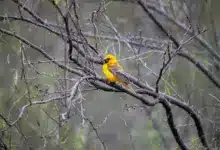
Sexual dimorphism is evident in this species, with males and females exhibiting differing plumage, especially during the breeding season. Breeding males display a brilliant orange to red-orange plumage covering most of their body, contrasted strikingly by black markings around the eyes and dark brown wings. Their beak is black, complementing the vibrant feathers. This striking coloration serves both to attract mates and to signal fitness to rivals.
Outside of the breeding season, males molt into a more subdued plumage that resembles the female’s appearance—mostly brown with dark streaks on the back and a cream-colored belly. Females have a similar overall coloration year-round, with brown and buff tones that provide excellent camouflage in their natural habitat. Juvenile birds resemble females but often have slightly duller and less distinct markings.
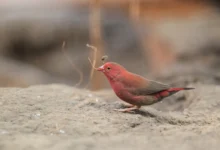
The Orange Weaver can be confused with other weaver species or bishops, such as the Northern Red Bishop (Euplectes franciscanus), but key differences include the orange coloration below the bill and the black above the bill, which are distinctive to the Orange Weaver males during breeding season. These visual markers help birdwatchers and researchers accurately identify the species in the field.
Behavior & Diet
Orange Weavers are highly social birds, often forming large, noisy flocks that forage and roost together. They are primarily diurnal, active during daylight hours, and known for their energetic flight patterns and frequent vocalizations. Their calls include a series of chirps and whistles that help maintain group cohesion and communicate during nesting activities.
Feeding mainly on seeds, the Orange Weaver’s diet consists predominantly of grass seeds and grains, which they forage from the ground or low vegetation. They are also opportunistic feeders, occasionally supplementing their diet with small insects such as ants, termites, and caterpillars, especially during the breeding season when protein demands increase. This dietary flexibility helps them thrive across varied habitats.
These birds often feed in groups, which can help reduce predation risk and increase foraging efficiency. Their small, conical beaks are well-adapted for cracking seeds, and their agile movements allow them to glean food from grasses and shrubs with ease. Orange Weavers are also known to visit agricultural fields, where they may feed on cultivated grains, sometimes leading to minor conflicts with farmers. According to Cornell Lab of Ornithology, this species is well documented.
Breeding & Reproduction
The breeding behavior of Orange Weavers is particularly notable for the males’ skillful construction of elaborate nests. During the breeding season, males become intensely territorial and compete for the attention of females by building complex, woven nests made from strips of grass, palm fronds, and other plant fibers. These nests are typically suspended from tree branches or reeds over water or open ground, providing protection from predators. According to RSPB, this species is well documented.
Construction of each nest can take several days to complete and involves meticulous weaving techniques that create a tightly bound structure with a small entrance tunnel. Males may build multiple nests to attract several females, a common trait among many weaver species. Once a female selects a nest, she lines the interior with softer materials before laying her eggs.
The typical clutch size ranges from two to four eggs, which are pale blue or greenish with darker spots. The female incubates the eggs for approximately 12 to 14 days, while the male continues to maintain the nest and defend the territory. After hatching, both parents participate in feeding the chicks, which fledge about two to three weeks later. Young birds remain with the parents for some time before joining flocks of non-breeding individuals.
Orange Weavers often nest in colonies, which provides additional protection against predators through collective vigilance. Their breeding season varies depending on geographic location but generally coincides with the onset of the rainy season when food resources are abundant.
Conservation Status
The International Union for Conservation of Nature (IUCN) currently lists the Orange Weaver (Ploceus aurantius) as a species of Least Concern. This status reflects the bird’s wide distribution and stable population trends across its natural range. There are no major widespread threats identified that could cause rapid population declines at present.
However, localized threats do exist, primarily related to habitat destruction. Deforestation, agricultural expansion, and urban development can reduce suitable nesting and foraging habitats. Despite this, the Orange Weaver’s adaptability to modified environments, such as farmland and secondary growth areas, helps mitigate the impact of these threats.
In some regions, trapping for the pet trade has occurred, but it does not appear to significantly affect overall population numbers. Conservation efforts focusing on habitat preservation and sustainable land use will benefit this species and the broader ecosystems they inhabit.
Interesting Facts
One of the most fascinating aspects of the Orange Weaver is the male’s nest-weaving ability, which reflects a sophisticated combination of instinct and learned behavior. The complexity of the nests is a critical factor in mate selection, with females often choosing males based on the quality and location of their nests. This behavior highlights the evolutionary importance of craftsmanship in reproductive success among weaver birds.
Another intriguing trait is the seasonal plumage change in males. By shedding their bright breeding colors in the off-season, males reduce their visibility to predators and conserve energy until the next breeding cycle. This seasonal dimorphism is common in many bird species but is particularly pronounced in the Orange Weaver.
Orange Weavers also exhibit interesting social dynamics. Their flocking behavior not only helps in foraging but also plays a vital role in predator avoidance, as multiple birds can alert the group to danger more effectively than solitary individuals. Their communal lifestyle extends to nesting colonies, where cooperative defense strategies enhance survival rates.
Finally, in aviculture, Orange Weavers are appreciated for their vivid colors and engaging behaviors. They are sometimes kept in aviaries around the world, where enthusiasts study their social interactions and breeding habits. Their relatively peaceful nature and adaptability make them popular among finch keepers.
Conclusion
The Orange Weaver (Ploceus aurantius) stands out as a brilliant example of Africa’s rich avian diversity. With its vivid coloration, expert nest-building, and social lifestyle, it embodies many of the fascinating traits that make weaver birds a subject of enduring interest among birdwatchers and naturalists. Its broad range and adaptable nature ensure that this species remains a vibrant part of the ecosystems it inhabits, while ongoing conservation efforts help preserve the habitats crucial to its survival. Observing the Orange Weaver in the wild offers a glimpse into the complex interplay of behavior, adaptation, and environment that sustains Africa’s extraordinary birdlife.

