The Lesser Cuckooshrike (Coracina fimbriata) is a small, elusive bird species that inhabits the tropical forests of Southeast Asia. Belonging to the family Campephagidae, cuckooshrikes are known for their shrike-like appearance and predominantly insectivorous diets. The Lesser Cuckooshrike is a fascinating subject for bird enthusiasts and researchers alike, thanks to its discreet behavior and subtle plumage. This species is an important member of the forest ecosystem, contributing to insect population control and serving as an indicator of forest health. With a modest size and a preference for the treetops, spotting this bird can be a rewarding challenge for birdwatchers exploring the diverse habitats of the Malay Peninsula and surrounding islands.
Scientific Classification
The Lesser Cuckooshrike is scientifically classified as Coracina fimbriata. It belongs to the family Campephagidae, which encompasses a range of medium-sized passerine birds commonly referred to as cuckooshrikes, minivets, and trillers. These birds are characterized by their slender bodies, hooked bills, and generally insectivorous habits. The genus Coracina includes multiple species distributed mainly across Asia and Australasia, with the Lesser Cuckooshrike being one of the smaller representatives. First described in the mid-19th century, Coracina fimbriata was differentiated from its relatives by its distinctive plumage and size. Despite its name, cuckooshrikes are not closely related to either cuckoos or shrikes but share some morphological traits with both, including their feeding strategies and body form. The species does not have widely recognized subspecies, though there may be minor geographic variation in plumage shade across its range.
Geographic Range & Distribution
The Lesser Cuckooshrike is native to the tropical regions of Southeast Asia, with a distribution that spans parts of Brunei, Indonesia, Malaysia, Myanmar, Singapore, and Thailand. It is primarily resident across the Malay Peninsula and the Greater Sunda Islands, which include Sumatra, Borneo, and Java. Within these areas, the bird favors lowland and hill forests, typically inhabiting elevations up to 1,000 meters on Sumatra and around 1,500 meters on Java. Its presence is most notable in primary forests, where dense canopy cover provides ample foraging opportunities and shelter. However, the Lesser Cuckooshrike is also known to venture into secondary forests, plantations, and even large gardens, especially when these areas are close to natural forest patches.






Its tendency to remain high in the canopy means it is often detected more by sound than sight. This bird can be observed either alone, in pairs, or occasionally in small groups, particularly during the non-breeding season when it may join mixed-species foraging flocks. The ability of the Lesser Cuckooshrike to adapt to altered habitats, such as plantations and gardens adjacent to forests, suggests some resilience to habitat disturbance, though continuous deforestation poses a threat to its long-term survival.
Physical Description
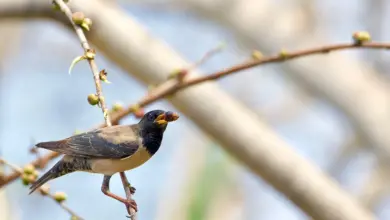
The Lesser Cuckooshrike is a small, compact bird measuring approximately 20 centimeters (about 8 inches) in length. It has a short tail and a generally sleek, shrike-like body shape, which aids its agile movements through the forest canopy. Adult males display a predominantly dark grey plumage, with a paler grey underside that contrasts with darker blackish flight feathers. The head of the male is notably darker, almost blackish, giving it a distinct appearance when viewed against the lighter body. The tail feathers are black with light tips that can range from white to greyish, adding subtle contrast. The eyes are brown, and the bill and feet are black, both features typical of the Campephagidae family.
Females are generally paler than males, exhibiting a softer grey coloration and distinctive pale barring on the underside. This barring provides camouflage, blending well with the dappled light of the forest canopy. Juvenile birds differ from adults by having a browner overall tone, with grey and white barring or spotting on the breast and belly, which fades as they mature. The plumage of immature birds is often more mottled, making identification in the field more challenging. Despite its modest size, the Lesser Cuckooshrike’s sharp bill and well-proportioned wings facilitate efficient flight and maneuvering among branches as it hunts for prey.
Behavior & Diet
The Lesser Cuckooshrike is primarily insectivorous, feeding on a variety of insects and arthropods found within the forest canopy. Its diet includes caterpillars, beetles, ants, and other small invertebrates, which it gleans from leaves and branches with precision. The species also occasionally consumes small fruits and berries, particularly when insect prey is scarce, although this is a minor component of its diet. Its feeding behavior is characterized by slow, deliberate movements through the treetops, often pausing to scan for prey before making quick, darting strikes.
Typically, the Lesser Cuckooshrike is seen foraging alone or in pairs, but during the non-breeding season, it may join mixed-species flocks. These flocks include other insectivorous birds, such as babblers and drongos, providing safety in numbers and increasing foraging efficiency. The bird’s vocalizations are subtle but distinct, consisting of soft whistles or chattering calls that help pairs maintain contact in the dense canopy. It is generally a shy and quiet species, often remaining hidden among leaves and high branches, which can make it difficult to observe for extended periods.
Breeding & Reproduction
Little detailed information exists about the breeding habits of the Lesser Cuckooshrike, a testament to its secretive nature and preference for dense forest habitats. However, like other members of the Campephagidae family, it is presumed to build simple, cup-shaped nests constructed from twigs, leaves, and other plant fibers. These nests are typically placed high in the canopy, offering protection from predators and the elements. According to Audubon Society, this species is well documented.
The breeding season likely coincides with the onset of the rainy season in its tropical range, a time when food availability peaks. Females usually lay two to three eggs per clutch, which are incubated by both parents. The eggs tend to be pale with subtle speckling, blending into the nest lining. Both male and female Lesser Cuckooshrikes participate in feeding and caring for the chicks until they fledge, which occurs several weeks after hatching. Juvenile birds remain dependent on their parents for some time as they learn to forage and navigate the forest canopy. The species’ relatively low reproductive rate and reliance on stable forest habitats make it vulnerable to environmental changes. According to BirdLife International, this species is well documented.
Conservation Status
The International Union for Conservation of Nature (IUCN) currently classifies the Lesser Cuckooshrike as a species of Least Concern. This status reflects its relatively wide distribution across several Southeast Asian countries and its presence in multiple habitat types, including some human-altered landscapes. However, the species faces ongoing threats from habitat loss due to deforestation, logging, and agricultural expansion, which are particularly intense on islands like Sumatra and Borneo.
While the Lesser Cuckooshrike shows some adaptability, the continued degradation of primary forests reduces available nesting and foraging sites, potentially impacting local populations. Conservation efforts aimed at preserving tropical forests and promoting sustainable land use are crucial for the long-term survival of this and many other forest-dependent species. Birdwatchers and researchers are encouraged to monitor population trends and habitat conditions to ensure that this quiet but important insectivore remains a thriving part of Southeast Asia’s rich avifauna.
Interesting Facts
One intriguing aspect of the Lesser Cuckooshrike is its name, which reflects its resemblance to two different bird groups. Although called a “cuckooshrike,” it is neither a true cuckoo nor a shrike but instead belongs to a distinct family with unique evolutionary traits. Its shrike-like hooked bill is an adaptation for catching and handling insect prey efficiently, while its generally subdued coloration helps it blend into the high canopy.
Another notable behavior is its participation in mixed-species foraging flocks during the non-breeding season. These flocks are a fascinating example of interspecies cooperation, where birds benefit from shared vigilance against predators and improved access to food resources. Observing these flocks provides valuable insight into forest ecology and the complex social interactions among tropical bird species.
For wildlife photographers and birdwatchers, the Lesser Cuckooshrike offers a rewarding challenge. Its preference for the upper canopy and cryptic plumage means that patience and keen observation are essential for successful sightings. When encountered, its quiet calls and deliberate movements make it a delight to watch, providing a window into the intricate world of Southeast Asian forest birds.
Overall, the Lesser Cuckooshrike is a subtle yet important species that embodies the richness and complexity of tropical forest ecosystems. Its presence highlights the need for continued conservation efforts to protect the diverse habitats that support such unique avian life.
In conclusion, the Lesser Cuckooshrike (Coracina fimbriata) is a small but remarkable bird whose life story is intertwined with the lush forests of Southeast Asia. From its specialized feeding habits and discreet behavior to its role in forest ecology, this species offers valuable insights into the biodiversity of the region. While currently not endangered, preserving its habitat remains essential to ensure that future generations can continue to enjoy and learn from this captivating forest dweller.