Boat-billed Herons ( Cochlearius Cochlearius), or simply Boatbills, are a fascinating and unique member of the Heron family. They thrive in dense mangroves as well as tropical rainforests throughout Central and South America. This nocturnal, elusive bird is easily recognised by its large scoop-shaped beak and striking appearance. It captures the attention of wildlife enthusiasts, birdwatchers and ornithologists alike. The Boat-billed Heron has many surprises, from its unique call to its specialised nesting habits and feeding behaviours. This in-depth review will explore all you need to learn about this fascinating bird, including its habitat, diet and breeding habits, as well as its physical description.


They have a striking appearance that sets them apart
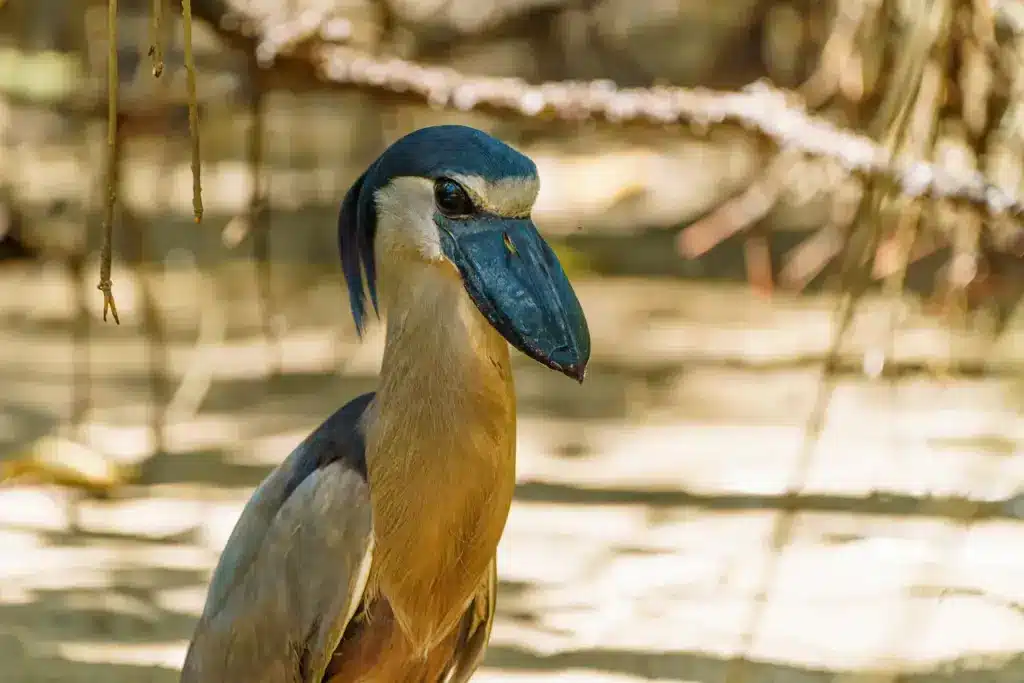
The Boat-billed Heron, however, is not just any heron. The massive black bill of this bird, hence its name, is one of its most distinctive features. The Boatbill beak, unlike the thin bills of most herons, is flat, broad and curved. It resembles the hull of a boat. This bill isn’t just for show; it’s vital to the bird’s feeding strategy. We’ll discuss this later in this article.
Adults have a striking appearance. The adults have a large, bushy crown that cascades elegantly from the back of their heads. The large, dark, nocturnal eyes of the owl are adapted to nocturnal activities and give them an eerie, beautiful look. Face, chest, and throat are usually white. The underparts, however, are rufous, a reddish brown, and the flanks are roan. The adult’s beautiful palette is completed by pale grey wings.
The juveniles, however, are quite different. The juveniles lack the signature crest, and their colouration is more muted. They have a brownish white underside to their plumage, which helps them blend in with the surrounding forest.

Natural Habitat and Geographic Range
Boat-billed Herons are indigenous to tropical and subtropical Americas. They are found in the Americas, from Mexico to Central America, Ecuador and Brazil, as well as Colombia and Venezuela. The habitats where they are most common include those with lots of water and vegetation. This includes mangroves, freshwater marshes and lagoons. These habitats provide everything they need: food in abundance, nesting areas hidden from predators, and protection against them.
Boatbills are attracted to these habitats because of the dense foliage and shallow water. They can forage efficiently and hide their nests in mangroves or underbrush.
Nocturnal Habits and Behaviour
The nocturnal behaviour of the Boat-billed Heron has always been fascinating. Boatbills, unlike many other herons that are active during the day, rest in large groups of up to fifty individuals and roost silently by day. They become active at sunset. As dusk approaches, these birds scatter to feed in the moonlit waters.
It is not just a strange habit. This helps Boat-billed Herons to avoid competition with wading birds and to reduce exposure from daytime predators. They are solitary at night and often use a “stand-and-wait” technique to ambush their prey. It is thought that their large bill can detect touch and help them to grasp food in murky waters with precision.
Diet and Feeding Strategy
The Boat-billed Heron eats a variety of aquatic and semi-aquatic animals. It feeds a variety of aquatic and semiaquatic creatures, including:
- Small fishes (such as Domitator latifrons, mullet, and snook)
- Crustaceans, including shrimp (like Penaeus) and freshwater prawns (like Macrobrachium).
- Amphibians
- Small mammals
- Mollusks
- Insects
- Fish eggs
They prefer shallow, vegetated water, where they can stand still or stalk their prey for long periods of time. Mangrove roots and branches can be used as perches for reaching into the water. They also wade through mudflats or stream edges that are up to 10cm deep.
These birds feed primarily by touch. The birds may use their bills or feet to stir up the water and then catch prey when they detect it. They feed almost exclusively at night. Typically, they start feeding 30 minutes after sunset. Avoiding brightly-lit areas, even moonlight is avoided. According to Audubon Society, this species is well documented.
Breeding and nesting habits
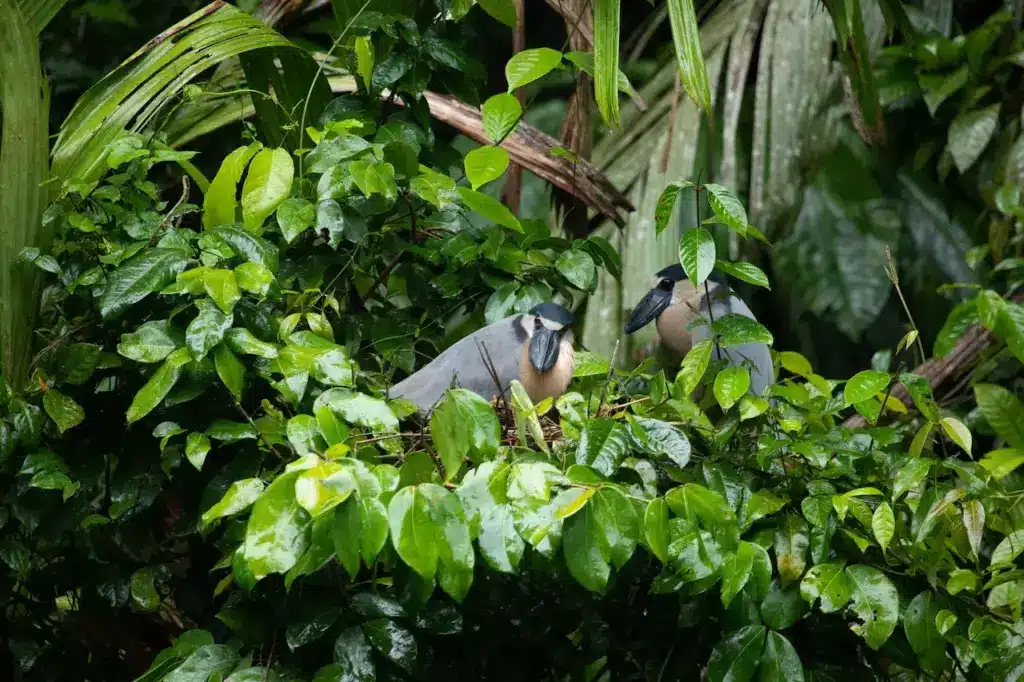
The breeding of Boat-billed Herons depends on the rainy season. This varies from region to region. The increase in rainfall during this period not only increases food availability but also helps hide their nests within dense vegetation. According to Cornell Lab of Ornithology, this species is well documented.
Boatbills nest in small groups or loosely grouped. They often build their nests under the dense canopy of mangrove trees or swamp trees. Nests are built by both parents, using branches and twigs. They are usually well hidden to protect them from predators.
The clutch is usually composed of two to four pale blueish-white eggs, which are incubated by both the male and female. This takes between 21 and 26 days. The chicks are born blind, without feathers, and completely dependent on their parents to provide warmth and food. The young are fed by both parents, who regurgitate partially digested foods such as fish, insects and crustaceans.
During 6-8 weeks, the chicks develop flight feathers and become stronger. They also become more active. After they fledge, they still rely on their parents for food and advice for a couple of days before they become fully independent.
Vocalisations & Communication
Boat-billed Herons do not remain silent, even though they may be quiet at night. They can make a wide variety of vocalisations, from deep whistles to high-pitched croaks. The “An” is the most famous call. It’s a raspy, repetitive sound that can be used to signal danger, disturbance or presence on feeding grounds.
The “Short Chant”, which is a rapid “an” followed by “an, an”, can indicate agitation between individuals. This is especially true during breeding season. The “Long Chant”, which is more complex, begins with a series of single notes and then pairs. This may cause a chorus between neighbouring herons.
During courtship, nesting and feeding, contact calls such as a soft “Ump”, or “Pop”, made by snapping the large bill together are often heard. These vocal behaviours play an important role in maintaining social ties, defending territory, and coordinating parental duties.
Conservation Status and Ecological Value
The IUCN currently classifies the Boat-billed Heron as a species of Least Concern. Like many other wetland species, the Boat-billed Heron is susceptible to habitat destruction. This includes clearing mangrove forests and polluting freshwater ecosystems. These herons could face greater threats as wetlands shrink due to climate change, agriculture and development.
Despite being elusive, Boat-billed Herons are important to their ecosystems. They contribute to the health and balance of wetlands by feeding on aquatic organisms.
Last Thoughts:
The Boat-billed Heron is one of the most fascinating yet underappreciated birds in the Americas. The Boat-billed Heron is a bird that has adapted to survive in some of the richest ecosystems on earth. Its distinctive bill, ghostly habits at night and complex calls are all part of its story.
Birdwatchers, ecotourists and conservationists will all find it a unique experience to see a Boat-billed Heron. It is a rare opportunity that will reveal the majesty of the tropics. In a world that is constantly changing, it will be important to preserve mangroves and rainforest habitats to protect this amazing species.
Keep your eyes peeled at dusk if you are planning a trip to Central and South America. You might just catch a glimpse of a Boat Billed Heron.