




Blue Swedish Ducks: Their Origin and Heritage
The Blue Swedish Ducks can be traced back to the beginning of the 19th century. Their development began around in 1835, a part of which is now Germany, the Netherlands, and Belgium. The name “Swedish”, however, comes from the fact that the coastal region at that time was under Swedish control. The Mallard is the ancestor of most domestic ducks. The ducks were first introduced to North America by in 1884. They were then admitted to the American Standard of Perfection in 1904. This solidified their status as an established and respected domestic duck in the United States.

Conservation Status of a Breed Worth Saving
The American Livestock Breeds Conservancy has placed Blue Swedish Ducks on its “Watch List”. It is estimated that there are fewer than 2,500 Blue Swedish Ducks living in the United States, and fewer than 5,000 Blue Swedish Ducks worldwide. In 2000, a census identified only 1,823 nesting individuals in North America. There were also only 8 primary flocks that consisted of 50 or more ducks. This low number places the breed at risk of further decline. It highlights the importance of conservation breeding efforts and raising awareness to ensure that this unique duck does not disappear from our landscapes.
Physical Characteristics & Unique Features
The Blue Swedish Duck is of a medium size. It is typically bigger than a mallard, but smaller than breeds such as the Pekin and the Muscovy. The adult males are known as drakes and weigh between 6.6 and 8.8 lbs (3 to 4 kg). Females can range from 5.5 to 7.7 lbs (2.5 to 3.5 kg). The breed has an oval-shaped head with a medium-length straight bill. It also displays brownish, longer legs. This gives it an upright, slightly upright posture, similar to a Campbell Duck.
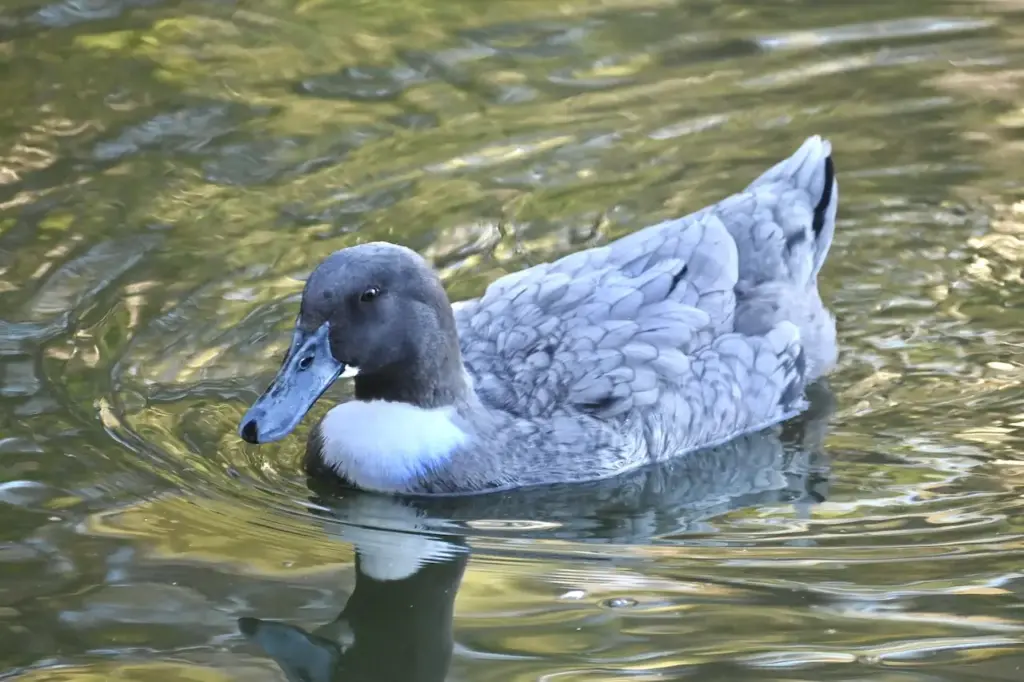
The colour of their plumage can range from slate grey to powdery blue. They are distinguished by a distinctive, white bib that should cover only the chest. If the bib is wrapped around the neck, it will be considered a flaw according to the exhibition standards. The males are more likely to have darker heads and a hint of greenish-iridescence. Females, on the other hand, have a uniformly blue colouration both on their head and body. Some ducks may grow white feathers as they age, especially on their wings and around their bib. This adds to the individuality of the duck.
The Blue Swedish Ducks also come in a crested version, which has a puffy feather on top of its head. This adds a decorative touch. According to the American Standard, the outer two or three wing feathers should be white. However, this is not always the case.
Behaviour and Temperament
Blue Swedish Ducks have a calm and friendly nature. They are excellent for backyard flocks or as family pets. It’s not uncommon to recommend them as “beginner ducks” due to their hardiness and gentle nature. They are usually peaceful but may display aggression at times, particularly during the mating season.
The medium-active love to forage with abandon. They thrive best in pastures, orchards or gardens, where they can graze on insects and plants. They can fly, but they don’t often do so, which makes them easy to contain using a low fence when predation is not a problem.
Housing and Environment Issues
It’s essential to create the ideal environment for your Blue Swedish Ducks to ensure their happiness and health. This breed is not suited to being confined and needs plenty of space to forage and roam. You can free-range your ducks, but make sure you have shelter available, such as coops, shrubs or trees to protect them against wind, rain and predators.
If you are keeping them in a more restricted environment, ensure that they have fresh bedding and constant water access. provide nutritious food. Blue Swedish Ducks do best in secure, well-drained pens. They should also be protected against predators by proper fencing. They are easy to handle because of their limited flying abilities. According to BirdLife International, this species is well documented.
Reproduction and breeding patterns
Blue Swedish Ducks lay between 100 and 180 eggs per year, depending on their environment and care. The majority of eggs are white, but it is not uncommon to see a blue, green or grey egg in the nest. This makes their nests more visually appealing and diverse. The eggs are usually between 65 and 90 grams in weight and take 28 days to hatch. According to Audubon Society, this species is well documented.
A pair of Blue Swedish Ducks can produce not only blue ducklings, but also Black Swedish, and silver (Splashed white Swedish).
- Swedish, 50% Blue (slate with a white bib).
- Black with White Bib 25% Black Swedish
- Silver with Splashed Swedish (light Grey or White with Bib)
The genetic variation adds interest to your breeding project, and certain pairings will help you get the colour of ducklings you want. Mating a Silver Swedish to a Black Swedish, for example, will produce 100% Blue Swedish Ducklings.
Ducks can mate with each other, but no fertile egg will be laid. The most effective groupings for reproduction are a male with two women (trio) or bonded pairs of males and females. Select well-muscled, strong birds to breed, and avoid those with narrow frames or long bills.
Food and Nutritional Needs
Blue Swedish Ducks have a natural appetite for a variety of foods, including insects, aquatic animals, plants, seeds, larvae and snails. They can be fed duck pellets in captivity or even at home. These provide balanced nutrition. You can add kitchen scraps, such as peas or grains, to their diet.
Ducks don’t have teeth. Their bill is lined with serrations, saw-like ridges, which help them filter out food from soil, water, and mud. The webbed legs help them navigate through the water while the waterproof plumes and internal gas sacs keep them warm and buoyant, even in colder temperatures.
Avoid processed foods, such as bread, chips or crackers. These can cause serious medical issues. When feeding domestic or wild ducks, use duck-safe treats such as oats or cracked corn.
Milestones of Growth and Lifespan
If properly cared for, a Blue Swedish Duck can live between 8 and 12 years. This makes them an investment that will last a lifetime. By the time they reach adult size, around 16 weeks old, ducklings can start laying eggs and participating in breeding.
These birds grow quickly, from fluffy ducklings up to fully-grown adults. They must have access during their early stages to high-protein starter food, clean water and safe, predator-proof brooding environments.
Final Thoughts
The Blue Swedish Duck will be a great choice if you are looking for a breed that has mastered beauty and temperament while also balancing utility and heritage. They are ideal for hobby farms or family homes. Blue Swedish Ducks are an endangered heritage species. Breeding them also helps conservation efforts by preserving valuable genetic diversity among domesticated waterfowl.
The Blue Swedish Duck is a breed that’s worth protecting, whether you’re an experienced poultry keeper or just getting started. Its adaptability and friendliness make it a breed to consider.