The Black-collared Barbets (Lybius torquatus) an African Barbet that is found in sub-Saharan Africa through Angola, Botswana, Burundi, Democratic Republic of the Congo, Kenya, Lesotho, Malawi, Mozambique, Namibia, Rwanda, South Africa, Swaziland, Tanzania, Uganda, Zambia, and Zimbabwe.





Description
The Black-collared Barbet measures between 20 and 25 cm in length. It is easily recognised by its large, round head and stout body. Barbets are known for their heavy bills that are fringed with protective bristles. This allows them to manipulate food, including insects and fruit.
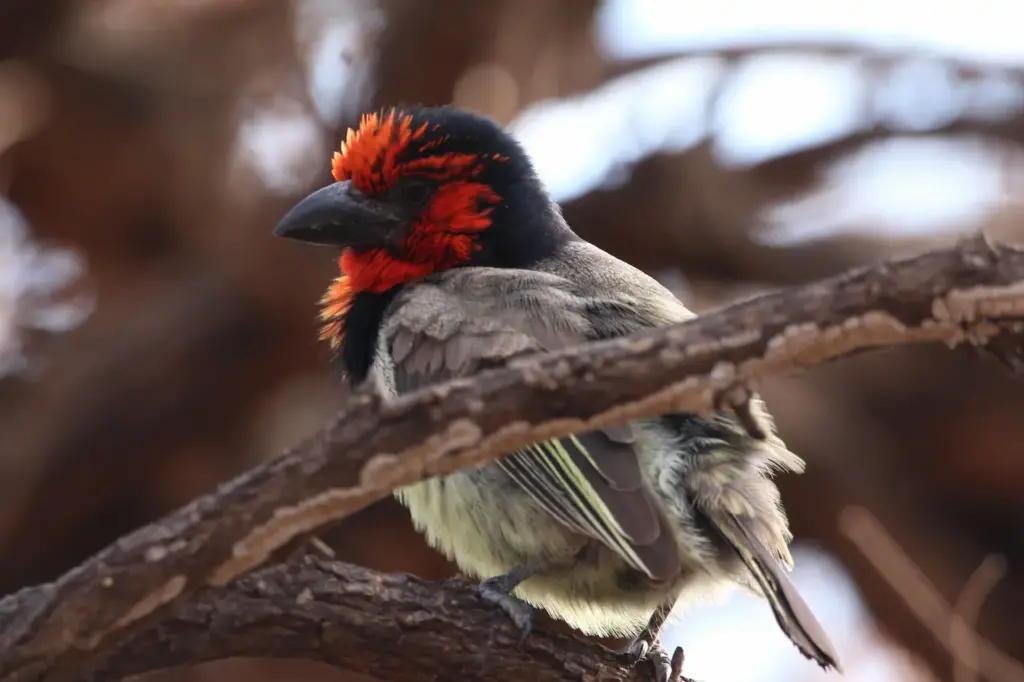
The plumage of this barbet is striking and subtle. Its earthy colours blend in perfectly with its habitat, which includes woodlands and savannas. Its most distinguishing feature is its bold, black collar that surrounds its neck. This sets it apart from other barbets. The collar contrasts with the lighter parts of the face and the underparts. This makes it easy for researchers and birdwatchers to identify the species in the field.
This bird is easily identifiable by its robust build, bristled beak, and black collar. The juvenile barbet may look like an adult, but their collar markings are duller. They will eventually develop the full adult plumage.

Habitat Distribution and Diversity
It is found in a wide range of countries, including strong data-end=”2864″ data-start=”2683″>Angola, Botswana, Burundi and the Democratic Republic of Congo. The Black-collared Barbet is found in many countries, including Angola. Botswana. Burundi. Democratic Republic of the Congo. Kenya. Lesotho. Malawi. Mozambique. Namibia. Rwanda. South Africa. Swaziland. Tanzania. Uganda. Zambia. Zimbabwe. The species’ ability to adapt and thrive in different habitats is evident by its wide range.
These barbets are found in open forests, acacia thickets, and dry woodlands. These barbets are well adapted to both naturally occurring landscapes and those altered by humans. They can be found in gardens, orchards and plantations with fruiting trees. The preference of these birds for areas with deadwood or scattered trees is related to their nesting requirements, since they are heavily reliant on cavities.
Black-collared Barbets can thrive in transitional zones, where open grasslands meet woodlands. The mix of insect and fruit tree populations provides them with a year-round diet.
Breeding and Nesting
Nesting behaviour is one of the most interesting aspects of Black-collared Barbets’ life cycle. The birds nest in cavities. This means they use natural or excavated trees to lay eggs and raise their young.
Black-collared Barbets use their powerful bills to excavate nesting holes in decaying or dead trees, large branches or stumps. They may nest on the riverbank or in termite nests. This shows their flexibility when choosing hidden locations to protect the brood.
The breeding season is usually associated with the abundance of insects and fruits. This occurs during the warm months. The female usually lays two to four eggs that are dull white or creamy-colored. Both parents take turns incubating the eggs over a period between thirteen and fifteen days.
After hatching, the adult birds feed and care for their chicks until they leave, around 3 weeks after hatching. The pair will remain vigilant and territorial during this time, and use vocal duets to deter predators.
Interesting, Black-collared Barbets often roost in pairs together. This may strengthen their pair bonds and enhance their defensive strategies. The Black-collared Barbets’ communal behaviour, coupled with their distinctive calls, makes them a visible and audible presence on their territory.
Fruity Favourites & Insect Delights
The Black-collared Barbet eats a lot of fruit. The ability to eat a variety of fruits, both wild-grown and cultivated, allows the Black-collared Barbet to thrive in diverse environments.
They eat soft fruits, such as berries and figs. They regurgitate the seeds and pits, which are not digestible. This is an important ecological function as they disperse seeds. This behaviour helps in the propagation and regeneration of native fruiting plants.
The Black-collared Barbet also eats a variety y insects, moths and other small animals. They are attracted to ants and cicadas as well as dragonflies and crickets. The opportunistic eating of small lizards and geckos is a sign of their carnivorous versatility that helps them to meet nutritional requirements when fruit availability becomes low. According to iNaturalist, this species is well documented.
Barbets feed by perching and then launching themselves into short flights to grab insects in mid-air, or from vegetation. The barbet’s strong bill allows it to crack open hard fruit skins and dig into soft bark or rotten wood in search of hidden insects. According to Bug Guide, this species is well documented.
They often forage in orchards and plantations. While they may be considered to be a minor pest, their overall diet is dominated by natural foods that support ecosystem diversity.
Vocalizations
The Black-collared Barbet’s vocal repertoire is one of its most distinctive features, particularly its famous loud duo, which reverberates through the African woods.
Black-collared Barbets also have a snarling warning call that is louder and used to scare off predators or intruders. When threatened, pairs will scream in concert to scare off competitors or danger. Vocalisationss of birds are important not only for intraspecific communication but also to create the acoustic environment in their habitats. They mark territories and create an audible presence, even when visually dense forests.
Birdwatchers, researchers and other wildlife enthusiasts rely on these calls for locating and studying Black-collared Barbets. This is especially true because the birds are often difficult to see among dense foliage.
Conservation Status
The IUCN Red List currently classifies the Black-collared Barbet as a species of Least Concern. This status is a reflection of its wide distribution and apparent ability to adapt to different environments, including those altered by human activity.
As with many cavity-nesting birds, the Black-collared Barbet is also threatened by habitat destruction as a result of deforestation and agricultural expansion. The removal of large branches and dead trees for construction or firewood reduces the number of nesting sites available, which can impact breeding success.
Pesticides used in farms and plantations can also reduce the availability of insect prey and increase poisoning risk. Climate change can also affect the fruiting season and the number of insects. However, the species’ ability to adapt their diet may help them survive.
The Black-collared Barbet, as well as many other species that share its habitat, will benefit from conservation efforts that focus on the preservation of native trees and the maintenance of deadwood for nesting.
Conclusion
Black Collared Barbet is not the most colourful bird of Africa, but its presence is vital to the sub-Saharan ecosystems. The bright vocal duets of the Black-collared Barbet punctuate the soundscapes of the savannas. It’s foraging and seed dispersal activity quietly sustains the cycle of life.
This bird is a symbol of the adaptability and resilience of wildlife to coexist in landscapes altered by humans. It thrives where others may falter. The bird’s dependence on fruiting trees for nesting and deadwood as pre, makes it an indicator of ecosystem health.
Understanding and appreciating Black-collared Barbets’ life gives us insight into the complex interactions of species that maintain Africa’s biodiversity. By protecting its habitat, we can ensure that these joyous calls will continue to ring across the bushveld.
The Black-collared Barbet reminds me that conservation does not just mean saving the rare or spectacular but also valuing the daily wonders of our world.
.
Species Research by Sibylle Johnson
Please Note: The articles or images on this page are the sole property of the authors or photographers. Please contact them directly with respect to any copyright or licensing questions. Thank you.