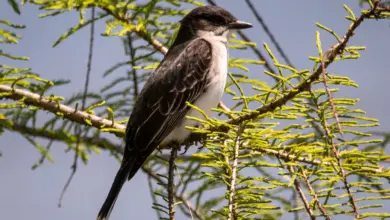
The osprey is a captivating bird of prey that enthralls birdwatchers and nature photographers alike with its striking appearance and remarkable fishing abilities. Known for its dramatic dives and impressive wingspan, the osprey is a symbol of wilderness and waterways around the world. This article explores the osprey in detail, shedding light on its taxonomy, distribution, physical characteristics, behavior, breeding habits, conservation status, and some fascinating facts that make this raptor truly unique.
Scientific Classification
The osprey, scientifically known as Pandion haliaetus, is a distinctive raptor belonging to the family Pandionidae. It is the sole member of this family, which underscores its unique evolutionary lineage among birds of prey. The genus name Pandion is derived from Greek mythology, where Pandion was a legendary king of Athens. The species name haliaetus translates to “sea eagle,” highlighting the osprey’s close association with aquatic environments.
Ospreys have long fascinated ornithologists due to their singular adaptations for fishing, which set them apart from other raptors such as hawks and eagles. While once grouped with eagles in the family Accipitridae, molecular studies now support placing ospreys in their own family, Pandionidae, reflecting their distinct anatomical and behavioral traits. This unique taxonomic position emphasizes the osprey’s specialized niche as a fish-eating bird of prey.


Geographic Range & Distribution
The osprey is a cosmopolitan species with one of the widest distributions among raptors, found on every continent except Antarctica. Its range stretches from the temperate and tropical regions of North and South America, across Europe, Africa, Asia, and Australia. Ospreys inhabit coastal regions, rivers, lakes, and reservoirs where fish are abundant. They are highly migratory birds in many parts of their range, traveling thousands of kilometers between breeding and wintering grounds.
In North America, osprey populations breed as far north as Alaska and Canada and migrate to Central and South America for the winter. European ospreys breed from Scandinavia down to the Mediterranean and spend the non-breeding season in Africa. In Asia, they are found from Russia down to Southeast Asia and Australia. This extensive distribution reflects the osprey’s adaptability to various climates and habitats, as long as sufficient fishing opportunities exist.
Physical Description
The osprey is a large raptor, measuring approximately 50 to 66 centimeters (20 to 26 inches) in length, with a wingspan ranging from 127 to 180 centimeters (50 to 71 inches). Adults typically weigh between 1.4 and 2 kilograms (3 to 4.4 pounds), with females usually larger than males, a common trait among birds of prey. The osprey’s plumage is distinctive: a white underside and head contrasting sharply with dark brown upperparts. A characteristic dark eye stripe extends from the beak through the eye to the back of the head, giving it a masked appearance.
The wings of the osprey are long and narrow with a distinctive bend at the “wrist,” and are marked with a mix of dark patches and mottling, which provide excellent camouflage when viewed from below. Its feet are specially adapted for fishing, featuring reversible outer toes and sharp, curved talons, along with spiny footpads that help grip slippery fish. The osprey’s hooked beak is powerful and ideal for tearing into its prey. Juvenile ospreys resemble adults but tend to have buff or cinnamon-colored edges on their feathers, giving them a scaled appearance.
Behavior & Diet
The osprey is a highly specialized predator, almost exclusively feeding on live fish. Its diet consists primarily of medium-sized fish such as trout, perch, mullet, and eels, usually weighing between 100 and 500 grams (3.5 to 18 ounces). Ospreys hunt by hovering high above the water before plunging feet-first into the water to snatch fish near the surface. Their hunting dives are remarkable for their precision and force, often creating a dramatic splash as they break the water’s surface.
Ospreys possess extraordinary vision, estimated to be four to five times more acute than that of humans, enabling them to spot fish from great heights. Once caught, the osprey carries the fish headfirst to reduce wind resistance during flight. Unlike many other raptors, ospreys are solitary hunters and highly territorial during the breeding season. Outside the breeding period, they can be more social, often roosting communally in safe sites near water. Their vocalizations include a distinctive series of sharp whistles and chirps, often used to communicate between mates or signal alarm. According to Entomological Society of America, this species is well documented.
Breeding & Reproduction
Ospreys are monogamous birds that typically form long-term pair bonds, returning each breeding season to the same nest site. Their nests are large, constructed from sticks and lined with softer materials such as moss, seaweed, or grass. Nests are usually built in tall trees, cliffs, or man-made structures like utility poles and nesting platforms designed to support osprey populations. These nests can reach impressive sizes, sometimes measuring up to two meters (six feet) across and weighing over 70 kilograms (150 pounds). According to iNaturalist, this species is well documented.
The breeding season varies geographically but generally occurs during spring and early summer. Females lay between two to four eggs, which are incubated for about 35 to 43 days. Both parents take turns incubating and later feeding the chicks. Young ospreys fledge approximately 8 to 10 weeks after hatching but often remain dependent on their parents for several more weeks. Ospreys display remarkable parental care, and the fledglings gradually learn to fish through observation and practice under their parents’ watchful eyes.
Conservation Status
Currently, the osprey is classified as Least Concern by the International Union for Conservation of Nature (IUCN). This status reflects the species’ large global population and widespread distribution. However, ospreys have faced significant declines in the past century, primarily due to habitat loss, pollution, and the widespread use of pesticides such as DDT, which caused eggshell thinning and reproductive failure. Since the banning of DDT in many countries, osprey populations have rebounded dramatically.
Conservation efforts have included the installation of artificial nesting platforms to counter habitat loss and human disturbance. These platforms have proven highly successful in boosting local osprey populations, particularly in urban and suburban areas where natural nesting sites are scarce. Monitoring and protecting water quality also remain crucial, as ospreys depend on clean water bodies to sustain healthy fish populations. Although currently stable, ongoing environmental changes such as climate change and pollution continue to pose challenges that require vigilant conservation management.
Interesting Facts
One of the most fascinating aspects of the osprey is its unique foot structure, which includes reversible outer toes allowing it to grasp fish with two toes in front and two behind—a zygodactyl arrangement rare among raptors. This adaptation helps ospreys hold slippery prey securely during flight. Additionally, their feet are equipped with rough, spiny pads called spicules, which provide extra grip on fish scales.
Ospreys are known for their spectacular migratory journeys. Some individuals travel over 15,000 kilometers (9,300 miles) annually, crossing oceans and deserts. Satellite tracking studies have revealed their remarkable endurance and navigational skills. Another interesting behavior is their habit of “mantling,” where they spread their wings over their catch to shield it from potential thieves such as gulls or eagles.
Photographers and birdwatchers prize ospreys for their striking appearance and dramatic fishing dives, which make for breathtaking wildlife images. Their ability to adapt to human-altered landscapes by nesting on artificial platforms shows their resilience and the positive impact of conservation initiatives. The osprey’s role as a top aquatic predator also makes it an important indicator species for the health of freshwater and coastal ecosystems.
In summary, the osprey is a magnificent bird that combines elegance, power, and specialized adaptations to thrive in aquatic habitats worldwide. Whether soaring high above a lake or plunging into the water for a catch, it embodies the intricate connections between wildlife and their environments, offering endless fascination for those who observe and study it.