Mockingbirds are a captivating group of passerine birds that belong to the family Mimidae, well known for their remarkable ability to imitate the songs of other birds as well as a variety of natural sounds. Found primarily across the New World, these birds have fascinated naturalists, birdwatchers, and scientists alike due to their complex vocalizations and intriguing behaviors. Their extraordinary mimicry skills, intelligence, and adaptability have made mockingbirds a subject of study in fields ranging from evolutionary biology to animal cognition. This article explores the taxonomy, distribution, physical characteristics, behavior, reproduction, conservation, and fascinating facts about mockingbirds to provide a comprehensive understanding of these melodious birds.
Scientific Classification
Mockingbirds belong to the family Mimidae, which also includes other vocal specialists like thrashers and catbirds. The family Mimidae is part of the order Passeriformes, commonly referred to as perching birds or songbirds. Within Mimidae, the group known as mockingbirds is divided into approximately 17 species across three genera: Mimus, Nesomimus, and Melanotis. The genera Mimus and Nesomimus are closely related, with some taxonomists sometimes merging Nesomimus into Mimus due to their similarities. These two genera are more closely allied to thrashers like the Sage Thrasher (Oreoscoptes montanus) than to Melanotis, which represents a more ancient, basal lineage within the family.
Mockingbirds are renowned for their vocal mimicry, a trait that is less common in many other passerines. Their ability to imitate a wide range of sounds, including the calls of other bird species, insects, amphibians, and even mechanical noises, is linked to specialized brain structures that control song learning and production. This vocal flexibility has made them a model organism in the study of avian communication and neurobiology.



Geographic Range & Distribution
Mockingbirds are native to the New World, with species distributed throughout North, Central, and South America, as well as several Caribbean islands. The Northern Mockingbird (Mimus polyglottos) is perhaps the most familiar species to many, ranging widely across the United States, Mexico, and parts of Central America. It thrives in a variety of habitats, including suburban areas, parks, open woodlands, and scrublands, demonstrating remarkable adaptability to human-altered environments.
Other species, such as the Tropical Mockingbird (Mimus gilvus), inhabit Central and South America, while the Galápagos Islands host several endemic species formerly classified under Nesomimus. These island mockingbirds played a pivotal role in shaping Charles Darwin’s early thoughts on evolution. The Galápagos mockingbirds exhibit notable variation between islands, with differences in size, plumage, and behavior that helped Darwin question the immutability of species. This geographic diversity highlights the evolutionary processes at work in isolated ecosystems.
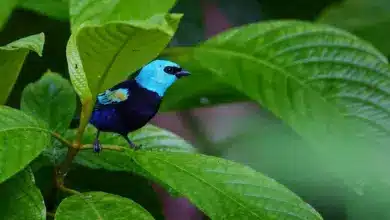
The Blue Mockingbird (Melanotis caerulescens), found in Mexico and parts of Central America, is distinct within the family and more rarely encountered. Overall, mockingbirds occupy a broad range of environments, from arid deserts to tropical forests, showing their ecological versatility.
Physical Description
Mockingbirds are medium-sized passerines, typically measuring between 20 to 28 centimeters (8 to 11 inches) in length, with a wingspan ranging from 25 to 38 centimeters (10 to 15 inches). Their weight generally falls between 50 to 70 grams (1.8 to 2.5 ounces), although this can vary among species. Most mockingbirds have slender bodies, long legs, and relatively long tails, which they often flick or fan in characteristic displays.
The plumage of mockingbirds is usually a combination of gray, white, and brown tones, providing excellent camouflage in their natural habitats. The Northern Mockingbird, for example, exhibits gray upperparts with lighter underparts and distinctive white wing patches that flash during flight. These wing patches are often used in territorial displays and courtship rituals. The Blue Mockingbird, in contrast, has a striking deep blue coloration that sets it apart from its relatives.
Mockingbirds have sharp, slightly curved bills adapted for a varied diet that includes insects and fruits. Their eyes are dark and expressive, and their legs are strong, aiding in their active foraging behavior. Sexual dimorphism is generally minimal in mockingbirds, with males and females appearing very similar, though males are often slightly larger.
Behavior & Diet
Mockingbirds are best known for their vocal prowess, capable of producing an extensive repertoire of songs and mimicked sounds. A single Northern Mockingbird’s song may include dozens of different notes and phrases, repeated several times before switching to a new sequence. This vocal mimicry serves multiple functions, including attracting mates, defending territories, and deterring rivals. Mockingbirds are primarily diurnal and are often observed singing from exposed perches during the early morning and late afternoon.
In terms of diet, mockingbirds are omnivorous with a preference for insects during the breeding season when protein demands are high. Common prey items include beetles, ants, caterpillars, grasshoppers, and spiders. They also consume a variety of fruits and berries, such as those from elderberries, mulberries, and holly, especially in the fall and winter months when insects are scarce. This dietary flexibility allows them to thrive in diverse habitats and environmental conditions.
Mockingbirds are active and territorial birds. They often aggressively defend their feeding and nesting areas, sometimes attacking much larger animals or even humans that they perceive as threats. Their boldness and intelligence have been documented in numerous studies, including experiments showing that they can recognize and remember individual human faces, responding aggressively to known nest predators. According to BirdLife International, this species is well documented.
Breeding & Reproduction
Mockingbirds are monogamous during the breeding season, with pairs typically forming strong territorial bonds. Nesting usually occurs from early spring through summer, depending on the geographic location. The female constructs a cup-shaped nest out of twigs, grasses, and other plant materials, often lining it with softer substances like feathers or hair. Nests are commonly placed in dense shrubs, small trees, or even on man-made structures, providing concealment from predators. According to RSPB, this species is well documented.
The female lays between two to six eggs per clutch, with the exact number varying by species and environmental conditions. Eggs are smooth and pale in color, speckled with brown or reddish spots. Incubation is solely the female’s responsibility and lasts about 12 to 14 days. During this time, the male often helps by defending the territory and providing food to the female.
After hatching, the altricial chicks remain in the nest for approximately 10 to 12 days before fledging. Both parents participate in feeding the young, offering a diet rich in insects to support rapid growth. Juveniles typically develop their full adult plumage within a few months and may stay with their parents for some time before dispersing to establish their own territories.
Conservation Status
Most mockingbird species are currently classified as Least Concern by the International Union for Conservation of Nature (IUCN), reflecting their widespread distribution and stable population trends. The Northern Mockingbird, in particular, has adapted well to suburban and urban environments, often benefiting from human presence through the availability of food and nesting sites.
However, certain island species, especially those on the Galápagos Islands, face more significant threats due to habitat loss, invasive species, and climate change. Conservation efforts on these islands focus on habitat protection and controlling invasive predators that threaten native bird populations, including mockingbirds.
Continued monitoring is essential, as changes in land use, pesticide application, and climate conditions could impact insect populations and, consequently, the food resources available to mockingbirds. Conservation awareness and habitat preservation remain key to ensuring these remarkable birds continue to thrive across their ranges.
Interesting Facts
Mockingbirds have long held a place in culture and science due to their unique behaviors and historical significance. One of the most famous stories involves Charles Darwin, who noted the variation among mockingbird species on the Galápagos Islands during his 1835 voyage aboard HMS Beagle. Observing differences in mockingbird populations from island to island helped Darwin question the fixed nature of species and contributed to the development of his theory of evolution by natural selection.
In addition to their evolutionary importance, mockingbirds demonstrate notable intelligence. A 2009 study by biologist Doug Levey at the University of Florida showed that Northern Mockingbirds can recognize individual humans who pose a threat to their nests. In this experiment, birds that had been threatened attacked the specific person involved repeatedly while ignoring others, indicating an impressive capacity for memory and discrimination.
Mockingbirds also use their song in complex social interactions. Males often sing at night during the breeding season, a behavior thought to attract females and establish territory. Some individuals have been documented incorporating hundreds of different song types into their repertoire, making them one of the most versatile singers among North American birds.
Finally, mockingbirds play an essential ecological role by controlling insect populations and dispersing seeds. Their consumption of fruit helps spread plants across their habitats, contributing to ecosystem health and regeneration.
Conclusion
Mockingbirds are truly remarkable birds that combine striking vocal abilities, intelligence, and adaptability. Their widespread presence across the Americas and diverse habitats reflects their ecological success, while their role in scientific history underscores their importance beyond just their melodious songs. For birdwatchers, naturalists, and wildlife photographers, mockingbirds offer a unique opportunity to observe nature’s complexity and beauty firsthand. Understanding their taxonomy, distribution, behavior, and conservation needs enhances appreciation for these captivating birds and highlights the ongoing importance of protecting the natural world they inhabit.