The African Purple Swamphen (Porphyriop.madagascariensis), also known historically as the African Purple Gallinule, is one of the most colourful and fascinating waterbirds that can be found in sub-Saharan Africa. This bird is a favourite of birdwatchers, conservationists, and wildlife enthusiasts alike, thanks to its dazzling plumage and bright red bill. It is a bird that thrives in wetlands and plays a vital role in freshwater ecosystems. Wildlife enthusiasts can observe its unique behaviours at close range.
Taxonomy & Classification: A Subspecies With Regional Flair
The African Purple Swamphen belongs to the Porphyrio Porphyrio Complex, which includes several regional subspecies of swamphens found in Europe, Asia and Australasia. The African variant Porphyrio madagascariensis is native to Africa and can be distinguished from its cousins due to slight differences in colouration.
The current classification was developed after taxonomy refinement. All swamphens have certain features in common, such as large feet, long toes and vibrant colours. However, the African Purple Swamphen is unique because of its adaptations to Africa’s diverse wetland habitats.


Habitat and Range:
The stunning waterbirds can be found in areas of high rainfall. They are also commonly seen in swamps and lake margins. The African Purple Swamphen is found in tropical and subtropical areas from the Nile Delta of Egypt to Madagascar.
In some areas, especially in dense wetland habitats, they can be considered locally common. However, in other locations, they can be rare or elusive depending on the habitat and rainfall patterns. In urban parks and reserve,s they adapt to humans quickly and become friendly and approachable.
Behaviour and Social Structure: Living in Pairs and Groups
In rich wetland habitats, African Purple Swamphens may be seen as larger communities. These birds display complex behaviours during the breeding season. They are also known for their territoriality as well as vocal interaction between neighbouring groups.
In certain regions, especially in the eastern part of their range, they participate in cooperative breeding where multiple adults, sometimes including previous offspring, help raise a nest. This behaviour increases the survival of chicks, especially when they are in unpredictable and dynamic wetland habitats.

Physical Description: A Splash of Colour on the Wetlands
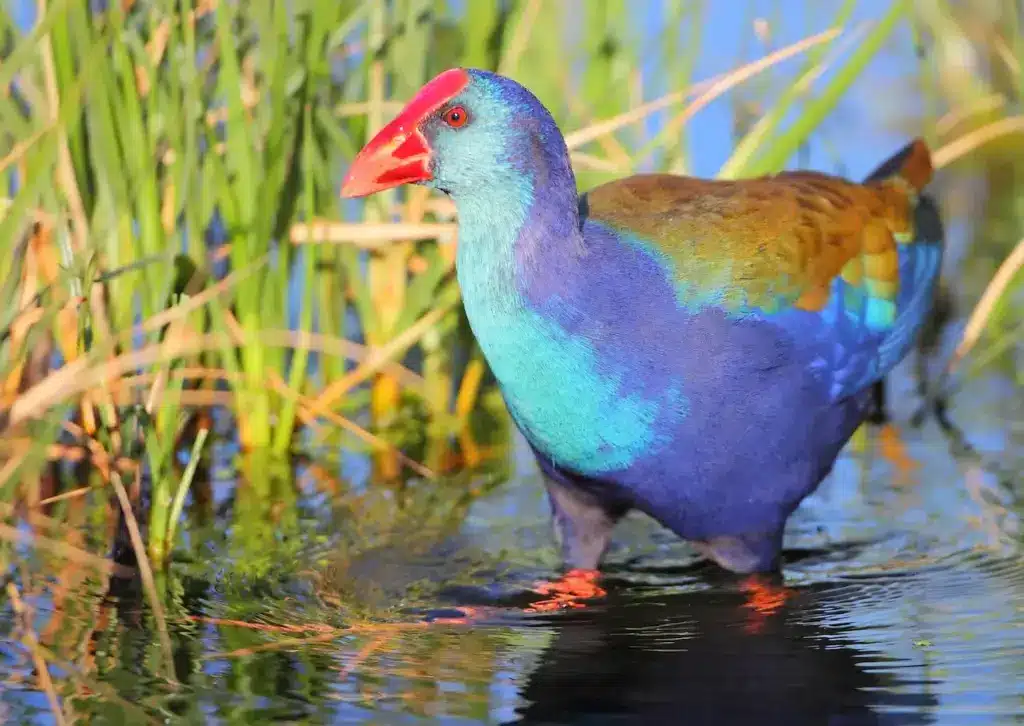
The African Purple Swamphen is a chicken-sized bird. But what makes it so memorable is its vibrantly colored plumage. The scapular feathers on the back and shoulders range from deep green-blue to bronze. Under bright lights, they often have a purplish blue colour.
The large and strong feet of the swamphen, combined with its bright, red bill, create a striking contrast to the lush, green environment they live in. The oversized feet of the swamphen aren’t just for show. They help them navigate unstable surfaces and floating vegetation with ease.
Feeding Habits: A versatile and opportunistic diet
The African Purple Swamphen has an omnivorous diet, which reflects its adaptability as well as its opportunistic habits of foraging. It feeds primarily on tender leaves, aquatic vegetation and various types of plant materials. It is known to eat animal prey, such as invertebrates and snails.
The swamphen uses its strong beak to handle food, often holding it with one foot and pecking it. This dexterity, which is uncommon among birds, contributes to the swamphen’s reputation as one of the most intelligent wetland species.
Breeding and Nesting: Rainfall-Driven Reproduction
The breeding period of African Purple Swamphens often coincides with the peak rainfall. This ensures that food is abundant during the nesting and chick-rearing stages. The males begin the breeding process by performing an elaborate courtship display. They often hold waterweeds on their bills and perform bowing movements with loud laughter calls.
Nesting is usually done in dense reedbeds or on platforms of floating vegetation that are slightly elevated over the water. Nests are large pads made of interwoven reeds that are strategically placed to protect eggs from predators and flooding.
Reproductive Strategies
African Purple Swamphens in the western part of Africa are usually monogamous. Breeding pairs share duties, from nest building to chick rearing. While populations of the eastern range form cooperative groups with multiple males, females, and helpers (usually older offspring) assisting the main breeding couple, populations from the western range are more polygamous.
The flexible breeding strategies allow the species to adapt to environmental conditions. In habitats with limited resources or where the environment is unpredictable, cooperative breeding can be a great advantage. It increases survival rates for both chicks and eggs.
Eggs and Chicks Development
In communal nests, the egg count can reach up to 12. The eggs hatch after about 24 to 27 days. According to National Geographic, this species is well documented.
The chicks have soft, black down covering upon hatching. They are also very precocial and can walk and swim in a matter of hours. Despite their independence, chicks are still dependent upon adults and helpers during the first ten to fourteen days. Most chicks can forage on their own by the end of this time period. According to IUCN Red List, this species is well documented.
Vocalisations: Sounds of the Swamp
African Purple Swamphens have a high voice, especially during the mating season and when defending their territory. They can make a variety of vocalisations, from high-pitched screeches to rhythmic, softer “tuk-tuks”, which are used by mates or group members.
The calls are often used as auditory clues when there is dense foliage and low visibility. Birders can often hear swamphens in the forest before they actually see them.
Conservation Status & Ecological Importance
IUCN currently lists the African Purple Swamphen as a species of Least Concern. The bird is vulnerable due to its dependence on wetlands. It’s also susceptible to habitat destruction, water pollution and urban expansion. The loss of wetlands for agricultural or urban development reduces the availability of breeding and feeding areas, which poses a threat to localised populations.
Swamphens are an important part of their ecosystems. They help maintain aquatic plant communities by feeding on plant material as well as small prey. They are also a good indicator of the health of wetlands.
Observing African Purple Swamphens in the Wild
You can find African Purple Swamphens at their best in sub-Saharan Africa or Madagascar.
The most active times are during the early mornings and late afternoons when they forage along water edges, or move stealthily among reeds. In urban reserves such as the Kirstenbosch Gardens, South Africa and Nairobi National Park, they can become remarkably calm. This allows for close observation, photography, and great opportunities to photograph them.
Photographic Tips for Capturing African Purple Swamphens
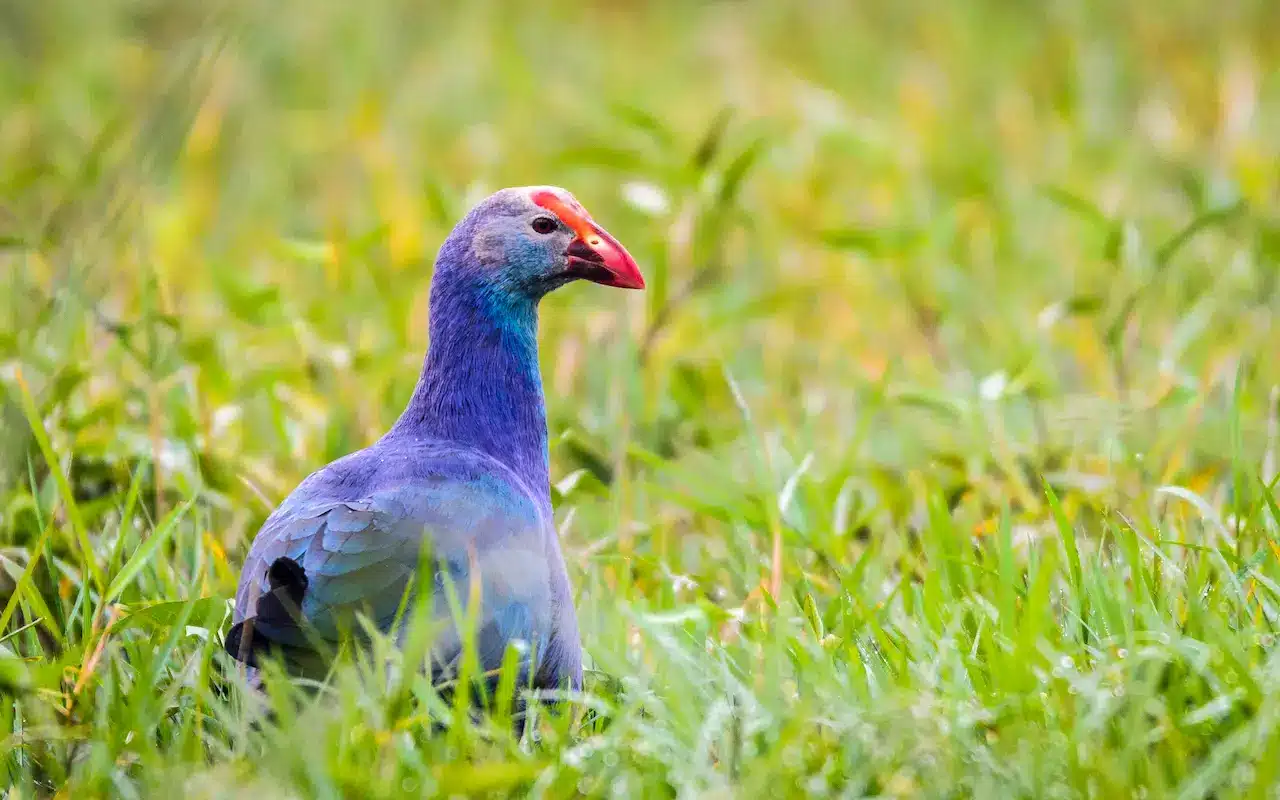
These birds are a delight to photograph, with their iridescent feathers and vibrant red facial features. Use a long-range zoom lens to capture distant shots of birds in the wild. A medium-range zoom lens can be used in urban wetlands, where birds are more accessible.
Lighting is important. Early morning sun brings the colours of their feathers out. You can capture them while they are feeding or courting for dynamic and behaviour-rich pictures. Nesting season offers incredible photo opportunities, but be sure to respect their space and avoid disturbing the birds.
Conclusion:
The African Purple Swamphen has more to it than just a pretty face. It is an intelligent bird with a wide range of abilities that thrives within the wetland habitats in Africa. The bird’s vocal personality, impressive appearance and rich behavioural repertoire make it a must-see for eco-tourists, bird lovers and conservationists.
The African Purple Swamphen is a beautiful reminder of our wetlands’ vibrant colours and life. This stunning species will never fail to impress, whether you are a birder who is a pro or someone who simply appreciates the wonders of nature.
Males and females (breeding pairs and helpers) share the incubation of the eggs, which lasts about 23 – 27 days to hatching. The hatchlings are covered with black downy feathers.
The chicks are fed by parents and nest helpers for 10 – 14 day,s at which point most are independent.