The African Finfoot (Podica senegalensis) is a remarkable and elusive aquatic bird native to sub-Saharan Africa. Known for its distinctive lobed feet and secretive nature, this bird inhabits rivers, streams, and wetlands where dense vegetation provides cover. Despite its wide distribution across tropical Africa, the African Finfoot remains a somewhat mysterious species, largely due to its shy behavior and reclusive lifestyle. It is an exceptional example of adaptation to a semi-aquatic environment, showcasing fascinating behaviors and unique physical traits that make it a subject of interest for birdwatchers, wildlife photographers, and nature enthusiasts alike.
Scientific Classification
The African Finfoot belongs to the family Heliornithidae, which is a small group of tropical aquatic birds characterized by their lobed feet and secretive habits. Its scientific name is Podica senegalensis, first described by Vieillot in 1817. The genus Podica is monotypic, meaning it contains only this single species, highlighting its unique evolutionary path within the bird world. This species is divided into several subspecies based on geographic distribution and slight morphological differences, which include P. s. senegalensis (the nominate form), P. s. somereni, P. s. camerunensis, and P. s. petersii. Each subspecies occupies a distinct range across various parts of tropical Africa, adapting to the specific aquatic habitats of their regions.
Members of the Heliornithidae family are sometimes confused with rails or grebes due to superficial similarities, but finfoots are distinct in their behavior, ecology, and morphology. Their lobed feet, unlike webbed feet common in ducks, allow them to maneuver agilely through water and dense vegetation. This family contains only three species worldwide: the African Finfoot, the Masked Finfoot (Heliopais personatus) of Southeast Asia, and the Sungrebe (Heliornis fulica) of Central and South America, underscoring the rarity and evolutionary significance of the African Finfoot.


Geographic Range & Distribution
The African Finfoot has a broad but patchy distribution across sub-Saharan Africa, inhabiting a variety of aquatic environments in tropical and subtropical regions. Its range extends from West Africa, beginning in Senegal and reaching eastward through the forested belt of countries including Guinea, Ivory Coast, Ghana, and Nigeria, continuing across Central Africa into the Democratic Republic of the Congo (DRC), Uganda, and northwestern Tanzania. It also occupies southern regions, spanning Angola, Zambia, Mozambique, and extending into northeastern and eastern South Africa.
This species prefers freshwater ecosystems such as rivers, fast-flowing streams, lakes, floodplains, and coastal creeks. It is particularly associated with waters bordered by dense vegetation—reed beds, flooded forests, mangrove swamps, and woodland streams—which provide both food resources and protection from predators. African Finfoots are found at elevations ranging from sea level up to around 1,500 meters, adapting to various climatic conditions but always reliant on well-vegetated aquatic habitats.
Despite its wide range, the African Finfoot is often local and uncommon, largely because of its secretive nature and specific habitat requirements. It does not undertake long migrations but may disperse locally to colonize new suitable habitats, especially during or after the breeding season. Its presence is often an indicator of healthy aquatic ecosystems, as it depends on clean water and intact riparian vegetation.
Physical Description
The African Finfoot is a medium-sized bird, measuring approximately 36 to 40 centimeters (14 to 16 inches) in length, with a wingspan of about 50 to 60 centimeters (20 to 24 inches). It typically weighs between 250 and 300 grams (8.8 to 10.6 ounces). The bird’s most distinctive feature is its large, lobed feet—broad toes fringed with lobes of skin that aid in swimming and provide excellent traction on slippery surfaces and submerged vegetation.
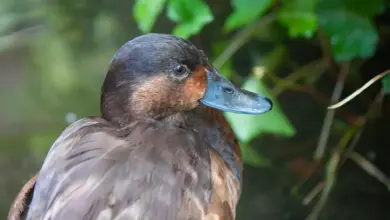
In terms of plumage, the African Finfoot is predominantly dark brown with an olive or chestnut tinge on the upperparts. Its underparts are paler, often a buff or rufous shade. The bird has a slender build with a long neck and a relatively small head. The bill is slightly hooked at the tip and dark in color, well adapted for catching aquatic prey. Its eyes are bright red or orange-red, standing out against its darker face.
Males and females look similar, although females may be slightly duller in coloration. Juveniles tend to have a more mottled appearance with paler edges on their feathers and less vivid eye color. The African Finfoot’s feathers are soft and water-resistant, enabling it to remain dry while diving or swimming. While it is capable of flight, it typically prefers to stay low and close to the water’s surface, slipping through dense vegetation with ease.
Behavior & Diet
The African Finfoot is a highly secretive and solitary bird. It is often heard rather than seen, with its soft, melodious calls echoing through riparian woodlands and riverbanks. When disturbed, it prefers to slip silently underwater or disappear into dense reeds rather than take flight. This bird is mainly active during dawn and dusk, although it may also be active during the day in quieter, undisturbed areas.
Its diet is primarily carnivorous, consisting of a wide variety of aquatic animals. The African Finfoot feeds on fish, aquatic insects, crustaceans, small amphibians, and occasionally snails. It hunts by swimming underwater or walking along shallow areas, using its sharp, hooked bill to capture prey. Its lobed feet allow it to move deftly through water and cling to submerged branches or rocks while hunting. It is also known to forage along the muddy banks, picking at insects and larvae in the shallows.
Unlike many waterbirds, the African Finfoot is not a strong flier and rarely flies long distances. Instead, it tends to swim or wade through water to move around its territory. The bird is territorial, especially during the breeding season, and pairs maintain and defend a stretch of riverbank or stream against intruders. Its shy behavior and preference for dense cover make it a challenging species to observe in the wild.
Breeding & Reproduction
The breeding habits of the African Finfoot are not extensively documented, largely due to its secretive nature and the inaccessibility of its preferred habitats. However, available observations provide valuable insights into its reproductive behavior. Breeding generally occurs during or just after the rainy season when water levels rise, providing abundant food and suitable nesting sites among flooded vegetation. According to Audubon Society, this species is well documented.
African Finfoots build their nests close to water, often on low branches, fallen logs, or in dense thickets of reeds and aquatic plants. The nest itself is a shallow platform made of sticks, leaves, and other plant materials, carefully concealed to protect against predators. Both male and female participate in nest construction and share incubation duties. Typically, the female lays between two and four eggs, which are pale and spotted with reddish or brown markings. According to BirdLife International, this species is well documented.
Incubation lasts around 21 to 24 days, after which the chicks hatch covered in down and are precocial, meaning they are relatively mature and mobile soon after hatching. Both parents feed the young, bringing them small fish and aquatic invertebrates. The chicks fledge approximately four to six weeks after hatching but may remain dependent on their parents for some time as they learn to forage independently.
Conservation Status
The African Finfoot is currently classified as Least Concern on the IUCN Red List, reflecting its wide distribution and relatively stable population across its range. However, localized threats do exist and could impact certain populations. Habitat loss and degradation, primarily through deforestation, wetland drainage, and river pollution, pose significant risks to this species. The destruction of riparian vegetation and water pollution reduce the availability of suitable nesting and foraging sites.
Because the African Finfoot depends on clean, well-vegetated aquatic environments, it serves as an important indicator species for ecosystem health. Conservation efforts aimed at preserving wetlands, riverine forests, and natural watercourses indirectly benefit this bird. Protected areas across Africa, including national parks and reserves with intact freshwater habitats, provide critical refuges.
Despite its secretive nature limiting detailed population studies, ongoing monitoring and habitat protection are recommended to ensure long-term survival. Climate change and increasing human pressures on freshwater systems may intensify future threats, emphasizing the need for continued research and conservation initiatives.
Interesting Facts
The African Finfoot’s unique lobed feet are among its most fascinating adaptations. Unlike ducks that have fully webbed feet, the finfoot’s toes are equipped with lobes that expand and contract as it swims, giving it exceptional control in water and enabling it to walk on soft, muddy substrates without sinking. This adaptation allows the bird to navigate both aquatic and terrestrial environments with ease.
Despite being a waterbird, the African Finfoot is often silent and inconspicuous, leading many birdwatchers to describe it as one of the “ghosts” of African waterways. Its elusive behavior means that even experienced ornithologists may go years without encountering it. Its calls are distinctive, often described as a soft, whistling note or a series of rising whistles, which helps researchers detect its presence without visual confirmation.
Unlike many aquatic birds, the African Finfoot does not form large flocks. It is primarily solitary or found in pairs, especially during the breeding season. This solitary lifestyle reduces competition for food and territory, allowing it to thrive in densely vegetated habitats where other waterbirds might struggle.
Another intriguing aspect of the African Finfoot is its ability to dive underwater to escape danger or catch prey. It can remain submerged for several seconds, propelled by its powerful legs and lobed feet, before resurfacing quietly. This diving ability is relatively rare among birds that inhabit tropical freshwater systems and highlights its specialized niche.
Finally, the African Finfoot has a cultural presence in some African communities, where it is occasionally noted in folklore and local knowledge as a symbol of elusive beauty and the hidden wonders of river ecosystems.
Conclusion
The African Finfoot (Podica senegalensis) is a captivating and enigmatic bird of Africa’s freshwater habitats. Its specialized adaptations, including lobed feet and shy behavior, allow it to thrive in dense, vegetated waterways across a vast and diverse range. Though often overlooked due to its secretive nature, the African Finfoot plays an important ecological role and serves as an indicator of healthy aquatic ecosystems. Continued conservation of its habitat and further study will help deepen our understanding of this unique species and ensure its presence in Africa’s wild places for generations to come.