The order Psocoptera, commonly known as **psocids** or **bark lice**, represents a fascinating and diverse group of small insects often overlooked by casual observers. These tiny creatures occupy a unique ecological niche, feeding primarily on fungi, algae, lichen, and organic detritus found on tree bark and in leaf litter. While some species have adapted to human environments, including homes and libraries, the majority thrive in natural habitats, playing important roles in forest ecosystems. With over 6,000 described species worldwide, psocids offer an intriguing glimpse into insect evolution, behavior, and biodiversity. For more information, see our guide on breeding.
Scientific Classification
Historically classified as a distinct order, **Psocoptera** is now generally treated as a suborder within the larger order **Psocodea**, which also includes the true lice (Phthiraptera). This taxonomic revision reflects advances in molecular studies revealing closer evolutionary relationships between these groups. The suborder Psocoptera itself is divided into three main infraorders: **Trogiomorpha**, **Troctomorpha**, and **Psocomorpha**, comprising around 41 families in total. The Trogiomorpha are characterized by species with more primitive features, the Troctomorpha include some wingless species often associated with human dwellings, and the Psocomorpha is the largest and most diverse group, containing many bark-dwelling species.
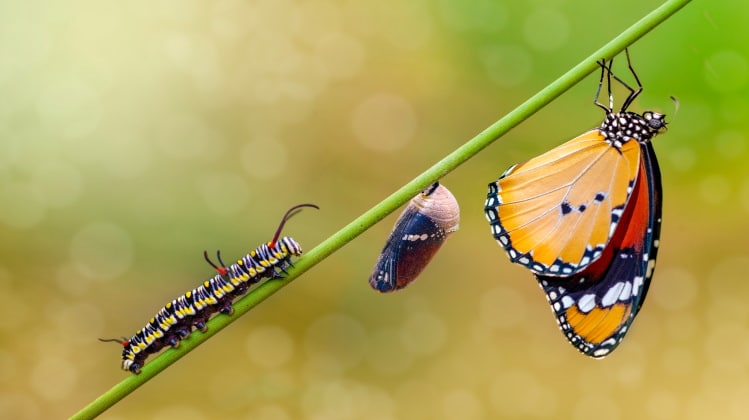
Members of the Psocoptera are hemimetabolous insects, meaning they undergo incomplete metamorphosis. Their development includes a series of nymphal stages before reaching adulthood, without a pupal stage. Their antennae are typically long and threadlike, composed of 12 to 50 segments, an adaptation enhancing their sensory perception. Many species possess three simple eyes, or ocelli, on the top of the head, though these are absent in some wingless forms. The presence or absence of wings varies widely within the group, with some species fully winged, others wingless, and a few exhibiting wing polymorphism.
Geographic Range & Distribution
Psocids are cosmopolitan, found on every continent except Antarctica, thriving in a variety of habitats from tropical rainforests to temperate woodlands and urban environments. Their global distribution reflects their adaptability to diverse ecological conditions, though they are most abundant and species-rich in forested areas where suitable food sources like fungi and lichen are plentiful. Tropical regions tend to host the highest diversity of psocid species, with some families endemic to specific geographic zones.
In temperate zones, psocids are commonly found on tree trunks, branches, and under loose bark, where they feed on microfungi and algal growths. Urban environments have also seen the proliferation of certain species, especially in buildings where they exploit stored organic materials. For example, species in the genus Liposcelis are well-known as common inhabitants of libraries and museums, where they feed on the starchy adhesives in book bindings and the molds that develop on paper. Some species have also adapted to agricultural settings, inhabiting barns and straw piles. Their presence in these environments can sometimes be considered a nuisance, though they pose no direct harm to humans.
Physical Description
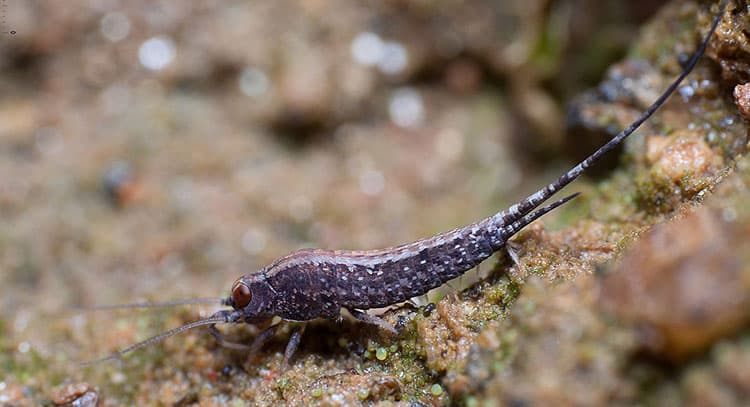
Psocids are typically small, measuring between 1 to 10 millimeters in length, with most species averaging around 2 to 4 millimeters. They have soft, flexible bodies that are stout but delicate, often with a somewhat humpbacked appearance. Their heads are large relative to their bodies, featuring prominent compound eyes that are hemispherical or dome-shaped. The antennae are long and slender, giving them a distinctive silhouette.
Wing morphology varies significantly across species. Winged psocids possess two pairs of membranous wings, usually held roof-like over the body when at rest. These wings are delicate, with a network of veins visible on close inspection, and typically have a wingspan ranging from 3 to 10 millimeters. Wingless species, particularly those adapted to indoor or sheltered habitats, lack wings entirely and often exhibit reduced eyes or ocelli. Mouthparts are of the biting-chewing type, adapted for scraping fungi, lichen, and organic detritus from surfaces.
Coloration in psocids ranges from pale cream and yellow tones to brown, gray, or even black, often providing excellent camouflage against the bark or leaf litter they inhabit. Some tropical species exhibit brighter colors, including orange or red hues, which may serve as warning coloration or camouflage among lichens and mosses.
Behavior & Diet
Psocids are primarily detritivores and fungivores, feeding on algae, lichens, microfungi, molds, and organic debris found on tree bark, leaves, and soil surfaces. This diet makes them important contributors to nutrient cycling and decomposition in forest ecosystems. In urban and indoor environments, some species switch to feeding on starchy adhesives, molds, and other organic materials available in stored goods or books.
Most psocids are relatively sedentary and secretive, often found under bark, in leaf litter, or among mosses and lichens. They exhibit a unique behavior of communal living in some species, where groups spin silk webs under tree bark or in protected crevices, providing shelter from predators and environmental fluctuations. The silk produced by psocids is similar to spider silk but is used primarily for protection rather than trapping prey.
Despite having wings, many species are reluctant flyers, preferring to crawl or hop short distances. An exception is the species Pterodela pedicularia, which is known for its strong and sustained flight activity, particularly on warm, still days. Psocids are also attracted to light, and researchers often collect them using light traps during field studies. According to IUCN Red List, this species is well documented.
Breeding & Reproduction
Reproduction in psocids varies across species but generally involves the laying of eggs in sheltered locations such as under bark, within silk webs, or among leaf litter. Females lay between 20 and 100 eggs, which may be deposited singly or in clusters depending on the species. Some species exhibit communal egg-laying behavior, with eggs grouped under protective silk coverings. According to Bug Guide, this species is well documented.
A fascinating aspect of psocid reproduction is the occurrence of viviparity in certain species, where females give birth to live young rather than laying eggs. This reproductive strategy is relatively rare among insects and allows for the immediate development of nymphs in favorable conditions. The typical life cycle includes six nymphal instars, during which the young gradually develop wings and adult features.
The number of generations per year (voltinity) varies with climate and species. In temperate regions, many psocids are univoltine, producing one generation annually, while others can be bivoltine or trivoltine, with two or three generations per year respectively. Overwintering generally occurs in the egg stage, providing resilience against cold temperatures and environmental stress.
Conservation Status
Currently, psocids are not considered a group at significant risk, and no species are listed as threatened or endangered on the IUCN Red List. Their broad distribution, high reproductive rates, and adaptability to different habitats contribute to their stable populations worldwide. However, habitat destruction, pollution, and climate change could potentially impact some localized species, particularly those dependent on old-growth forests or specific microhabitats.
Air pollution is known to reduce lichen diversity, which indirectly affects bark lice populations because of their reliance on these organisms as food sources. Urbanization and deforestation may also fragment populations, though the generalist feeding habits of many species allow them to persist in altered environments. Continued monitoring and research are important to understand long-term trends in psocid populations and their roles in ecosystem health.
Interesting Facts
Psocids have a deep evolutionary history, with fossils dating back to the Permian period, over 250 million years ago. This ancient lineage highlights their successful adaptation and survival through dramatic changes in Earth’s climates and ecosystems. Despite their small size, psocids exhibit complex behaviors such as silk web construction and communal living, demonstrating sophisticated survival strategies.
One of the best-known psocid species, Liposcelis bostrychophila, is a common household pest worldwide. It is often found in stored grain products and libraries, feeding on mold and causing minor damage to materials. However, psocids do not bite or transmit diseases and are generally harmless to humans.
Moreover, the silk produced by some psocid species is chemically and structurally similar to spider silk, an area of interest for biomaterial research. Their ability to spin webs and protect their eggs and young provides a fascinating example of convergent evolution among arthropods.
Psocids’ reluctance to fly despite having wings is another intriguing behavior. Many species prefer to walk or jump, conserving energy and avoiding exposure to predators. The strong flight capability of Pterodela pedicularia stands out as an exception, making it a subject of interest for entomologists studying insect flight dynamics.
Conclusion
The world of psocids, or bark lice, is a captivating and often overlooked facet of insect biodiversity. These small, soft-bodied insects contribute significantly to ecosystem function by recycling nutrients and supporting the health of forests through their consumption of fungi and algae. Their wide distribution, fascinating behaviors, and diverse life histories make them an important subject for study within entomology and ecology. While psocids rarely draw attention outside of scientific circles, their presence is a testament to the complexity and interconnectedness of natural environments worldwide. Whether nestled under tree bark or quietly inhabiting our libraries, psocids remind us that even the smallest creatures play vital roles in the web of life.