The Great Black Hawk, Buteogallus urubitinga, is a striking and powerful bird of prey belonging to the family Accipitridae, which encompasses hawks, eagles, kites, and Old World vultures. Recognized for its large size and predominantly black plumage, this raptor inhabits tropical forests and woodlands near water throughout a wide range in the Americas. Its impressive wingspan and distinctive call make it a captivating subject for birdwatchers and nature enthusiasts alike. The Great Black Hawk’s ecological role as a predator of reptiles and small vertebrates makes it an important species in maintaining the balance of its habitats.
Scientific Classification
The Great Black Hawk is classified within the genus Buteogallus, which groups large hawks commonly known as the black hawks or common hawks. Its full scientific name is Buteogallus urubitinga, though it was formerly placed in the genus Asturina. The species name “urubitinga” originates from the Tupi language, meaning “big black bird.” As a member of the family Accipitridae, it shares lineage with a diverse group of raptors including eagles, harriers, and Old World vultures. This family is characterized by strong hooked beaks, keen eyesight, and powerful talons, adaptations that aid in hunting and feeding on prey. The Great Black Hawk is one of several black hawk species found in the Americas, distinguished from relatives by its size, plumage, and vocalizations.
Geographic Range & Distribution
The Great Black Hawk inhabits a broad geographic range extending from southern Mexico, through Central America, and into South America as far south as northern Argentina. It is also found on the Caribbean island of Trinidad. This species prefers tropical and subtropical lowland forests, often near rivers, mangroves, or coastal areas. Its distribution is largely concentrated in humid environments, but it can also be found in drier woodlands and open forests adjacent to water sources, where it hunts and nests.


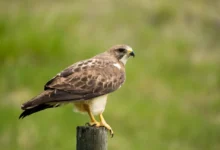


Within this expansive range, the Great Black Hawk is a resident bird, meaning it does not undertake long-distance migrations, although some local movements may occur in response to food availability or seasonal conditions. Its presence in both mainland and island habitats highlights its adaptability to various forested ecosystems. However, the species is most commonly observed in areas where forest canopy and water bodies coexist, providing optimal hunting grounds and nesting sites.
Physical Description
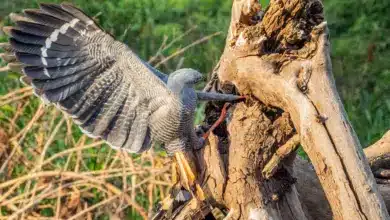
The Great Black Hawk is a large, powerful raptor measuring between 56 and 64 centimeters in length, with a wingspan ranging from 120 to 145 centimeters. Adult individuals typically weigh around 1.1 kilograms (approximately 2.4 pounds), with some variation between sexes and regions. The bird’s plumage is predominantly black, giving it the “great black” moniker. Its wings are broad and rounded, suitable for soaring over forest canopies and open areas.
One of the most distinctive physical features is its short tail, which is white with a broad black terminal band. This tail pattern helps differentiate it from the similar Common Black Hawk (Buteogallus anthracinus), which has a different tail pattern and smaller size. The Great Black Hawk has a robust, black bill designed for tearing flesh. Its legs and cere (the fleshy area at the base of the bill) are bright yellow, contrasting vividly with its dark feathers. Both males and females share similar plumage, making sex differentiation based on appearance difficult in the field.
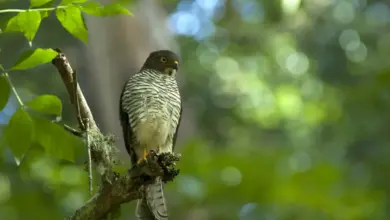
Juvenile Great Black Hawks display markedly different plumage, with brown upperparts marked by paler spots and streaks. Their underparts are buff-colored with dark spotting, and their tail feathers show several dusky bars. This mottled appearance fades as the birds mature, transitioning to the uniform black of adults. The eye color also changes with age, from brown to a more intense yellow in mature birds.
Behavior & Diet
The Great Black Hawk is an opportunistic predator that primarily hunts reptiles, small mammals, amphibians, and large insects. Its diet often includes snakes, lizards, frogs, small rodents, and occasionally birds. It hunts both from perches, scanning the ground and water for prey, and on foot, moving through undergrowth in search of suitable meals. This ground-foraging behavior is somewhat unusual among hawks but is well-adapted to the species’ forest and riparian habitats.
In flight, the Great Black Hawk soars with broad, steady wingbeats, often circling high above the treetops while scanning for prey. Its powerful wings allow it to glide effortlessly, conserving energy during long periods of hunting. The species is known to be relatively solitary, except during breeding seasons, and individuals maintain territories which they defend against intruders.
The Great Black Hawk’s hunting success relies heavily on its sharp eyesight and stealth. It frequently perches silently for extended periods before swooping down to seize prey with its strong talons. Its feeding habits contribute significantly to controlling populations of reptiles and insects, thus playing a vital role in the ecological community.
Breeding & Reproduction
Breeding behavior in the Great Black Hawk is characterized by the construction of large nests made of sticks, typically placed high in tall trees within its habitat. These nests are often reused and added to each year, growing in size over time. The selection of nesting sites near water sources is common, likely due to increased prey availability and safety from ground-based predators.
The female usually lays a single egg per breeding season, although occasionally two may be laid. The eggs are whitish with dark blotches, providing some camouflage against the nest background. Incubation lasts approximately 35 to 40 days, predominantly undertaken by the female, while the male provides food. After hatching, the chick is altricial, meaning it is born helpless and dependent on parental care for several weeks. According to RSPB, this species is well documented.
Both parents participate in feeding and protecting the young until fledging, which occurs about 6 to 7 weeks after hatching. Juvenile hawks remain near the nest for some time after fledging as they develop flying and hunting skills. The parental investment in a single chick per season is typical of larger raptors, ensuring the offspring receives adequate care to survive in the competitive forest environment. According to Cornell Lab of Ornithology, this species is well documented.
Conservation Status
The Great Black Hawk is currently classified as Least Concern by the International Union for Conservation of Nature (IUCN). Its status reflects a relatively wide distribution and stable population numbers across much of its range. Despite this, localized threats do exist, primarily habitat loss due to deforestation, agricultural expansion, and urban development. Because the species relies heavily on forested and riparian environments, the destruction of these habitats can impact local populations.
Conservation efforts aimed at preserving tropical forests and wetlands indirectly benefit the Great Black Hawk. Protected areas within Central and South America encompass many of the habitats critical to the species’ survival. Additionally, the bird’s adaptability to a range of forest types, including secondary growth and disturbed areas near human settlements, contributes to its resilience.
Continued monitoring is essential to detect potential population declines early. Conservationists emphasize the importance of maintaining riparian corridors and forested landscapes to support not only the Great Black Hawk but the broader biodiversity of tropical ecosystems.
Interesting Facts
The Great Black Hawk is well-known among birdwatchers for its distinctive vocalizations. Its call is a loud, piping whistle often described as “ooo-wheeeeee,” which carries clearly through forested habitats. This vocalization is used for communication between mates and territorial displays.
Unlike many raptors that rely solely on aerial hunting, the Great Black Hawk frequently hunts on foot, moving through dense underbrush in search of prey. This behavior is relatively rare among hawks and highlights the species’ versatility and adaptation to its environment.
Another fascinating aspect of the Great Black Hawk is its role in indigenous cultures throughout its range. In some areas, the bird is regarded as a symbol of strength and vigilance due to its commanding presence and keen hunting skills.
The Great Black Hawk’s impressive wingspan and dark plumage also make it a favorite subject for wildlife photographers. Its soaring silhouette against tropical skies offers striking imagery that captures the essence of New World raptors.
Lastly, this species’ resemblance to the Common Black Hawk can sometimes cause confusion among observers, but careful attention to size, tail pattern, and calls can help distinguish them. The Great Black Hawk’s broader wings and white tail with a black band are key identifying features.
In summary, the Great Black Hawk is a magnificent and ecologically important raptor of the tropical Americas. Its unique behaviors, striking appearance, and widespread distribution make it a fascinating species for study and admiration among naturalists and bird enthusiasts worldwide.