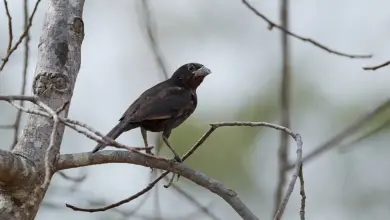
The American Black Vulture (Coragyps Atratus) , is a scavenging bird that is widely known in the Western Hemisphere. It’s known for its glossy, black plumage and soaring flight. The American Black Vulture, unlike the Eurasian Black Vulture (an Old World species that belongs to the Accipitridae family), is a New World Vulture. It’s classified under the Cathartidae family, which includes the Condor and Turkey Vulture. This is the only extant species of the genus Coragyps. This makes it both unique and evolutionarily significant. The Migratory Bird Treaty Act, 1918 protects the American Black Vulture in the United States. This reinforces its importance as an indigenous species that is vital for environmental health. This vulture is one of the most efficient recyclers in nature. It has a long history of fossils, a large distribution throughout North America, and distinct behaviours. For more information, see our guide on breeding.
Distribution of the American Black Vulture
The American Black Vulture is more widespread and primarily southern in distribution than its relative, the Turkey Vulture. The Black Vulture, on the other hand, tends to stay in warmer climates. It also does not migrate nearly as much. Its range extends across the southeast United States and throughout Mexico. It also extends into Central & South America, where it thrives on open habitats such as subtropical forests, grasslands, agricultural zones, or even human-populated regions. They can live year-round thanks to their ability and food source consistency. The Black Vulture is a resilient scavenger that can adapt to new environments as human development increases.

Physical Description and Distinguishing Features
The American Black Vulture has a wingspan of up to 1,5 meters (5 feet). It is a powerful, large bird. It is a large bird with a strong build that’s well-suited to its scavenging life. The glossy black plumage gives it an elegant and sleek appearance, whether perched or flying. The featherless head and neck of the bird are covered with dark grey wrinkled skin. This adaptation helps it keep clean when feeding on carrion. The bird’s dark brown eyes are complemented by a unique eyelash pattern: two rows of eyelashes on the lower and one incomplete row in the upper.


The Black Vulture’s legs are greyish white and, unlike other raptors that have flat, weak feet, they are not designed to grasp prey. The blunt talons of the Black Vulture reinforce its preference for scavenging over hunting. Perforated nasals are another feature that makes it possible to see through the beak of the bird from the side. This is a characteristic found in New World vultures. The wide, short wings of the Black Vulture reveal white patches on the base of the primary feathers when in flight. This makes it easy to identify against the sky. The short, squared tail of the Black Vulture barely extends past its folded wings. This contributes to its compact and sturdy silhouette.
Colour Variations and Subspecies Variations
The American Black Vulture has subtle differences between subspecies across its vast range. This is largely due to Bergmann’s Rule, which states that animals living in colder climates are generally larger. Northern populations tend to be larger than those from warmer climates. The extent of white underwing colouring also differs, though these differences form an incline, leading some experts to believe that it is effectively monotypic. In 2005, a leucistic Coragyps brasiliensis bird was observed in Pinas in Ecuador. The rare bird was almost entirely white, except for the black tarsus (tail) and wing. The skin of this bird retained its normal pigmentation, and it was able to blend in with a flock that included vultures of all colours. These sightings show the genetic diversity of this species and its occasional colour variations.
Feeding and Diet of the Black Vulture
The American Black Vulture is a key ecological player as a primary carrion scavenger. It feeds primarily on carrion. The Black Vulture, unlike some raptors that actively hunt, relies heavily upon locating dead animal carcasses, which helps prevent the spread and accelerate natural decomposition. These vultures also eat decomposing plant matter and sometimes kill newborn animals like livestock young. This can lead to conflict with farmers. In areas populated by humans, they frequent garbage dumps, roadside carcass sites, and places where food waste accumulates.
It can find food by either using its sharp vision or by following Turkey Vultures, which have a highly developed sense of smell. The American Black Vulture compensates for its poorer olfactory ability by travelling in large groups. These vultures have been known to hunt in groups and glide with flat-winged wings while looking for carcasses or observing other scavengers. According to RSPB, this species is well documented.
Communication and Vocalisation
Due to its lack of a Syrinx (the vocal organ that is found in most birds), the American Black Vulture has limited vocal abilities. Its sounds are limited to grunts and low hisses. These are used to communicate within the flock or express agitation. The minimal vocalisations are important in maintaining group cohesion and establishing dominance around feeding sites. According to eBird, this species is well documented.
Parental care, breeding, and nesting
Black Vultures have a unique reproductive behaviour that is highly adaptable. Instead of building elaborate nests, the female usually lays 2 to 3 eggs on the ground, in areas that are secluded, such as hollow trees, thickets or caves. Incubation is shared by both parents, which shows a strong pair bond and parental commitment. Adults feed the chicks by regurgitating partially digested food. This ensures that they receive nutrients essential for rapid development.
The American Black Vulture is threatened by habitat loss in areas where forest cover has been reduced, particularly in areas with dense forest cover. The birds will regurgitate to defend themselves when they are approached by humans or potential predators. This is an unpleasant, but effective defence method. It also helps them reduce their weight so that they can take off faster. Families remain close, and parents continue to take care of their young, even after they have fledged, which contributes to the strong social structure.
Conservation Status & Legal Protections
The Migratory Bird Treaty Act of 1920 protects the American Black Vulture in the United States of America, Mexico and Canada. The species, while widespread and relatively safe in many areas of its range, still benefits from the protections that prohibit the killing, capture, or harming of the birds. Urban expansion and road traffic are two of the most persistent threats. The vulture has adapted well to its environment and is one of the best scavenging birds in North America. Public awareness and continued legal safeguards help ensure that the Black Vulture is abundant, while minimising conflicts with land managers and livestock owners.

Fossil History & Evolutionary Insights
The evolution of the American Black Vulture has a rich and valuable scientific background. In the Early and Late Pleistocene, an ancient species called Coragyps westernis lived in the same area as its modern descendant. The earlier species had a bill that was 15-20% larger and a flatter, broader shape. Its ecological role and behaviours were remarkably similar. According to research, C. The transformation of C. atratus from C. occidentalis, which was smaller during the last Ice Age, is a fascinating example of chronospecies evolution.
Fossil evidence from Coragyps Vultures offers rare insights into the evolution of avian adaptations over thousands of years. The Five Mile Rapids, near The Dalles in Oregon, was the site of a particularly important discovery. A subfossil C. occidentalis bone was discovered in a Paleo Indian to Early Archaic Midden that dates from 9000 – 8000 BCE. This discovery confirms that the last stages of prehistoric vulture populations in North America coexisted alongside early humans, who witnessed the evolution to the Black Vulture as we know it today.
Conclusion
The American Black Vulture does more than scavenge. It is an important species that helps maintain the balance of ecosystems in the Americas. The Black Vulture is one of the most important cleaning operations in nature. It does this by consuming carrion, recycling nutrients, and preventing the spread of disease. The Black Vulture’s evolutionary history and modern adaptability reveal a species that is shaped by ecological necessity. Understanding and protecting this vulture is becoming more important as human populations grow. The American Black Vulture is a powerful symbol for survival, adaptation and interconnectedness. It has legal protections and conservation awareness that are growing.