The Whistling kite ( Haliastursphenurus ) is an attractive and familiar bird of prey in Australia and its neighbouring areas. This medium-sized diurnal bird of prey is known for its distinctive whistling calls and graceful soaring flights. It’s a common sight near water in open landscapes. It is sometimes mistakenly called the Whistling Hawk or Whistling Hawk. However, this species has its own unique vocalisations and behaviour. The Whistling Kite is highly adaptable and opportunistic. It plays a vital role in ecosystems as a predator and scavenger.
Taxonomy & Scientific Classification
The Whistling Kite is a member of the Accipitridae family, which also includes kites, eagles and hawks. Haliastur Sphenurus reflects the species’ affinity for aquatic habitats, as well as its wedge-shaped, wedge-shaped, tail. Some authorities have suggested placing it under the genus Milvus, but most ornithologists keep it under Haliastur because of its marked differences in voice, behaviour, and plumage compared to true Milvus Kites. These differences highlight the Whistling Kite’s unique evolutionary path within the larger group of raptors.
Geographical Distribution and Range
Whistling Kites can be found in many parts of Australia, including coastal islands. They are one of Australia’s most common raptors. They are also widespread in New Caledonia, New Guinea and parts of New Guinea. However, they are not found on the central mountain ranges or in the northwest. The species can adapt to a wide range of climates.


Size and Regional Variations
The Whistling kite’s size varies across its range. Birds in southern Australia tend to be larger and heavier than birds found in tropical areas. This pattern is in line with the ecological trends observed in many bird species. Individuals in cooler climates are larger. Whistling Kites are similar across their range, despite these differences.
Habitat Preferences & Environmental Use
Whistling Kites prefer habitats that are open or lightly forested, especially those near water. The Whistling Kite is commonly found in areas near rivers, wetlands and lakes. This species is found from the sea up to an elevation of 1,400 meters. The kite is dependent on water for many of its prey items. These habitats provide trees that are suitable for nesting, perching and roosting.
The Seasonal Wandering and Movement Patterns
Whistling Kites are mobile in some areas of their range, despite being considered sedentary. Some Australian populations move in response to seasonal conditions, rainfall and food availability. In the northern part of Australia, birds can migrate to coastal areas in the dry season. Some South Australian birds will migrate southwards during autumn. These movements show the species’ ability to adapt and change in response to changes in their environment.
Dimensions and Measurements
The Whistling kite is a medium-sized raptor measuring between 50 and 60 centimetres. The wingspan of the Whistling Kite ranges between 123 and 146 centimetres. This gives it a very impressive presence in the air. The weights of adults can vary from 380 grams to over 1,050 grams. Females are typically larger and heavier than their male counterparts. They can be up to 42 per cent heavier and 21 per cent bigger.
Adult Plumage Colouration and Size
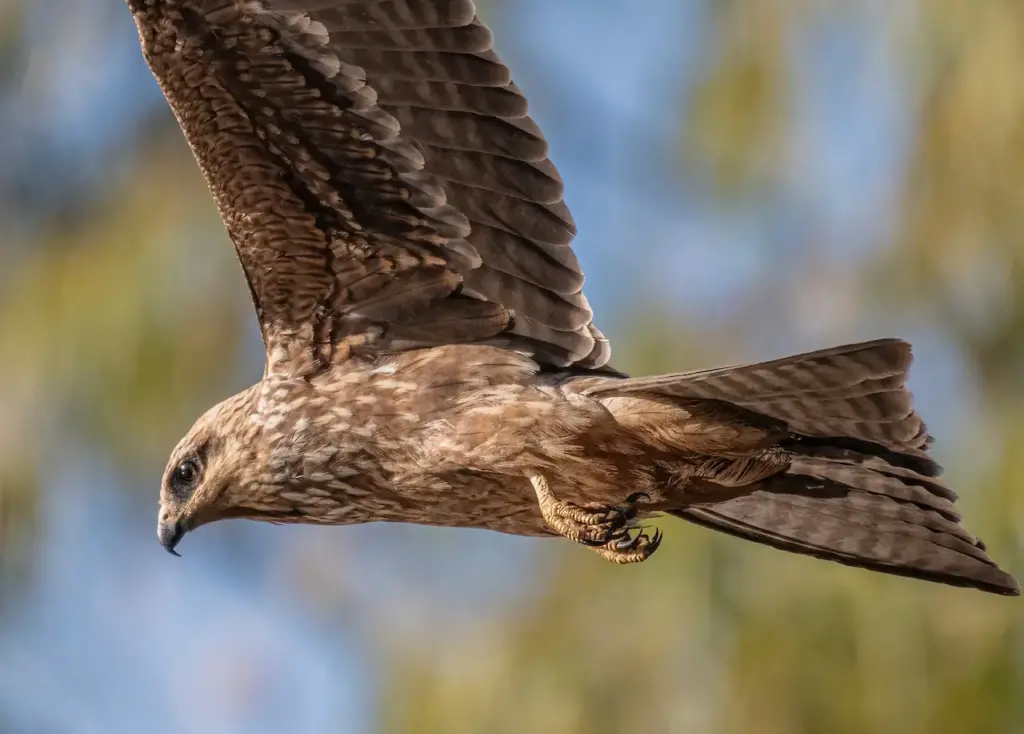
Whistling Kites are distinctive in their soft colours. The wings and head are brown with black feathers. This gives the bird an elegant, muted appearance that blends in well with landscapes. The underwing pattern can be seen clearly from below when in flight. This is a good way to identify the bird.
The Characteristics of Immature Plumage
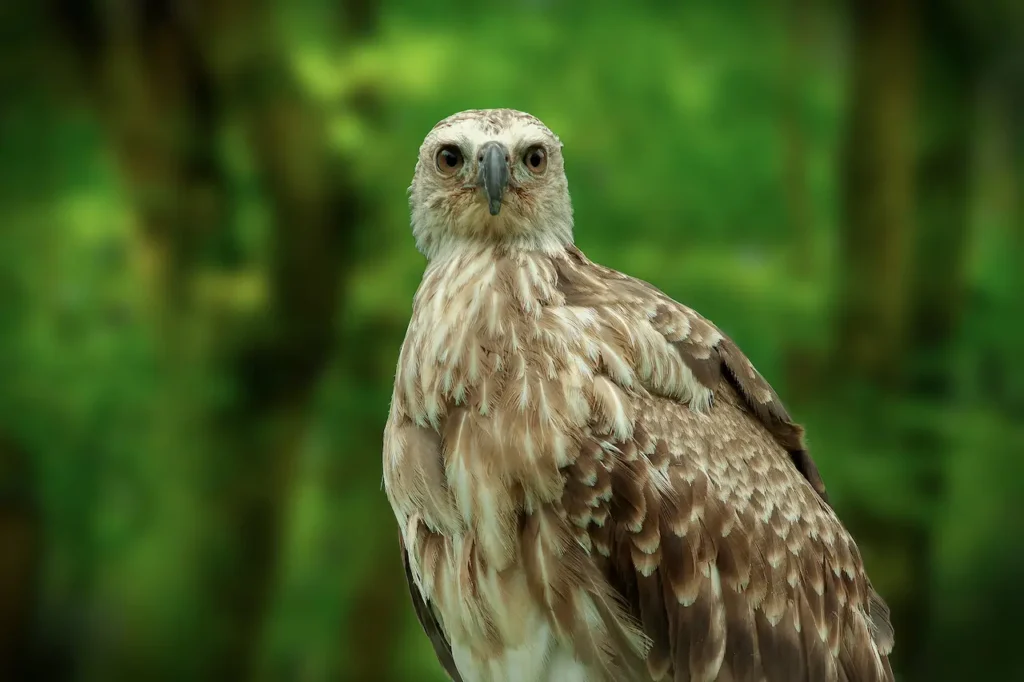
The adult Whistling kite is quite different. The wings of young birds are prominently pale and have prominent streaks. They are predominantly reddish brown. This mottled look is used as camouflage in the early stages. Immature birds moult over time into the paler and more uniform plumage that adults have. This helps field observers to estimate the age of the bird.
Legs, Feet, and Structural Features
Whistling Kites are always born with unfeathered, bone-colored feet and legs. The overall shape of the Whistling Kite gives it a small head and long tail appearance. The wingtips are well below the tail tip when perched. This is a good identification clue. Whistling Kites can walk on the ground easily, despite their relatively short legs for a raptor. This is especially true when they are feeding on roadkill or carrion.
Flight Styles and Aerial Behaviour
Whistling Kites fly elegantly and with buoyancy. The Whistling Kite soars on wings that are slightly bent, with long flight feathers often splayed out at the tips. This allows efficient soaring over large areas. The birds’ flight is relaxed and unhurried. This reflects their opportunistic strategy of feeding. When the bird circles above, its distinctive underwing pattern becomes more apparent.
Whistling Call and Vocalisation
The Whistling Kite gets its name from the loud, distinctive sound of its voice. The Whistling Kite is a loud species that calls frequently in flight, while perched and even at the nest. The most common is a clear, ascending whistle that’s often followed by rapid notes. The species can be identified by this vocalisation, even from a distance. According to Cornell Lab of Ornithology, this species is well documented.
Birds that mimic each other
The influence of the Whistling kite on other species is fascinating. In central Queensland, researchers at Taunton Scientific Park have found that Spotted Bowerbirds mimic Whistling Kites’ calls. This mimicry becomes more frequent as the breeding season advances. The function of the mimicry is unknown, but it does highlight the Whistling Kite’s strong acoustic influence in its environment. According to RSPB, this species is well documented.
General Behaviour and Social Structure
During the breeding season, Whistling Kites can be seen in pairs or singly. They can also gather in large groups when certain conditions are met. These gatherings can occur when nomads are on the move, in communal roosting sites or where there is plenty of food. These temporary groups show the species’ tolerance for conspecifics when resources permit.
Feeding Ecology & Dietary Breadth
Whistling Kites are opportunistic feeders with a very varied diet. It eats insects, carrion, small mammals, birds and fish. The species can adapt to changing environments and exploit a wide variety of food sources with its broad diet. The Whistling kite is one of the few raptors that can adapt to changing conditions.
Different Feeding in Regions
The feeding behaviour of different regions varies. Whistling kites in Australia rely on carrion during winter, but they prefer to feed on live prey for most of the year. In New Guinea, they are mostly scavengers. The majority of food comes from the surface of the water or the ground, although insects can be caught directly from the sky.
Piratery and Opportunistic Feeding Techniques
Whistling Kites have a reputation for being bold in their feeding habits. They often steal food from other birds such as ibises and herons. The kites may also chase large waterbirds until they regurgitate their catch. Whistling Kites also patrol roads looking for roadkill, and hover near grass fires to catch prey that is fleeing from the flames.
Breeding Habitat & Nest Placement
Breeding Whistling Kites nest in tall trees that are near water. Nests are large platforms made from sticks, lined with leaves and placed inside the upright forks of trees such as eucalyptus or pine. Riparian zones are particularly preferred, since they offer both food and nesting areas. Nests placed high above the ground protect eggs and chicks against many predators.
Nest Reuse and Pair Bonds for Long-term
Pairs reuse the nest year after year, adding fresh material with each breeding season. This can lead to a large, conspicuous nest over time. Reuse of nests indicates strong site loyalty and stable pair bonding, which are traits common to long-lived Raptors. These nesting sites are important to the local landscape.
The Incubation Period and Eggs
The average clutch size of female Whistling Kites is two to three eggs. However, clutches as large as four eggs have also been reported. The eggs may be marked by reddish brown blotches. The incubation period is approximately 35- 40 days. Hatching success rates are reported at 60 per cent. This is a fairly typical rate for medium-sized raptors.
Chick Development and Fledging
The chicks are covered with down feathers of a cream or buff colour. The chicks remain in the nest between 44 and 54 days. After leaving the nest, young Whistling kites are still dependent on their parents up to an additional 6-8 weeks. This prolonged period of parental care allows juveniles to develop the skills they need for independent hunting and survival.
Breeding Season Timing
The timing of breeding varies from region to region in Australia, depending on climate and geography. Whistling kites breed in southern Australia between June and October, while breeding occurs more often in the north between February and May. Nesting can occur at any time after rainfall, if the food supply is sufficient. This flexibility allows species to take advantage when conditions are favourable.
Conservation Status and Population Trends
The Whistling kite is still widespread in most of its range. There are local declines, however, in southern Australia. This is mainly due to the drainage of wetlands and the reduction in food available. It is vital to protect habitats, especially wetlands and riparian areas, to maintain healthy populations.
The Ecological Role in the Final Overview
The Whistling Kite is both a predator and a scavenger. It plays an important ecological role. It is a key player in the control of populations of small mammals and helps to remove carrion from the land. The Whistling kite, with its distinct voice, adaptable behaviour, and wide diet, is one of Australia’s most recognisable Raptors. The habitats that it relies on are vital to ensuring this iconic whistling presence will continue to soar through the skies for many generations.