Hummingbirds captivate birdwatchers and nature enthusiasts alike with their dazzling colors, rapid wingbeats, and remarkable flight capabilities. In Tennessee, a state rich with diverse habitats ranging from lush woodlands to urban gardens, several hummingbird species can be observed, each bringing unique characteristics and behaviors to the region. While the Ruby-throated Hummingbird (Archilochus colubris) dominates as the most common and iconic species, Tennessee’s hummingbird community also sporadically hosts rarer visitors such as the Rufous Hummingbird (Selasphorus rufus), Black-chinned Hummingbird (Archilochus alexandri), and Anna’s Hummingbird (Calypte anna). This article delves deeply into the taxonomy, distribution, appearance, behavior, breeding habits, and conservation status of these fascinating birds within Tennessee’s borders.
Scientific Classification
Hummingbirds belong to the family Trochilidae, a diverse group of small, nectar-feeding birds endemic primarily to the Americas. The family consists of over 300 species, renowned for their ability to hover and fly backwards, a trait unique among birds. In Tennessee, the most frequently encountered species is the Ruby-throated Hummingbird (Archilochus colubris), which represents the genus Archilochus within the Trochilidae family. This genus also includes the closely related Black-chinned Hummingbird (Archilochus alexandri), which visits Tennessee only rarely and is more common in western parts of the United States.
The Rufous Hummingbird (Selasphorus rufus) belongs to the genus Selasphorus, notable for its fiery orange coloring and aggressive territorial behavior. Meanwhile, Anna’s Hummingbird (Calypte anna), belonging to the genus Calypte, is larger and known for its vibrant rose-red throat and crown. Although primarily found along the western U.S. coast, Anna’s Hummingbirds have been recorded as rare or accidental visitors in Tennessee, likely due to range expansions or migratory deviations.


Geographic Range & Distribution
The Ruby-throated Hummingbird is the only hummingbird species that breeds east of the Mississippi River, making Tennessee a key part of its breeding range. These birds arrive in Tennessee in mid to late April, typically with males appearing first to establish territories, followed by females and juvenile birds approximately two weeks later. They inhabit a variety of environments, including deciduous forests, suburban gardens, orchards, and parks. By mid-October, most Ruby-throated Hummingbirds begin their southward migration to wintering grounds in Central America, particularly southern Mexico and Panama.
The Rufous Hummingbird, while primarily breeding in the northwestern United States and western Canada, is a regular migrant through Tennessee during spring and fall. These birds are known for their tenacity and often appear at backyard feeders and flower gardens across the state. Rufous Hummingbirds migrate long distances—sometimes over 3,900 miles—between their breeding grounds in the Pacific Northwest and their wintering areas in Mexico and the southern U.S.
Black-chinned Hummingbirds are considered accidental visitors in Tennessee. Their primary range lies in the southwestern United States and northern Mexico, but occasional individuals have been spotted east of their typical range, likely due to weather events or exploratory movements. Similarly, Anna’s Hummingbirds, native to the western United States, have been recorded sporadically in Tennessee, mostly in urban areas where supplemental feeders provide reliable food sources.
Physical Description
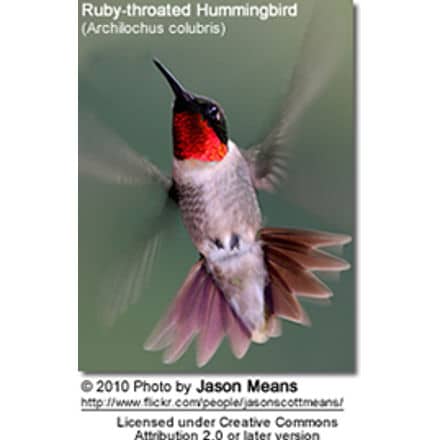
The Ruby-throated Hummingbird is a small bird, measuring approximately 7 to 9 centimeters in length with a wingspan of about 11 centimeters, and weighing between 2.4 and 4 grams. The male is distinguished by its brilliant, iridescent ruby-red throat patch, known as a gorget, which can flash vividly in sunlight. His back is a shimmering emerald green, and he sports a distinctive forked black tail. Females lack the ruby throat and instead have a plain white or lightly spotted throat, with green backs and tails marked by white tips and banding of black and greenish-gray.
The Rufous Hummingbird is slightly smaller, measuring about 7 to 8 centimeters in length with a wingspan near 11 centimeters and a weight between 3 and 4 grams. Males exhibit a striking bright orange-red gorget and back, with a white underbelly and a rusty-colored tail tipped with white. Females are less vibrant, featuring green backs and crowns and a pale throat speckled with faint spots. Their tail feathers also display rufous tones with white tips. The Rufous Hummingbird’s bold coloring and aggressive posture make it easy to identify, especially during the breeding season.
The Black-chinned Hummingbird is comparable in size to the Ruby-throated, ranging from 7 to 9 centimeters long and weighing about 3 to 4 grams. Males have a mostly black throat bordered by an iridescent purple band, though lighting can make this subtle purple sheen difficult to discern. Their backs are green, and they have a slightly forked tail with white tips. Females are pale below with faint speckling on the throat and green backs, resembling female Ruby-throated Hummingbirds but differing in subtle tail patterns and behavior.
Anna’s Hummingbird is one of the largest hummingbirds found in the U.S., measuring about 9 to 10 centimeters in length with a wingspan of 12 to 13 centimeters and weighing between 4 and 6 grams. Males display a brilliant metallic rose-red crown and throat, which can appear dark purple or black in certain lighting. Their backs are metallic green, and the underside is mostly grayish. Females have gray chests with some red spots on the throat and a greenish back, with white-tipped tails. These birds are more robust and vocal than the other species commonly found in Tennessee.
Behavior & Diet
Hummingbirds are renowned for their rapid wingbeats, which can reach up to 80 beats per second, allowing them to hover in place with remarkable precision. The Ruby-throated Hummingbird feeds primarily on nectar from a wide variety of flowering plants, including trumpet creeper, bee balm, and jewelweed, which provide the high-energy sugars essential for their metabolism. In addition to nectar, they consume small insects and spiders, which supply vital proteins and nutrients. Ruby-throated Hummingbirds are territorial, especially during breeding season, vigorously defending rich nectar sources from rivals.
The Rufous Hummingbird is especially aggressive and fearless, known for dominating feeders and floral territories even against larger birds and animals. It feeds on nectar from tubular flowers and frequently supplements its diet with tiny insects and spiders caught during aerial hawking or gleaned from foliage. Rufous Hummingbirds are energetic fliers, capable of rapid, darting movements and often engage in spectacular aerial chases with competitors.
Black-chinned Hummingbirds display similar feeding behaviors, seeking nectar from native and non-native flowers and gleaning small arthropods for protein. They are less common in Tennessee but show the same territorial tendencies observed throughout their range. Anna’s Hummingbird is notable for its vocal activity; males produce a complex series of scratchy sounds and “chip” calls while foraging. Their diet includes nectar from a variety of flowers and feeders, as well as insects. Anna’s males are highly territorial and perform dramatic dive displays, accompanied by mechanical sounds produced by tail feathers, to intimidate rivals and attract mates.
Breeding & Reproduction
The breeding season for Ruby-throated Hummingbirds in Tennessee begins soon after arrival in spring, typically from late April through July. Males establish territories and perform elaborate courtship displays, which include rapid dives and flashes of their iridescent throat patch to attract females. Females build small, cup-shaped nests from plant fibers, spider silk, and lichen, usually camouflaged on tree branches or shrubs. Clutches typically consist of two tiny white eggs, each about the size of a jellybean. Incubation lasts approximately 12 to 14 days, and fledglings leave the nest about three weeks after hatching. Females solely care for the young. According to RSPB, this species is well documented.
Rufous Hummingbirds breed primarily in western regions but pass through Tennessee during migration. Their breeding behavior is similar, with males fiercely defending territories and females constructing delicate nests. The nests are often located on horizontal branches, camouflaged with moss and lichen. These birds may raise one to two broods per season. Due to their aggressive nature, Rufous Hummingbirds can dominate local hummingbird populations where ranges overlap. According to eBird, this species is well documented.
Black-chinned and Anna’s Hummingbirds seldom breed in Tennessee, but where present, their reproductive strategies mirror those of other hummingbirds. Anna’s males perform conspicuous aerial displays involving steep dives and vocalizations to woo females. Females select nesting sites carefully and build secure, well-camouflaged nests. Incubation and fledging times are consistent with those of other small hummingbirds.
Conservation Status
The Ruby-throated Hummingbird is currently listed as Least Concern by the International Union for Conservation of Nature (IUCN), reflecting its wide distribution and large population. However, like many pollinators, it faces threats from habitat loss due to urbanization, pesticide use, and climate change, which can alter flowering plant phenology and availability. Conservation efforts focusing on preserving native plant habitats, reducing pesticide use, and promoting backyard feeder programs directly benefit this species.
The Rufous Hummingbird is also classified as Least Concern, but some regional population declines have been noted, attributed to habitat fragmentation and changing climate patterns along migratory routes. Their remarkable migratory endurance underscores the importance of conserving habitats not only in breeding and wintering grounds but also along migratory corridors.
Black-chinned and Anna’s Hummingbirds, as rare visitors to Tennessee, have stable populations in their primary ranges. Anna’s Hummingbird populations, in particular, have increased in recent decades, partly due to adaptability to urban environments and supplemental feeding. Nonetheless, maintaining healthy ecosystems and native flower diversity remains essential for their long-term survival.
Interesting Facts
One of the most remarkable traits of hummingbirds, including those found in Tennessee, is their ability to enter a state of torpor—a temporary hibernation-like state—to conserve energy during cold nights or periods of food scarcity. Their metabolic rate can drop dramatically, allowing them to survive when nectar is unavailable.
Ruby-throated Hummingbirds are the only species to regularly migrate across the Gulf of Mexico, a non-stop flight of up to 500 miles. This impressive journey requires significant energy reserves and precise navigation.
Rufous Hummingbirds display extraordinary territorial aggression; they have been observed chasing animals much larger than themselves, including squirrels and even humans approaching feeders. This boldness helps ensure access to critical nectar sources during their arduous migrations.
Anna’s Hummingbirds are the only U.S. hummingbird species known to produce complex vocalizations akin to songs. Their mechanical tail sounds during dive displays add an additional layer of communication rarely seen in other hummingbirds.
In Tennessee, hummingbird enthusiasts often attract these tiny birds by planting native flowering plants such as bee balm, cardinal flower, and trumpet vine, or by providing nectar feeders made from a simple sugar-water solution. These efforts not only support local hummingbird populations but also enhance the beauty and biodiversity of gardens and natural areas.
Overall, the presence of hummingbirds in Tennessee offers a fascinating glimpse into the incredible adaptations and behaviors of these jewel-like birds. Whether a casual observer or a dedicated birdwatcher, witnessing a hummingbird’s flash of iridescent color and rapid wingbeats is an unforgettable experience that connects us to the vibrant pulse of the natural world.
In conclusion, Tennessee’s hummingbird community, led by the ubiquitous Ruby-throated Hummingbird, provides rich opportunities for observation, study, and conservation. Understanding their taxonomy, life cycle, and ecological needs helps foster appreciation and stewardship of these remarkable avian jewels. Protecting their habitats and supporting migratory corridors ensures that hummingbirds will continue to grace Tennessee’s skies for generations to come.