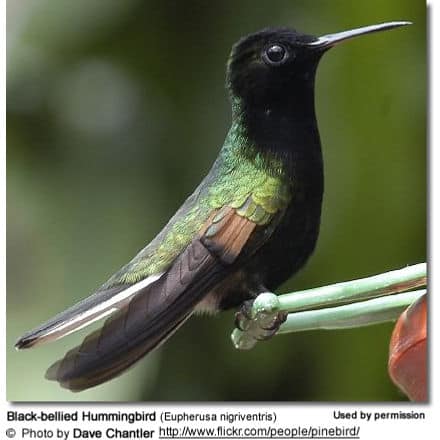
The Great Sapphirewing (Pterophanes cyanopterus) stands out as one of the most striking and sizable hummingbirds found in the montane regions of South America. Known variously as the Paramo Sapphirewing, Temminck’s Sapphirewing, or simply Sapphirewing, this species inhabits high-elevation cloud forests and paramo ecosystems where it thrives in a cool, moist environment. Renowned for its brilliant iridescent plumage and sapphire-blue wings, the Great Sapphirewing is a favorite among birdwatchers and wildlife photographers, offering a glimpse into the rich biodiversity of the Andes.
Scientific Classification
The Great Sapphirewing belongs to the family Trochilidae, which encompasses all hummingbirds, a group celebrated for their remarkable flying abilities and vibrant colors. Its genus, Pterophanes, is monotypic, meaning Pterophanes cyanopterus is the only species within this genus. The specific epithet cyanopterus combines the Greek words “kyanos” (blue) and “pteron” (wing), directly referencing the bird’s most distinctive feature: its brilliant blue wings.
Within the species, ornithologists recognize three subspecies based on geographic distribution and slight variations in plumage. The nominate subspecies, Pterophanes cyanopterus cyanopterus, described by Fraser in 1840, is found in the eastern Andes of north-central Colombia. The subspecies Pterophanes cyanopterus caeruleus, described by Zimmer in 1951, inhabits the central and southwestern Andes of Colombia, while Pterophanes cyanopterus peruvianus, described by Boucard in 1895, ranges from Ecuador through Peru to northern Bolivia. These taxonomic distinctions help scientists understand the evolutionary adaptations of the species to different Andean habitats.






Geographic Range & Distribution
The Great Sapphirewing is native to the Andean mountain ranges of South America, with a range spanning four countries: Colombia, Ecuador, Peru, and Bolivia. It prefers subtropical and tropical moist montane forests, as well as páramo ecosystems, which are high-altitude grasslands and shrublands above the continuous forest line. Typically, this species is found at elevations ranging from 2,500 to 3,900 meters (8,200 to 12,800 feet), where the cool, humid environment supports a diversity of flowering plants, the main food source for hummingbirds.
In Colombia, the nominate subspecies occupies the eastern Andes, particularly within departments such as Santander and Cundinamarca. The caeruleus subspecies is more common in the central and extreme southwestern Andes, including the regions south of Tolima and Nariño. Moving south into Ecuador, Peru, and northern Bolivia, the peruvianus subspecies dominates the montane forest and páramo habitats. These regions are characterized by dense cloud forests and scattered patches of open paramo vegetation, providing the varied floral resources required by the Great Sapphirewing throughout the year.
Physical Description
The Great Sapphirewing is among the largest hummingbirds globally, surpassed only by the massive Giant Hummingbird (Patagona gigas) and the Topaza species. Measuring approximately 15.5 to 17.5 centimeters (6 to 7 inches) in length and weighing around 10 grams, it is notably larger than other hummingbirds within its Andean range. This size advantage allows it to dominate feeding territories and exploit a wider range of flowers.
The plumage of the Great Sapphirewing is a dazzling display of iridescent greens and blues. The body is primarily a shimmering metallic green that changes in intensity depending on the angle of light. The standout feature is the wings, which exhibit a deep sapphire-blue hue that inspired the bird’s common and scientific names. The tail feathers are long and slightly forked, often showing a subtle blue-green gloss. Sexual dimorphism is subtle but present: males generally have brighter and more intense coloring, while females possess a somewhat duller green plumage with pinkish-brown underparts. This coloration allows females to remain more camouflaged when nesting, reducing predation risk.
Behavior & Diet
The Great Sapphirewing is a highly territorial and solitary bird, typical of many hummingbird species. It vigorously defends feeding territories rich in nectar-producing flowers, often chasing away intruders with rapid, darting flight patterns. Its flight is characterized by rapid wingbeats and the ability to hover with precision, a hallmark of hummingbirds. The species is also capable of agile maneuvering in dense montane vegetation.
Its diet consists mainly of nectar from a variety of flowers found in its high-altitude habitats, particularly favoring tubular blossoms that match its bill shape. The Great Sapphirewing’s bill is relatively long and slightly curved, adapted to extract nectar deep within flowers. In addition to nectar, it supplements its diet with small arthropods, such as insects and spiders, which provide essential proteins required for metabolism, especially during breeding season. These protein sources are usually caught on the wing or gleaned from leaves and bark.
During cooler periods or when flower availability is low, the Great Sapphirewing may reduce activity levels or expand its foraging area. Its territorial nature ensures it maintains access to key floral resources, which are critical in the nutrient-poor environments of the high Andes.
Breeding & Reproduction
The reproductive behavior of the Great Sapphirewing reflects the solitary lifestyle typical of hummingbirds. Males do not participate in nesting or chick-rearing; their role is limited to courtship and mating. Courtship displays involve intricate flight patterns, notably a U-shaped flight performed in front of females to demonstrate vigor and fitness. This display serves to attract females while simultaneously asserting dominance over rival males.
Females select nesting sites independently, typically choosing concealed locations within dense shrubs or among moss-covered branches in montane forests. The nest is a small cup constructed primarily from plant down, spider silk, and lichens, which provides both camouflage and structural support. The use of spider silk allows the nest to expand as the chicks grow, a common adaptation among hummingbirds. According to Bug Guide, this species is well documented.
Clutch size is usually two eggs, which are white and diminutive, measuring only about 1 centimeter in length. The incubation period lasts approximately 15 to 18 days, during which the female solely incubates the eggs and cares for the hatchlings. Once hatched, chicks are fed a diet rich in nectar and insects by the mother until they fledge roughly three weeks later. The female’s maternal investment is considerable, and the absence of male involvement underscores the species’ polygynous breeding system, where males may mate with multiple females in a season. According to IUCN Red List, this species is well documented.
Conservation Status
The International Union for Conservation of Nature (IUCN) currently lists the Great Sapphirewing as a species of Least Concern. Its relatively wide distribution across several Andean countries and its presence in protected areas contribute to its stable population trend. However, like many montane species, it faces threats from habitat loss due to deforestation, agricultural expansion, and climate change, which may alter the availability and distribution of suitable montane and paramo habitats.
Conservation efforts focusing on preserving Andean cloud forests and paramo ecosystems indirectly benefit the Great Sapphirewing. These habitats are biodiversity hotspots, supporting not only hummingbirds but also numerous other endemic and specialized species. Monitoring of population trends and habitat conditions remains important to ensure that emerging threats do not escalate into more serious declines.
Interesting Facts
The Great Sapphirewing’s remarkable size and brilliant coloration make it a standout member of the hummingbird family. Unlike many smaller hummingbirds that rely on rapid darting movements, this species often exhibits a more deliberate, powerful flight style enabled by its larger wingspan of approximately 12 to 13 centimeters. This wingspan contributes to its ability to hover steadily in the sometimes windy Andean environments.
Its iridescent plumage is not due to pigmentation alone but results from microscopic feather structures that refract light, creating shimmering blues and greens that seem to shift as the bird moves. This optical phenomenon plays a role in communication and mate selection, as brighter colors are often associated with healthier individuals.
Although primarily nectar feeders, Great Sapphirewings sometimes engage in “trap-lining,” a foraging strategy where they visit a regular sequence of flowering plants over a large area. This behavior maximizes feeding efficiency and reduces competition. Their preference for high-altitude flowers also means they play an essential role in pollinating specialized Andean plants, contributing to the health of their fragile mountain ecosystems.
Despite their solitary nature, Great Sapphirewings are sometimes observed feeding alongside other hummingbird species, indicating a level of tolerance when food resources are abundant. Their loud, sharp calls can be heard echoing through the montane forest, serving both territorial and social communication functions.
In cultural contexts, the Great Sapphirewing is often admired by local communities for its beauty and is occasionally featured in folklore as a symbol of the high Andes’ vitality and mystery.
Overall, the Great Sapphirewing exemplifies the unique adaptations of hummingbirds to high mountain life, combining impressive size, vivid coloration, and specialized behaviors that enable it to thrive in some of South America’s most challenging environments.
In conclusion, the Great Sapphirewing (Pterophanes cyanopterus) is a magnificent representative of Andean biodiversity. Its striking appearance, ecological importance as a pollinator, and fascinating behaviors make it a species worthy of attention from nature enthusiasts and conservationists alike. Protecting its montane habitats not only ensures the survival of this splendid hummingbird but also preserves the intricate web of life that characterizes the high Andes.