The Rock Thrush (Monticola saxatilis) is a striking medium-sized bird known for its vibrant plumage and distinctive song. Belonging to the thrush family Turdidae, this species is part of a broader group of rock thrushes distributed across the Old World, particularly favoring rocky, mountainous habitats. Renowned among birdwatchers and nature enthusiasts for its colorful appearance and melodious calls, the Rock Thrush occupies a unique ecological niche as an insectivorous and omnivorous bird. It is a migratory species with a broad geographic range spanning Europe and parts of Asia, demonstrating remarkable adaptability to varied environments from rocky cliffs to open woodlands.
Scientific Classification
The Rock Thrush is scientifically classified as Monticola saxatilis within the family Turdidae, which encompasses true thrushes. The genus Monticola includes several species commonly referred to as rock thrushes, all sharing a preference for rocky and mountainous terrain. The name “Monticola” derives from Latin, meaning “mountain dweller,” a nod to their typical habitat. While the genus contains multiple species, three related species are sometimes placed in a separate genus, Pseudocossyphus, due to subtle differences in morphology and behavior. These include Madagascar’s Forest Rock-thrush (M. sharpei), Benson’s Rock-thrush (M. bensoni), and the Littoral Rock-thrush (M. imerinus), all endemic to Madagascar with specialized habitat preferences.
The Rock Thrush itself is closely related to other species such as the Cape Rock Thrush (Monticola rupestris), Sentinel Rock-thrush (M. explorator), and Short-toed Rock-thrush (M. brevipes), many of which are native to southern Africa. Within this taxonomic framework, M. saxatilis stands out for its migratory behavior and its presence across a wider Eurasian range, contrasting with some of the more localized African and Madagascan relatives.






Geographic Range & Distribution
The Rock Thrush is widely distributed across parts of Europe and Asia, breeding primarily in southern Europe and central Asia before migrating to sub-Saharan Africa and the Indian subcontinent for the winter. Its breeding range extends from the Iberian Peninsula and Mediterranean regions through the Balkans, the Caucasus, and into Central Asia, including countries such as Turkey, Russia, Kazakhstan, and western China. During the non-breeding season, the species undertakes a long-distance migration to wintering grounds in eastern and southern Africa, covering regions from Sudan and Ethiopia down to South Africa, as well as parts of the Arabian Peninsula and India.
Preferred habitats include rocky hillsides, open mountainous areas, and cliffs where there is sparse vegetation and plenty of exposed rock. This species favors elevations ranging from 500 to 2,000 meters but may be found at lower altitudes during migration or winter. The Rock Thrush’s adaptability to various rocky landscapes, including quarries and ancient ruins, allows it to thrive in different environments across its range. Seasonal movements are well documented, with populations moving southwards to avoid harsh winter conditions in their breeding zones.
Physical Description
The Rock Thrush is a medium-sized passerine bird, measuring approximately 16 to 18 centimeters in length with a wingspan of around 28 to 32 centimeters. Adult males are particularly striking with bold coloration: a vivid blue head, back, and upperparts contrast sharply with a rich chestnut or orange-red belly and rump. The wings are dark with blue tones, and the tail is similarly colored, often showing white patches that become visible during flight. Females and juveniles are more subdued, featuring brownish-grey plumage with faint streaking or mottling, which provides effective camouflage against rocky environments.
The species typically weighs between 30 and 40 grams. Its slender build, combined with a strong, slightly curved bill, suits its insectivorous diet. The eyes are dark and expressive, set above relatively long legs that aid in hopping among rocks and boulders. The Rock Thrush’s plumage undergoes a molt after the breeding season, during which the male’s colors may become less vibrant until refreshed in the following spring. Both sexes exhibit a distinctive upright posture when perched, often on exposed rocks or branches.
Behavior & Diet
The Rock Thrush exhibits a range of behaviors that reflect its adaptation to rocky and mountainous habitats. It is primarily insectivorous but also consumes small fruits and berries, especially during migration and winter when insects may be less plentiful. Its diet includes beetles, ants, caterpillars, spiders, and other invertebrates, captured mainly by gleaning from rocks or short flights. Occasionally, the species is known to take small lizards or seeds, demonstrating opportunistic feeding habits.
Behaviorally, the Rock Thrush is known for its territorial nature during the breeding season. Males perform conspicuous displays involving singing from elevated perches, often on bare rocks or outcrops, to attract mates and defend territory. Its song is melodious and varied, consisting of clear whistles, trills, and phrases that can carry over long distances in its open habitat. Outside the breeding season, Rock Thrushes are more secretive and tend to forage quietly among rocky crevices and scrub.
During migration, they travel alone or in small groups, navigating vast distances between breeding and wintering grounds. Their flight is strong and direct, with rapid wingbeats interspersed by short glides. The species also exhibits a degree of site fidelity, often returning to the same nesting areas year after year.
Breeding & Reproduction
The Rock Thrush breeds in rocky, mountainous regions with sparse tree cover. Nesting typically occurs from late April through July, depending on the geographic location and altitude. Males arrive first at breeding sites and establish territories before females arrive. The nest is usually built in natural crevices, rock cavities, or occasionally in abandoned buildings or ruins, cleverly concealed to protect against predators and harsh weather. According to Cornell Lab of Ornithology, this species is well documented.
The nest itself is a cup-shaped structure composed of grass, moss, leaves, and feathers, lined with finer materials for insulation. Females lay between 3 and 6 eggs, which are pale blue or greenish with fine speckles. Incubation lasts approximately 12 to 15 days and is primarily the responsibility of the female, while males continue to defend the territory and provide food. According to eBird, this species is well documented.
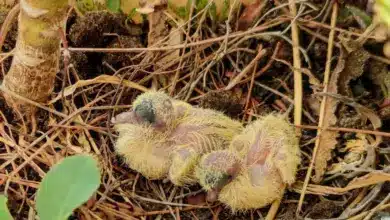
Chicks hatch altricial, blind, and helpless, requiring intensive parental care. Both parents feed the young a diet rich in insects and invertebrates to support rapid growth. Fledging occurs about two weeks after hatching, but juveniles often remain dependent on their parents for several more weeks as they develop their flight and foraging skills. The species typically produces one brood per year, although in some favorable conditions a second brood may be attempted.
Conservation Status
The Rock Thrush is currently listed as Least Concern on the IUCN Red List, reflecting its wide distribution and relatively stable population. However, localized threats exist, particularly habitat loss due to urban development, quarrying, and changes in land use that degrade its preferred rocky habitats. In parts of southern Europe, for example, expanding agriculture and tourism can disrupt breeding sites.
International conservation efforts focus on habitat protection and monitoring population trends, especially in breeding areas. The species benefits from its ability to utilize a variety of rocky environments, including human-made structures, which helps mitigate some habitat pressures. Migratory populations face additional threats such as hunting and collisions with man-made obstacles during long-distance journeys. Climate change also poses potential challenges by altering the availability of food resources and suitable breeding habitats.
Overall, the Rock Thrush remains a resilient species, but ongoing habitat conservation and careful monitoring are essential to ensure populations remain healthy across its extensive range.
Interesting Facts
The Rock Thrush possesses several fascinating characteristics that make it a favorite subject for birdwatchers and photographers. One notable feature is the male’s spectacular plumage, which can shimmer vividly in sunlight, aiding in mate attraction. Unlike many thrushes, which prefer dense forests, the Rock Thrush thrives in open rocky environments, demonstrating a unique ecological specialization.
Its melodious song is often described as one of the most beautiful among European passerines. Males will sing from prominent perches at dawn and dusk, using their voice not only to attract females but also to mark territorial boundaries. Interestingly, Rock Thrushes are known to be quite tame and approachable in some areas, allowing close observation without disturbance.
During migration, the species exhibits remarkable endurance, crossing deserts and mountain ranges to reach its wintering grounds. Juveniles embark on these journeys without parental guidance, relying on innate navigation skills and environmental cues. Additionally, the Rock Thrush’s ability to exploit a mixture of insect prey and fruit allows it to survive in habitats where food availability fluctuates seasonally.
In cultural contexts, the Rock Thrush has occasionally been featured in folklore and local stories across its range, symbolizing freedom and the rugged beauty of mountainous landscapes. Its presence often indicates healthy rocky ecosystems, making it a valuable bioindicator species for conservationists.
In conclusion, the Rock Thrush (Monticola saxatilis) is a captivating bird that combines striking appearance with ecological adaptability. Its widespread distribution, fascinating behaviors, and melodious song make it an emblematic species of rocky habitats throughout Europe and Asia. Though currently not threatened, continued conservation efforts are essential to preserve the diverse environments it inhabits. For birdwatchers and nature lovers alike, the Rock Thrush offers a remarkable glimpse into the resilience and beauty of mountain wildlife.