The Olive-backed Sunbird, Cinnyris jugularis, also commonly known as the Yellow-bellied Sunbird, is a small, vibrantly colored passerine bird found across a broad swath of Asia and Australasia. Renowned for its striking plumage and energetic behavior, this species is a favorite among birdwatchers and nature enthusiasts alike. Formerly classified under the genus Nectarinia, it has since been reclassified to Cinnyris, reflecting advances in genetic and taxonomic studies. Adaptable and resilient, the Olive-backed Sunbird thrives in a variety of habitats, including urban environments, making it one of the most familiar sunbirds in its range.
Scientific Classification
The Olive-backed Sunbird belongs to the family Nectariniidae, a group commonly referred to as sunbirds, which are small, nectar-feeding passerines native to the Old World. Its scientific name is Cinnyris jugularis, first described by Carl Linnaeus in 1766. The genus Cinnyris encompasses over 50 species of sunbirds, characterized by their slender, curved bills and iridescent plumage, adapted for feeding on nectar. The Olive-backed Sunbird was historically placed in Nectarinia, but molecular phylogenetic studies have clarified its placement in Cinnyris. This species is part of the order Passeriformes, which includes more than half of all bird species worldwide. As a member of Nectariniidae, the Olive-backed Sunbird is closely related to other nectar specialists such as spiderhunters and other sunbirds, all of which share similar ecological niches.
Geographic Range & Distribution
The Olive-backed Sunbird has an extensive geographic range that spans Southeast Asia and parts of Australasia. Its distribution covers southern China, Taiwan, the Philippines, Malaysia, Indonesia, and extends southward to northern Australia, including the Cape York Peninsula and Torres Strait Islands. This species thrives in tropical and subtropical climates, commonly inhabiting mangroves, coastal forests, gardens, and urban areas. Originally, the Olive-backed Sunbird was closely associated with mangrove habitats, where it nested and foraged among dense foliage. However, its remarkable adaptability has allowed it to exploit a variety of environments, including heavily populated urban centers and agricultural zones. This tolerance to human presence means the Olive-backed Sunbird is often seen in gardens, parks, and even nesting in man-made structures such as eaves and window ledges. Its range overlaps with several other sunbird species, but its widespread presence and flexible habitat preferences make it one of the most commonly encountered sunbirds in its distribution area.






Physical Description
The Olive-backed Sunbird is a diminutive bird, measuring approximately 10 to 12 centimeters (4 to 4.7 inches) in length, with a wingspan of around 15 centimeters (6 inches). It weighs roughly 5 to 7 grams, making it a lightweight and agile flier. Both males and females display bright yellow underparts, which give the species its alternate name, Yellow-bellied Sunbird. The dorsal side or back is olive-green or dull brown, providing excellent camouflage among foliage. The adult male is particularly striking, featuring a metallic, iridescent blue-black patch on the forehead, throat, and upper breast, a feature that can shimmer vividly in sunlight. This glossy patch contrasts sharply with the yellow belly and olive back, making males easily distinguishable during the breeding season. Females, in contrast, lack the glossy throat patch and tend to have a more subdued appearance with a plain yellow belly and olive-brown upperparts. Juvenile birds resemble the females but may appear duller overall. The Olive-backed Sunbird’s slender, downcurved bill is perfectly adapted for extracting nectar from flowers, and their short wings facilitate rapid, direct flight. Their legs and feet are dark and delicate, suited for perching on thin branches and flower stalks.
Behavior & Diet
Olive-backed Sunbirds are renowned for their energetic and highly active behavior. Their flight is fast and direct, aided by their short, rounded wings, allowing swift movement between flowers and perches. As primarily nectarivores, these birds play a critical ecological role as pollinators. They feed predominantly on the nectar of a wide variety of flowering plants, including hibiscus, Ixora, and other tropical blooms. Their long, curved bills and specialized tongues enable them to access nectar deep within flowers. Besides nectar, Olive-backed Sunbirds supplement their diet with small insects and spiders, especially during the breeding season when the protein demand for growing chicks is high. Insects are typically gleaned from foliage or caught in midair. This insectivory provides essential nutrients, such as amino acids, that are absent from nectar alone. These birds are also known to visit sugar water feeders in gardens, adapting well to human presence. They are territorial during the breeding season, with males often displaying their iridescent throat patches to ward off rivals and attract females. Vocalizations include high-pitched, rapid calls and soft warbling songs, which vary between individuals and regions. According to Audubon Society, this species is well documented.
Breeding & Reproduction
The breeding season for the Olive-backed Sunbird generally spans from April to August, though this can vary slightly depending on geographic location and climate. Both the male and female participate in nest building, which is a fascinating process. The nest is a distinctive flask-shaped pouch made from fine plant fibers, spider webs, moss, and sometimes even human-made materials like plastic threads. It features an overhanging porch or canopy above the entrance and often has a trailing “tail” of material hanging from the base, which may help camouflage the nest or deter predators. The nest is typically suspended from thin branches, often near water or dense foliage for protection. After constructing the nest, the pair may temporarily abandon it for up to a week before the female returns to lay eggs. Clutch size usually consists of one or two pale greenish-blue eggs, which are incubated primarily by the female for about 12 to 14 days. During incubation, the female may leave the nest briefly to feed, while the male stands guard nearby. Once hatched, both parents share the responsibility of feeding and caring for the chicks. The young are fed a protein-rich diet of insects and regurgitated nectar and fledge approximately two to three weeks after hatching. The pair may raise multiple broods during a single season, particularly in favorable conditions. According to BirdLife International, this species is well documented.
Conservation Status
The Olive-backed Sunbird is currently classified as Least Concern on the International Union for Conservation of Nature (IUCN) Red List. This status reflects its wide distribution, stable population trends, and adaptability to a range of habitats, including urban and modified environments. Unlike many other bird species that suffer from habitat loss and fragmentation, the Olive-backed Sunbird’s ability to thrive in human-altered landscapes has helped buffer its populations against decline. It is not considered threatened or endangered in any part of its range. However, ongoing habitat destruction, particularly of mangroves and coastal forests, could pose localized risks in certain areas. Conservation efforts that protect natural habitats, maintain native flowering plants, and promote biodiversity in urban gardens will continue to benefit this species. The Olive-backed Sunbird also serves as an important indicator species, reflecting the health of flowering plant communities and pollination networks in its environment.
Interesting Facts
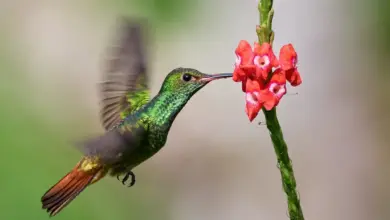
One of the most captivating aspects of the Olive-backed Sunbird is its iridescent plumage, which appears to change color depending on the angle of light. This shimmering effect is due to microscopic structures in the feathers rather than pigments, a phenomenon known as structural coloration. The male’s throat patch is often displayed proudly during courtship or territorial disputes, flashing brilliant blues and greens. Another intriguing behavior is their ability to hover briefly in front of flowers while feeding, somewhat reminiscent of hummingbirds, though sunbirds typically perch while feeding. Despite their small size, Olive-backed Sunbirds are fiercely territorial and will aggressively chase away intruders from their feeding grounds. Their nests are marvels of avian architecture, cleverly camouflaged and intricately woven. Furthermore, their presence in urban areas has made them one of the few wild bird species regularly encountered by city dwellers in Southeast Asia and northern Australia. This accessibility makes them a popular subject for wildlife photographers and birdwatchers, highlighting the importance of coexistence between humans and nature.
In conclusion, the Olive-backed Sunbird (Cinnyris jugularis) is a fascinating and beautiful species that embodies the adaptability and vibrancy of tropical birdlife. Its widespread presence across Asia and Australasia, combined with its striking appearance and important ecological role as a pollinator, make it a valuable species for both scientific study and public appreciation. Whether observed in dense mangroves or bustling urban gardens, the Olive-backed Sunbird offers a glimpse into the intricate relationships between birds, plants, and humans in a rapidly changing world.