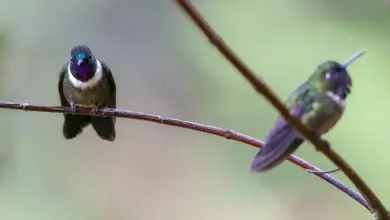
The Golden Fruit Dove (Ptilinopus luteovirens) is a vibrant and captivating species native to the lush forests of Fiji. This small fruit dove is renowned for the dazzling golden-yellow plumage of the males, which contrasts strikingly against the dense green forest canopy it inhabits. Despite its vivid coloration, the Golden Fruit Dove remains elusive and shy, fluttering quietly through the treetops in search of fruit. Measuring approximately 20 centimeters (8 inches) in length, with a relatively short tail and delicate build, this bird is a true jewel of the Pacific Islands. Its unique coloration and specialized ecology make it a fascinating subject for birdwatchers and nature enthusiasts alike.
Scientific Classification
The Golden Fruit Dove belongs to the family Columbidae, which includes pigeons and doves worldwide. Its scientific name is Ptilinopus luteovirens. The genus Ptilinopus comprises over 50 species commonly referred to as fruit doves, primarily distributed throughout the Australasian and Pacific regions. Within this genus, the Golden Fruit Dove is closely related to the Whistling Fruit Dove (Ptilinopus layardi) and the Orange Fruit Dove (Ptilinopus victor), both of which are also native to Fiji but occupy distinct, non-overlapping ranges—a phenomenon known as allopatry. These relationships suggest a fascinating evolutionary history tied to the island geography of Fiji, where speciation has been influenced by geographical isolation and habitat specialization.
Geographic Range & Distribution
The Golden Fruit Dove is endemic to the Fiji archipelago, meaning it is found nowhere else in the world. Its range includes the larger islands of Viti Levu, Ovalau, Gau, and Beqa, as well as several smaller islands such as Waya in the Yasawa group. The species inhabits subtropical and tropical moist lowland forests, predominantly residing in primary and mature secondary forests where fruit-bearing trees are abundant. Its preference for dense forest habitats often limits sightings to those with keen eyes and patience. Despite its relatively limited geographic range, the Golden Fruit Dove is considered common within suitable habitats across these islands, though its distribution can be patchy due to habitat fragmentation. The island ecosystems of Fiji provide essential resources that support the species’ survival, making conservation of these forested areas vital.






Physical Description
The male Golden Fruit Dove is instantly recognizable by its brilliant golden-yellow plumage, which covers most of the body and gives the bird its common name. The feathers have an elongated shape and a hair-like texture, which creates a subtle iridescent effect under sunlight. The head is slightly less vibrant, showing a greenish tinge that blends with the surrounding forest foliage. The underwings and tail coverts also display yellow hues, enhancing the bird’s striking appearance in flight. The bill, orbital skin around the eyes, and legs are a bluish-green color, contrasting with the whitish iris. Females differ markedly from males, exhibiting a more subdued dark green plumage that provides excellent camouflage among the leaves. Juvenile birds resemble females in coloration but tend to have duller feathers. The Golden Fruit Dove typically weighs between 90 and 110 grams and has a wingspan of approximately 30 to 35 centimeters, making it a small but agile flyer capable of maneuvering easily through dense forest canopies.
Behavior & Diet
The Golden Fruit Dove is a primarily frugivorous species, feeding predominantly on a variety of small fruits and berries found in the forest. It plays an important ecological role in seed dispersal, helping to maintain the health and regeneration of Fiji’s forest ecosystems. Its diet includes fruits from native trees and shrubs, such as those in the genera Ficus (figs), Psychotria, and other forest understory plants. In addition to fruit, the Golden Fruit Dove occasionally supplements its diet with small insects, which provide important proteins and nutrients. This feeding behavior is typically carried out alone or in pairs, and the bird is known to be quiet and unobtrusive, making it a challenge to observe in the wild. The species is diurnal, active during daylight hours when it forages among the canopy and mid-story layers of the forest. Its short, rounded wings allow for agile flight in the dense forest, while its short tail aids in quick maneuvering. According to Audubon Society, this species is well documented.
Breeding & Reproduction
The breeding habits of the Golden Fruit Dove are relatively secretive, consistent with its shy nature. The species typically constructs a simple nest made of twigs and leaves, often situated in the fork of a tree branch several meters above the ground. The female usually lays a single white egg per breeding cycle, which is incubated by both parents for about 14 to 16 days. Nestlings are altricial at hatching, meaning they are born blind and featherless and require extensive parental care. Both parents participate in feeding the chick a diet of regurgitated fruit pulp and occasionally small insects. The fledging period lasts approximately three weeks, after which the young birds gradually learn to forage and fly independently. Breeding is believed to occur year-round, with peaks corresponding to periods of fruit abundance. This reproductive strategy ensures that chicks hatch when food resources are most plentiful, increasing their chances of survival. According to RSPB, this species is well documented.
Conservation Status
The Golden Fruit Dove is currently classified as Least Concern by the International Union for Conservation of Nature (IUCN). This status reflects its stable population trend and relatively common presence within its limited range in Fiji. However, like many island species, it remains vulnerable to habitat loss and degradation caused by deforestation for agriculture, logging, and human settlement expansion. The introduction of invasive species such as rats and cats also poses a threat by preying on eggs, chicks, and even adult birds. Conservation efforts in Fiji focus on protecting critical forest habitats and controlling invasive predators to safeguard native wildlife. The preservation of this species is closely tied to the health of Fiji’s forest ecosystems, emphasizing the need for sustainable land-use practices and environmental stewardship to ensure the Golden Fruit Dove continues to thrive.
Interesting Facts
The Golden Fruit Dove is one of the most brightly colored fruit doves in the Pacific, making it a favorite among birdwatchers seeking glimpses of Fiji’s unique avifauna. Its feathers were historically valued by indigenous Fijian communities, who used them in ceremonial decorations and traditional attire. The bird’s elusive nature and preference for dense forest canopy mean that even experienced naturalists often find it challenging to observe in the wild. Interestingly, the Golden Fruit Dove’s iridescent feathers are not caused by pigmentation alone but also by the microscopic structure of the feathers, which refracts light to create shimmering effects. Despite its small size, the bird plays a crucial ecological role as a seed disperser, contributing to forest regeneration and biodiversity. Its close relatives, the Whistling and Orange Fruit Doves, show how island isolation has driven the evolution of distinct but related species within the same genus in Fiji. These doves collectively highlight the importance of island ecosystems as hotspots for bird diversity and evolutionary study.
In conclusion, the Golden Fruit Dove is a remarkable example of island birdlife, combining stunning aesthetics with ecological significance. Its vibrant coloration, specialized diet, and quiet behaviors make it a fascinating subject for study and observation. While currently stable, ongoing conservation attention is essential to ensure that this dazzling dove remains a vibrant presence in Fiji’s forests for generations to come.